Roblox
Roblox Corporation, 2006-present (the platform itself defines this look)
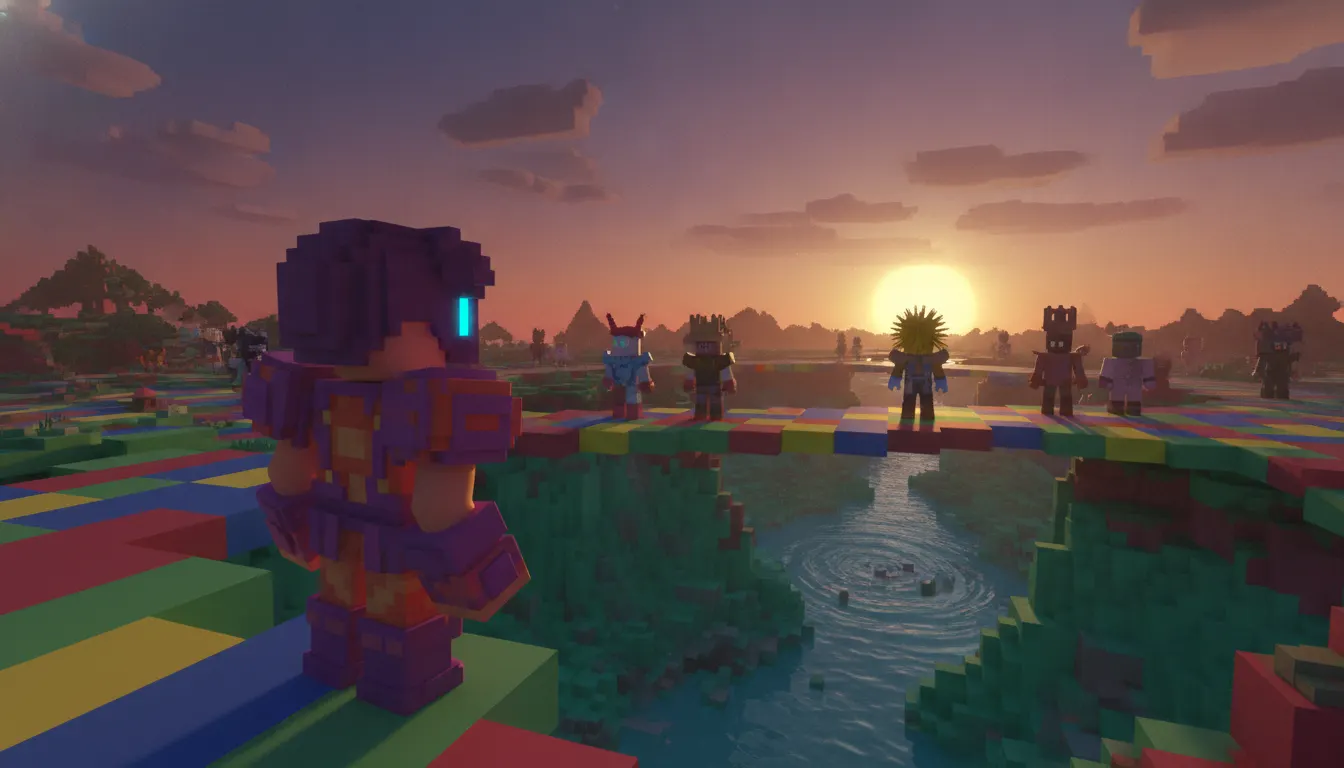
Roblox blocky 3D world. User-generated avatar diversity, cylinder-and-block character, vibrant kid-platform palette.
The moves a human crew would use to get here. Cue applies them for you, and knowing their names is how you ask for a change.
shaded plastic surface materials with no normal map detail
primitive environment construction with visible texture tiling
color palette with minimal shadow depth
polygon geometry with right-angle dominant architecture
toy ragdoll death animations with exaggerated limb detachment
Roblox Corporation launched its platform in 2006, and the visual language it developed - blocky, plastic-looking, physics-toy characters in flat-colored, low-polygon environments - has become one of the most recognized aesthetics in children's and Gen Z gaming culture. Unlike Minecraft's deliberate pixel-art ethos, Roblox's blocky look emerged from engine constraints and user-generated tooling rather than artistic direction, which gives it a specific rough-around-the-edges charm.
The default Roblox character is a limbless block torso with attached cylindrical limbs, a rectangular head, and a yellow-plastic face. Customization happens through layered texture wraps - shirts, pants, faces - applied to the same underlying mesh. The avatar system's simplicity is the point: any player's design is immediately readable as "a Roblox character" regardless of cosmetics. This created a visual identity as strong as Minecraft's Steve despite the platform's infinite customization.
Roblox games are built with rectangular primitives - bricks, wedges, cylinders - that users assemble without needing 3D modeling software. The result is environments that look like elaborate LEGO dioramas: right angles everywhere, texture tiling clearly visible, ground planes flat and undetailed. Lighting has improved across platform generations (Roblox introduced "Future" lighting mode in 2019 with real-time shadows and ambient occlusion), but the underlying geometry remains blocky.
Roblox had 88 million daily active users by 2024, predominantly under 17. The blocky look carries enormous parasocial weight for this demographic: it's the visual language of after-school gaming sessions, of "Adopt Me!" and "Tower of Hell" and hundreds of creator games. For marketers, this aesthetic signals accessibility, fun, and youth-audience relevance in a way that polished graphics explicitly do not.
Roblox Corporation, 2006-present (the platform itself defines this look)
Uplift Games, Roblox, 2017 (most-played Roblox game, defining visual template)
ObliviousHD, Roblox, 2018 (parkour obstacle course, iconic blocky level design)
Badimo, Roblox, 2017 (open-world blocky GTA-style game)
Mojang, 2011 (separate but adjacent blocky aesthetic, frequent comparison point)
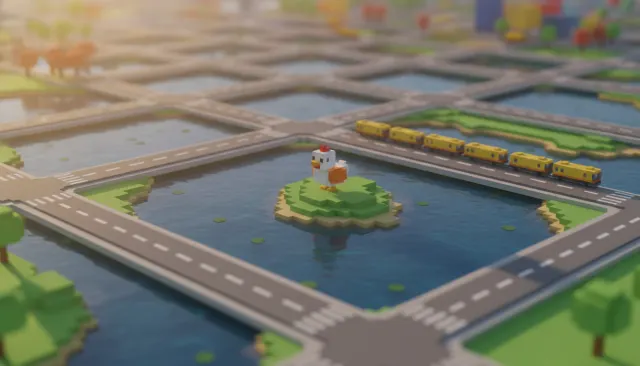
Hipster Whale, 2014 (mobile game using similar voxel-blocky character language)
A Look is not a filter. It is a set of stored decisions the pipeline reads before it makes a single frame, so two videos in the same Look actually match.