Crossy Road
2014
Hipster Whale (Matt Hall, Andy Sum), Melbourne
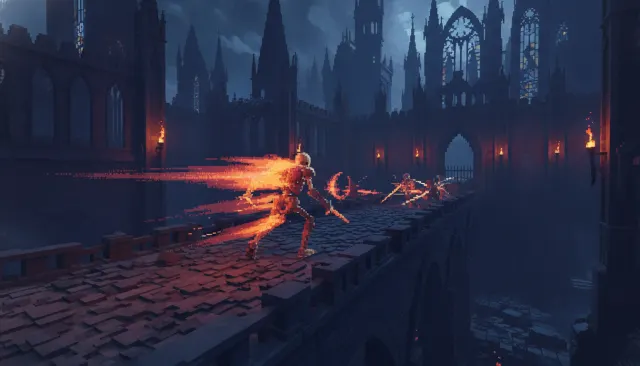
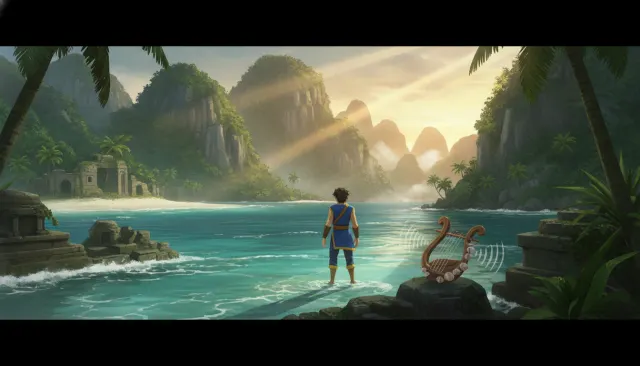
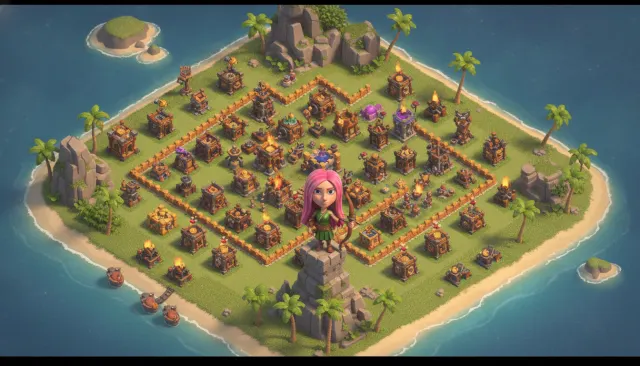
Crossy Road isometric voxel game. Tilt-shift-feel mobile arcade, simple chibi voxel characters, bright iconic palette.
The moves a human crew would use to get here. Cue applies them for you, and knowing their names is how you ask for a change.
cube geometry construction with no smooth polygon interpolation (all cubic voxel units)
16 desaturated environment tones with high-contrast character accent colors
material areas to prevent flat, uniform surface reads
color limit) as a design discipline
Crossy Road (2014), developed by Hipster Whale (Matt Hall and Andy Sum, Melbourne, Australia), became one of the defining mobile game art direction case studies of the decade. Published in November 2014, the game's voxel visual style-three-dimensional pixel art built from cube units with a restricted palette and soft ambient occlusion lighting-was perfectly calibrated for mobile hardware constraints while being visually distinctive and screenshot-shareable.
Voxel art (volumetric pixel) is the 3D equivalent of pixel art: every object is constructed from unit cubes, allowing complex shapes while maintaining a resolution-limited, inherently digital aesthetic. Unlike smooth polygon 3D, voxel art embraces visible cubic geometry as a design feature. Crossy Road implements voxel art with a key softening influence: ambient occlusion (soft shadows in corners and contact points between cubes) is applied, giving the cube-world a toy-box tactility rather than the harsh, blocky quality of older voxel games like Minecraft (Mojang, 2011).
Hipster Whale's color approach is key to the game's success: a limited palette of desaturated, warm mid-tones (tan, moss green, slate grey, muted sky blue) with high-contrast character colors (bright orange chicken, bold black-and-white panda) ensuring characters read clearly against environments. The overall lighting setup uses a single warm directional source (implying afternoon sun) with the ambient occlusion pass providing depth and ground-contact shadow. The result is clean, toy-like, and immediately legible at mobile resolution.
Crossy Road's success contributed to a voxel art renaissance in mobile and indie games. MagicaVoxel (ephtracy, free tool released 2013, popularized 2015+) democratized voxel art creation, leading to thousands of indie projects. Minecraft had already popularized the macro-voxel (large cube) aesthetic; Crossy Road showed that micro-voxel (small cube, fine detail) could work in a polished commercial product. Other examples include Trove (Trion Worlds, 2015) and VoxPopuli community works.
Crossy Road features hundreds of unlockable character 'skins'-voxel reimaginings of the same gameplay character in different styles (retro arcade, Disney licensed, etc.). This mechanical design decision made the voxel aesthetic functionally important: the cube-unit system allows rapid character variant production at consistent quality.
2014
Hipster Whale (Matt Hall, Andy Sum), Melbourne
2011
Mojang - macro-voxel predecessor establishing the cultural frame
2015
Trion Worlds - MMORPG voxel world
MagicaVoxel editor (ephtracy, 2013–present)
2021
Yacht Club Games - voxel-adjacent pixel-3D hybrid
A Look is not a filter. It is a set of stored decisions the pipeline reads before it makes a single frame, so two videos in the same Look actually match.