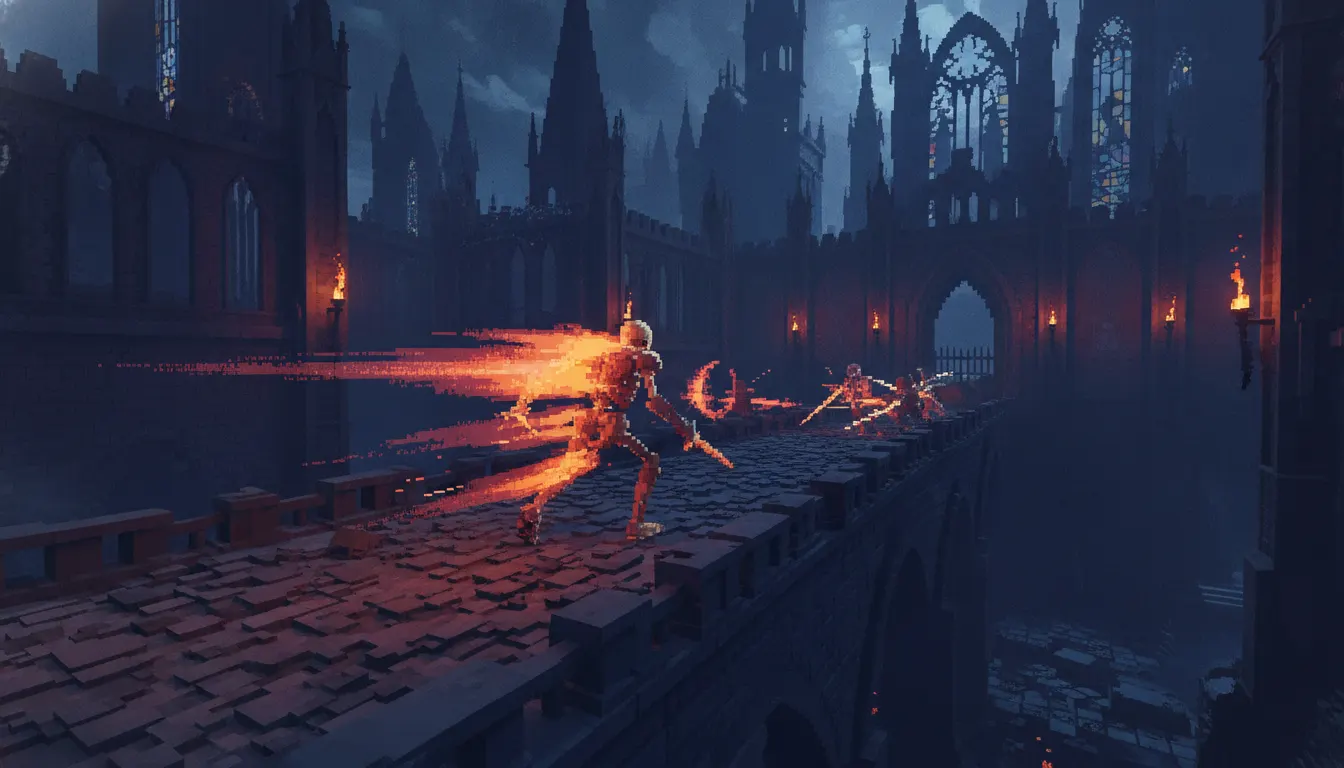
Dead Cells (Motion Twin, 2018)
the defining reference
Dead Cells fluid-animation pixel roguelike aesthetic. Motion Twin 3D-skeleton-to-pixel pipeline, gothic castle palette, fast combat readability.
The moves a human crew would use to get here. Cue applies them for you, and knowing their names is how you ask for a change.
resolution pixel sprites (not hardware-constrained) with hundreds of animation frames per character
resolution: pixel-art characters combined with modern sub-pixel particle effects and post-processing
speed movement conveying action velocity
enemies and environments emit colored light affecting surrounding pixel surfaces
Dead Cells (Motion Twin, 2018) represents the high-water mark of what might be called 'maximalist pixel art' - a contemporary approach that retains the pixel grid as an aesthetic choice while throwing out all the hardware constraints that historically justified it. Motion Twin's pixel artists created extraordinarily detailed and expressive sprites, combined them with modern real-time particle systems, post-processing effects, and high-frame-rate animation to produce something that looks simultaneously retro and state-of-the-art.
Unlike SNES-era pixel art constrained to 16 colors per sprite, Dead Cells characters are rendered at higher resolutions with full RGB color depth. The player character has hundreds of animation frames covering running, combat, special attacks, and death sequences. This is pixel art freed from hardware constraint - the aesthetic choice to work in pixels remains, but the execution uses every modern tool available.
The game's combat feel owes much to its particle effects: enemy deaths explode in colored showers matching their type (fire enemies burst into orange sparks, poison enemies into green clouds). These particle systems use modern GPU rendering techniques rather than pixel-art sprite sheets. The deliberate mix of pixel-art characters with non-pixel particle effects creates a visual richness that purely pixel-art games lack.
Environments in Dead Cells use dark, moody palettes - deep blues and greens in the Prisoner's Quarters, fiery reds in Infested Shipwreck, cool purples in the Castle - while ensuring player characters and enemies maintain high contrast visibility against these backgrounds. This is the functional-artistic compromise: dark and atmospheric without sacrificing readability in fast-paced combat.
The genre's procedural generation means environments are assembled from tile sets rather than hand-placed elements. Dead Cells' tile sets are individually detailed enough that procedural combinations feel handcrafted. The visual challenge of roguelike art direction - making algorithmic composition feel intentional - is one the team solved through careful tile design and lighting.
the defining reference
expanded universe
parallel dark atmospheric pixel art metroidvania
deliberate NES-constraint pixel game peer
pixel roguelike contemporary
same 2018 indie pixel moment, different emotional register
dark pixel art action game descended from the tradition
A Look is not a filter. It is a set of stored decisions the pipeline reads before it makes a single frame, so two videos in the same Look actually match.
 Pixel Modern IndieCeleste Mountain Pixel
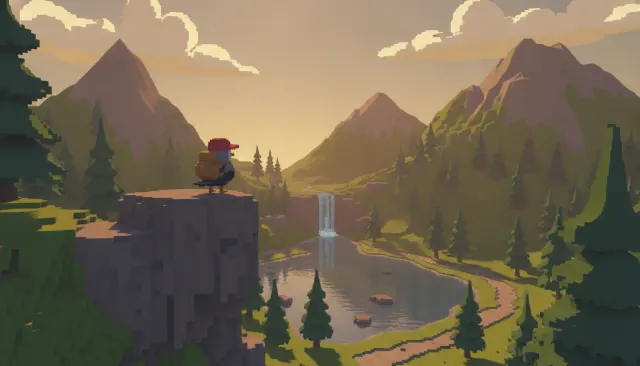 Indie ModernA Short Hike Painterly Pixel
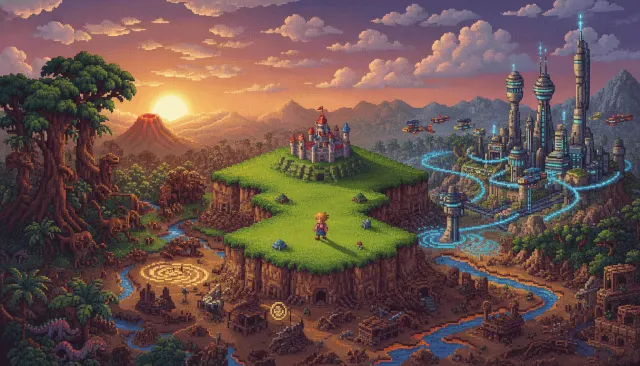 Pixel Era 8Bit 16BitChrono Trigger JRPG Pixel
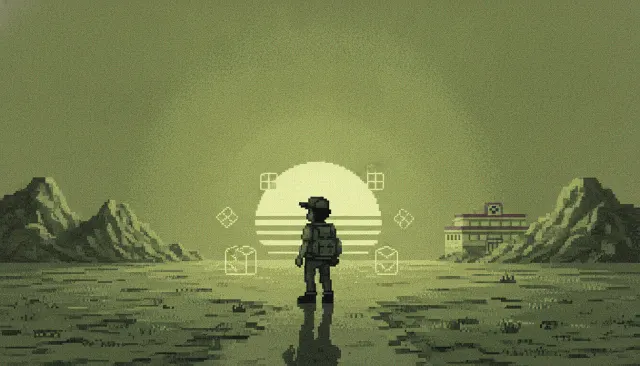 Pixel Era 8Bit 16BitGame Boy Monochrome 4-Color
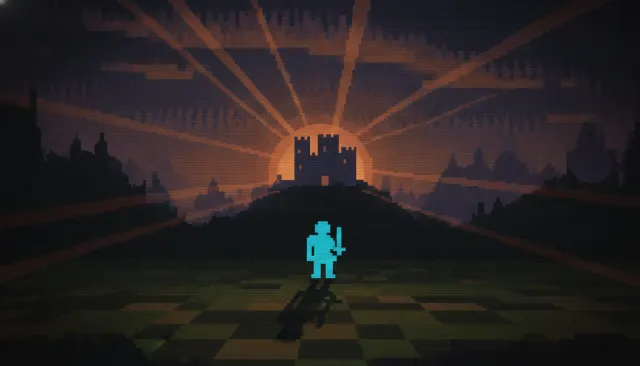 Retro Pre NesAtari 2600 Chunky Vector
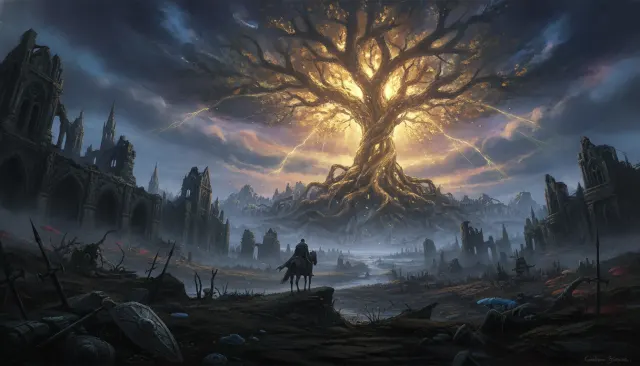 Aaa Cinematic ExtendedElden Ring Dark Souls Painterly Fantasy
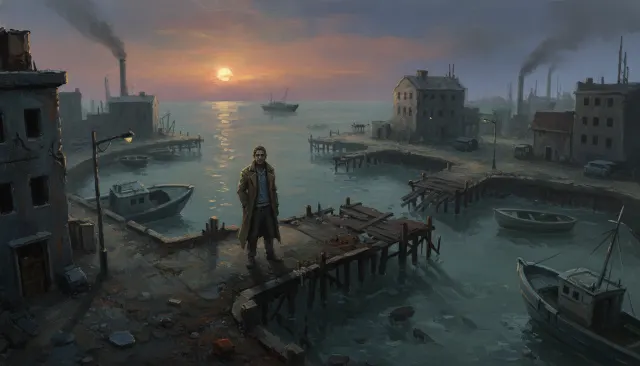 Indie StylizedDisco Elysium Painted RPG