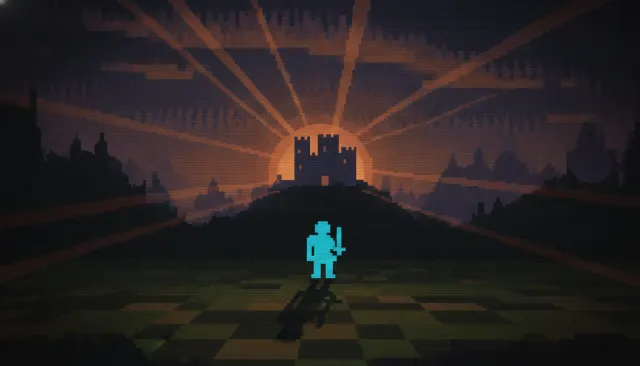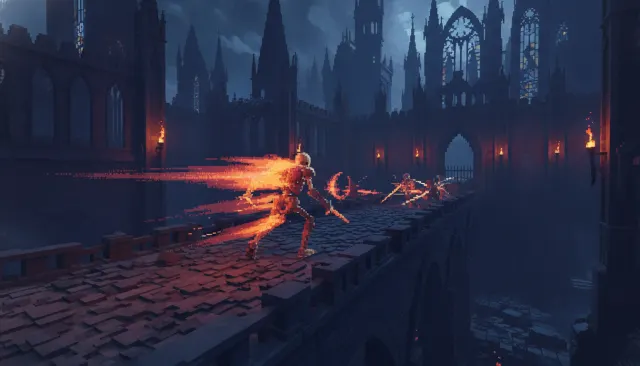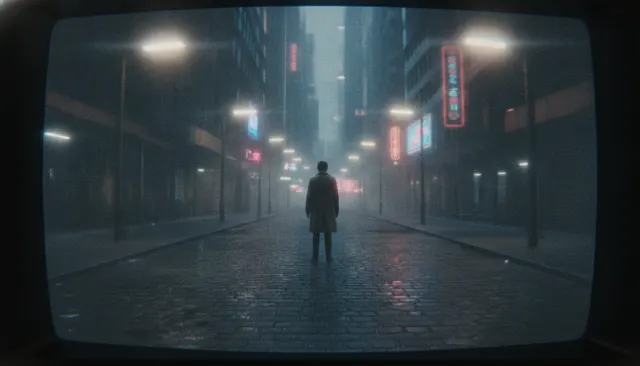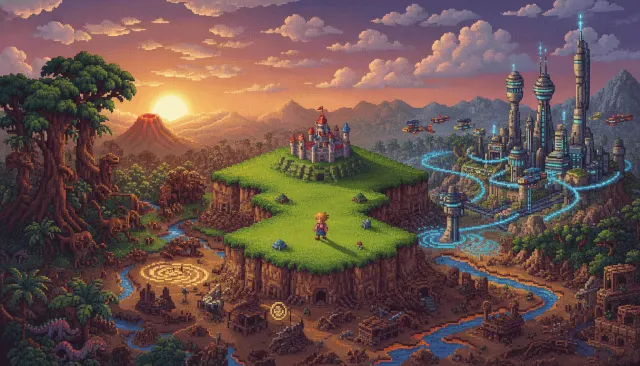
Tetris (Nintendo, 1989)
Game Boy launch title defining the platform
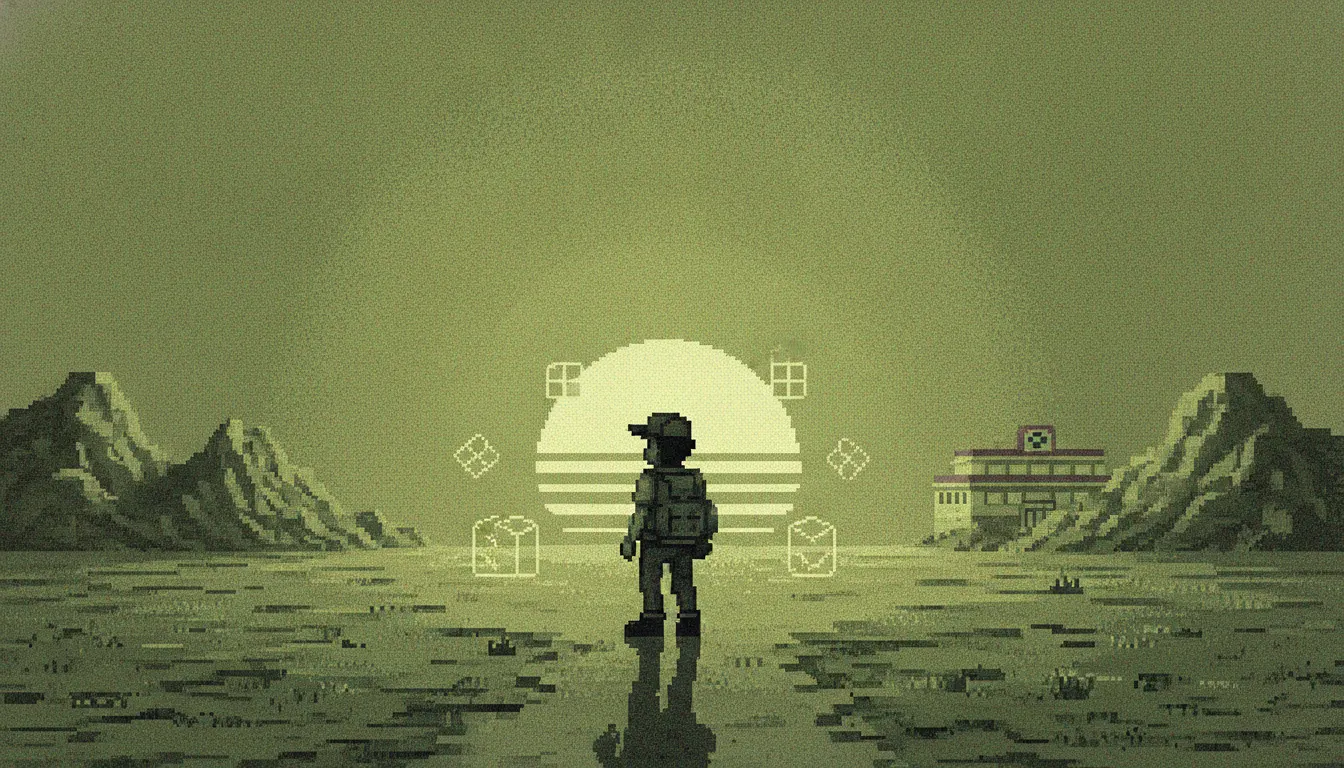
Original Game Boy DMG monochrome 4-shade green palette. 160x144 LCD resolution, dot-matrix pixels, Tetris and Pokemon Red era handheld nostalgia.
The moves a human crew would use to get here. Cue applies them for you, and knowing their names is how you ask for a change.
shade palette: #9BBC0F, #8BAC0F, #306230, #0F380F (or equivalents) - no color other than these green tones
transparent sprite colors with strict black outline for character separation
based backgrounds using 8x8 pixel repeating tile units
palette icon design language
The original Game Boy (Nintendo, 1989) is one of the most constraint-defined visual systems in the history of media. Its reflective LCD display rendered graphics in exactly four shades: off-white, light green, dark green, and near-black - the specific hues determined by the DMG-01 hardware's dot-matrix LCD characteristics and ambient light reflection. The display ran at 160x144 pixels at approximately 59.7 frames per second, and the resulting aesthetic has become one of the most culturally recognizable visual signatures in gaming.
The Game Boy's iconic green tones were not an artistic choice but a hardware artifact - the LCD technology available in 1989 produced a yellowish-green phosphorescent quality. The four tones (approximately #9BBC0F lightest to #0F380F darkest in digital recreation) have become inseparable from Game Boy identity. Later hardware revisions - the Game Boy Pocket (1996) introduced a grey-scale neutral LCD; the Game Boy Color (1998) added full color - but the green DMG palette remains the culturally definitive Game Boy aesthetic.
Sprite design at 160x144 with four shades demands absolute economy. Sprites were limited to three non-transparent colors from the four available. Characters had to communicate their identity, emotional state, and action through shape silhouette and pattern alone - no color differentiation available. This extreme constraint produced design solutions of remarkable elegance: Kirby's simple dot-eyes and round form, Pikachu's lightning-bolt tail, Link's characteristic hat silhouette all read perfectly in monochrome.
The Game Boy sold 118 million units across its lifecycle (DMG, Pocket, Color, Advance). For an enormous generation of players, it represents first gaming experience and formative memory. The monochrome aesthetic carries profound nostalgia weight - arguably more than any other gaming platform's visual style - because portable gaming was a novel experience and the Game Boy's visual language was its exclusive signature.
The DMG green palette is one of the most frequently used retro aesthetics in contemporary pixel art, indie games, and internet culture. Games like Shovel Knight's Game Boy-inspired modes, countless itch.io Game Boy-jam entries, and merchandise design all reference this specific four-color system as shorthand for portable handheld gaming nostalgia.
Game Boy launch title defining the platform
151 creatures designed for DMG constraints
peak DMG adventure game art
Kirby's monochrome debut
atmospheric DMG dark design
JRPG constraints on DMG hardware
DMG palette applied to photography
A Look is not a filter. It is a set of stored decisions the pipeline reads before it makes a single frame, so two videos in the same Look actually match.