CRT-Royale shader (by hunterk, 2015)
most technically accurate CRT emulation shader for RetroArch
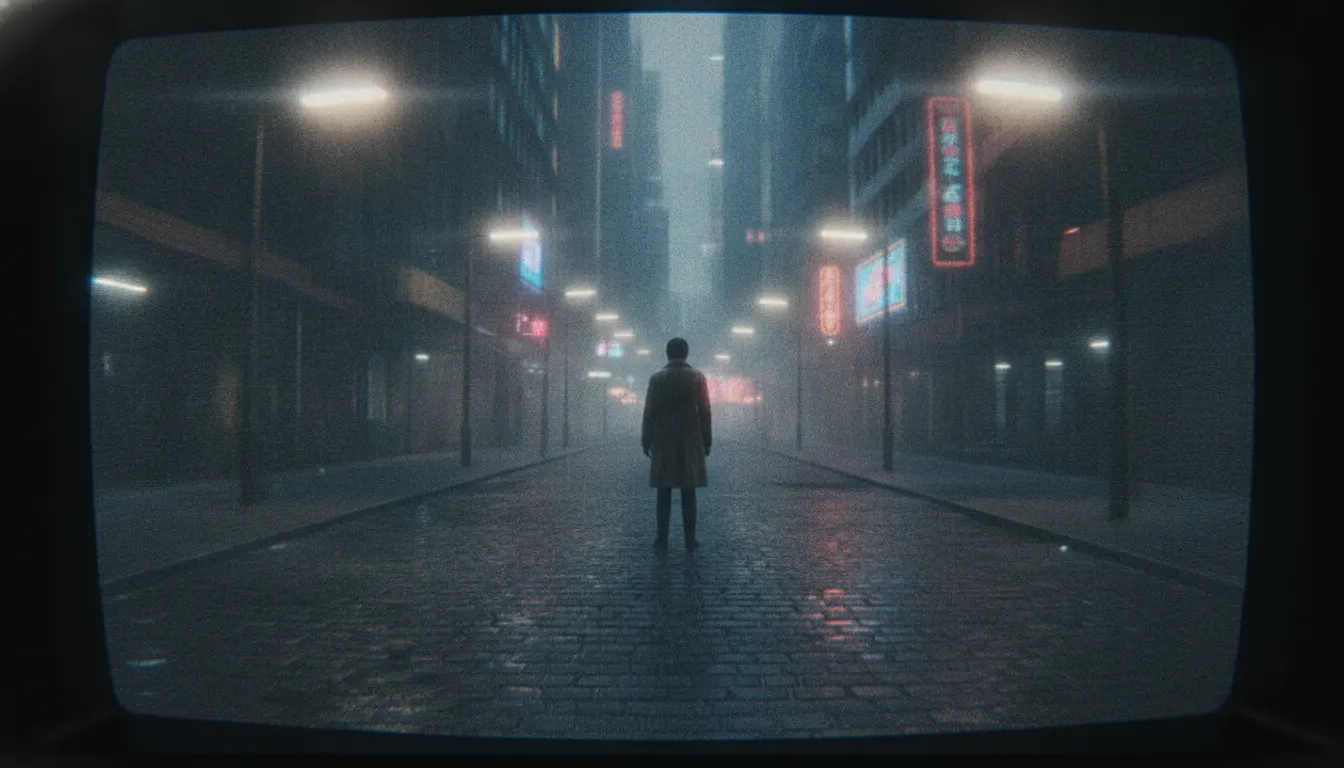
Curved CRT monitor simulation. Visible horizontal scanlines, RGB aperture grille subpixels, barrel distortion, phosphor bloom on highlights.
The moves a human crew would use to get here. Cue applies them for you, and knowing their names is how you ask for a change.
thin horizontal dark stripes every 2-4 pixels at 40-60% opacity over the video frame
bulge toward center using mesh warp or lens distortion at 0.3-0.6 value
warm amber or blue-white glow around bright elements using Screen-blend Gaussian blur pass
red channel offset +2px right, blue channel offset +2px left from green
fine grain texture at 3-8% opacity, slightly desaturated
heavy quadrant vignetting in CRT glass geometry shape, not circular
lower sharpness on horizontal axis than vertical, simulating electron beam dot pitch
The cathode-ray tube (CRT) display dominated consumer electronics from the 1930s through the mid-2000s, when LCD panels displaced them. The technology worked by firing an electron beam at a phosphor-coated glass screen, scanning left-to-right and top-to-bottom at rates defined by the broadcast standard: 525 lines at 60 Hz (NTSC), 625 lines at 50 Hz (PAL). The distinctive visual characteristics of CRT output - scanlines, phosphor glow, curved screen geometry, interlacing artifacts, and color bleed - are now aesthetically coded as warmth, nostalgia, and retro authenticity.
NTSC broadcast used 480 active lines of 480i interlaced video: each frame consisted of two alternating half-frames (fields) of 240 lines each, drawn at 60 fields per second. This interlacing produces a characteristic 'combing' on fast horizontal motion. The scanline gap - a horizontal dark stripe between each illuminated row - is visible at normal viewing distances on lower-resolution sets. Sony's Trinitron aperture grille tube (introduced 1968) used vertical phosphor stripes rather than dot triads, producing slightly different phosphor geometry and the characteristic two horizontal thin Invar wire shadows visible across the screen. The curved screen glass - barrel-distorted, with corner vignetting and edge distortion - contributed to the rounded 4:3 aspect ratio framing. Phosphors don't decay instantly: persistence creates a subtle ghosting trail on moving subjects and a warm bloom around bright elements.
Not all CRTs look the same. Consumer television sets used P22 phosphor triads (red, green, blue dots or stripes), which produce the characteristic warm off-white color temperature of broadcast video. Sony's Trinitron aperture grille (P22 in stripe configuration) gave sharper dot pitch. Professional video monitors often used blue-white P4 phosphors. Green-screen computer monitors used P31 (medium persistence green, #39FF14) or P1 (yellow-green); amber monitors used P3 phosphor (#FF6600). Each phosphor has a different persistence decay curve - the time it takes to fade after excitation - which determines ghost-trail length on moving objects. These differences are reproduced faithfully in high-quality shader implementations but often collapsed in casual CRT effect plugins that use a single generic phosphor response.
The CRT look has been actively sought in retro gaming, lo-fi aesthetics, and nostalgic content since approximately 2012, when the retro gaming community began documenting high-quality CRT shader implementations in emulators (CRT-Geom, CRT-Royale, Lottes shaders in RetroArch). In video production, the effect is built from layered components: a scanline overlay at 50% opacity, screen-space barrel distortion warp, phosphor bloom (orange-tinged for warm tubes, blue-white for cool ones), horizontal blur (less vertical than horizontal sharpness), and a noise layer simulating analog video noise. Chromatic aberration between red and blue channels simulates electron beam convergence error. After Effects plugins including Video Copilot's 'SABER' for glow passes and the 'Old TV' filter packs on VideoHive automate most components; CRT Studio (standalone macOS/Windows app) provides real-time hardware-accurate simulation for video work.
most technically accurate CRT emulation shader for RetroArch
the 'gold standard' CRT reference for retro gaming community
1987
iconic rogue CRT broadcast widely referenced in horror/ARG aesthetics
2004
intentional CRT-degraded aesthetic
VHS + CRT aesthetic as foundational genre visual language
2016
CRT-era typography and scan-noise referencing the 1983 setting
2014
extended CRT television parody with accurate scanline and phosphor glow
2014
designed with NES CRT specifications, including documented scanline and color decisions
A Look is not a filter. It is a set of stored decisions the pipeline reads before it makes a single frame, so two videos in the same Look actually match.