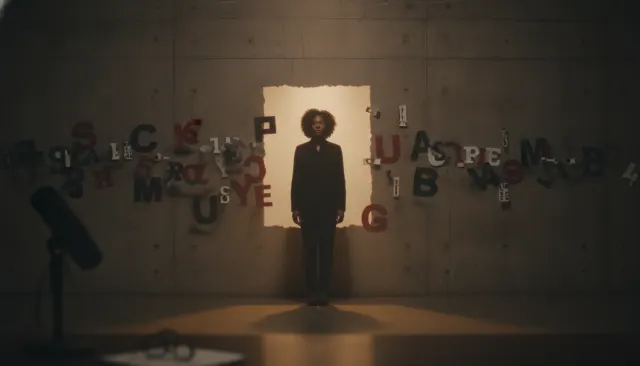
Night and Fog
Alain Resnais · 1955
Color/archival-BW intercut; foundational archival documentary grammar
Pure archival found-footage doc. 16mm reels, scratched home movies, government propaganda film, era-jumping montage with no narration.
The moves a human crew would use to get here. Cue applies them for you, and knowing their names is how you ask for a change.
Visible frame damage, splice marks, and dropout noise preserved as authenticating historical markers.
Banal or incongruous archival material placed against serious subject matter to generate critique through gap.
Slow lateral pan or push-in zoom across still photographs animates static archival images into cinematic time.
Material from multiple decades intercut without explanation, allowing the viewer to construct historical argument from juxtaposition.
Fungal damage and silver-bleed of decaying early film stock used as visual texture rather than corrected.
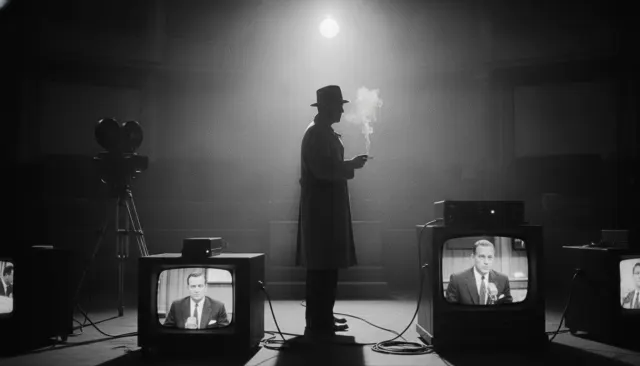
On-screen title cards, date stamps, or news chyrons provide temporal grounding within otherwise fragmentary montage.
Archival found-footage filmmaking treats pre-existing recorded material - 16mm newsreels, government propaganda films, home movies, surveillance footage, television broadcasts, industrial training films - as raw creative substance. The filmmaker is less photographer than archaeologist and editor, constructing meaning through juxtaposition, accumulation, and recontextualization of material shot by others for entirely different purposes.
The formal tradition begins with Dziga Vertov's Man with a Movie Camera (1929), which assembled footage of Soviet daily life into a reflexive meditation on cinema itself. The postwar era produced the compilation documentary as a genre: Alain Resnais's Night and Fog (1955) intercut contemporary color footage of Auschwitz with Nazi-era black-and-white archival material, establishing the ethical and aesthetic grammar of archival intervention.
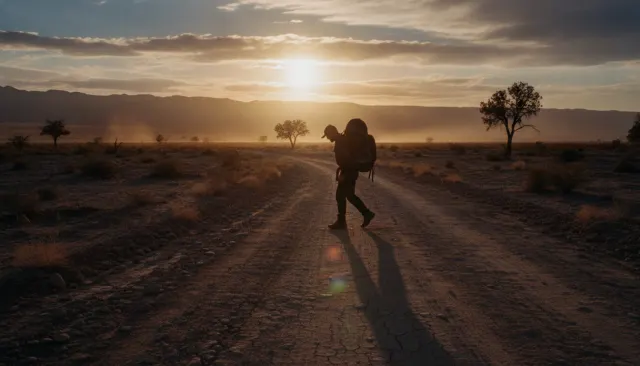
Adam Curtis is the most prolific practitioner of the modern essay-doc form. His BBC series The Power of Nightmares (2004), HyperNormalisation (2016), and Can't Get You Out of My Head (2021) weave declassified government footage, news broadcasts, advertising, and found film into polemical arguments about power, identity, and modernity. Curtis's signature move is the ironic juxtaposition: a banal advertisement cut against a geopolitical atrocity, letting the gap generate critique without narration spelling it out.
Bill Morrison occupies a different pole: his films are pure visual meditation on the physical decay of nitrate and acetate film. Decasia (2002) builds an entire aesthetic around the physical decomposition of early-20th-century film stock - fungi and silver-nitrate bleed transforming archival images into abstract expressionist paintings.
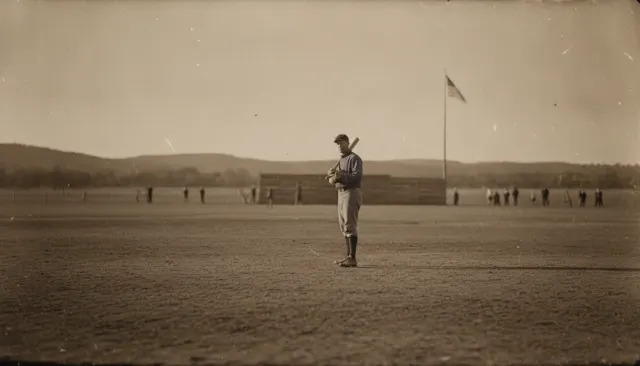
Ken Burns's approach to archival footage is probably the most widely imitated: slow pan-and-zoom across still photographs (the technique now called the 'Ken Burns effect'), recorded oral history voiceover, and period music. The Civil War (1990) and Baseball (1994) set the template for American historical documentary.
The visual language of found footage is defined by the artifacts of its source materials: visible film scratches, splice marks, color fading, dropout noise, film leader, and the frame instability of hand-held 16mm cameras. These imperfections are not corrected but embraced as authenticating signals of historical pastness.
Editing is the primary creative act. The rhythm of archival cuts can be fast and percussive (Curtis's hip-hop-influenced montage) or slow and meditative (Morrison's extended decaying dissolves). Text on screen - title cards, intertitles, date stamps - grounds the viewer temporally.
The archival aesthetic now extends beyond documentaries into essay video, YouTube explainers, political content, and brand history films. Any content wanting to signal 'this actually happened', 'this has weight and history', or 'we're making sense of the past' reaches for the visual grammar of the archival reel.
Alain Resnais · 1955
Color/archival-BW intercut; foundational archival documentary grammar
Ken Burns / PBS · 1990
Defined the pan-and-zoom still-photography documentary format
Bill Morrison · 2002
Nitrate decomposition as visual poetry; archival decay as aesthetic
Adam Curtis / BBC · 2016
Found-footage essay film; ironic montage as political critique
Adam Curtis / BBC · 2004
Archival news and propaganda intercut as geopolitical argument
Adam Curtis / BBC · 2021
Six-part found-footage essay on identity and power
Dziga Vertov · 1929
Foundational compilation-documentary and archival reflexivity
A Look is not a filter. It is a set of stored decisions the pipeline reads before it makes a single frame, so two videos in the same Look actually match.