60 Minutes
CBS News / Don Hewitt (creator) · 1968-present
Foundational American investigative broadcast documentary format
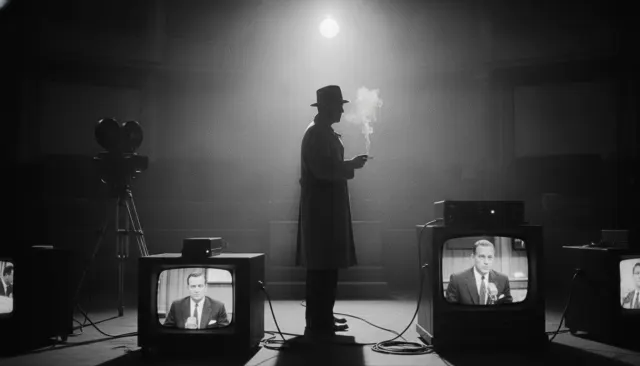
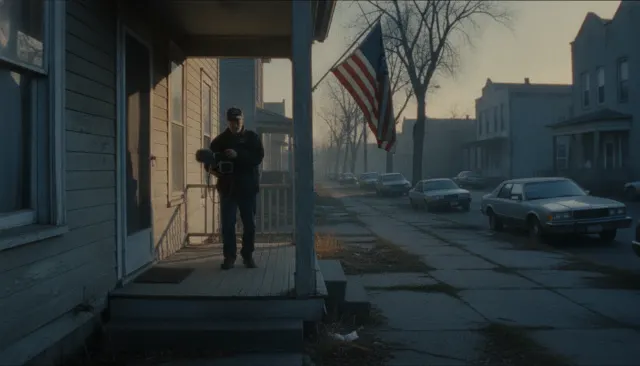
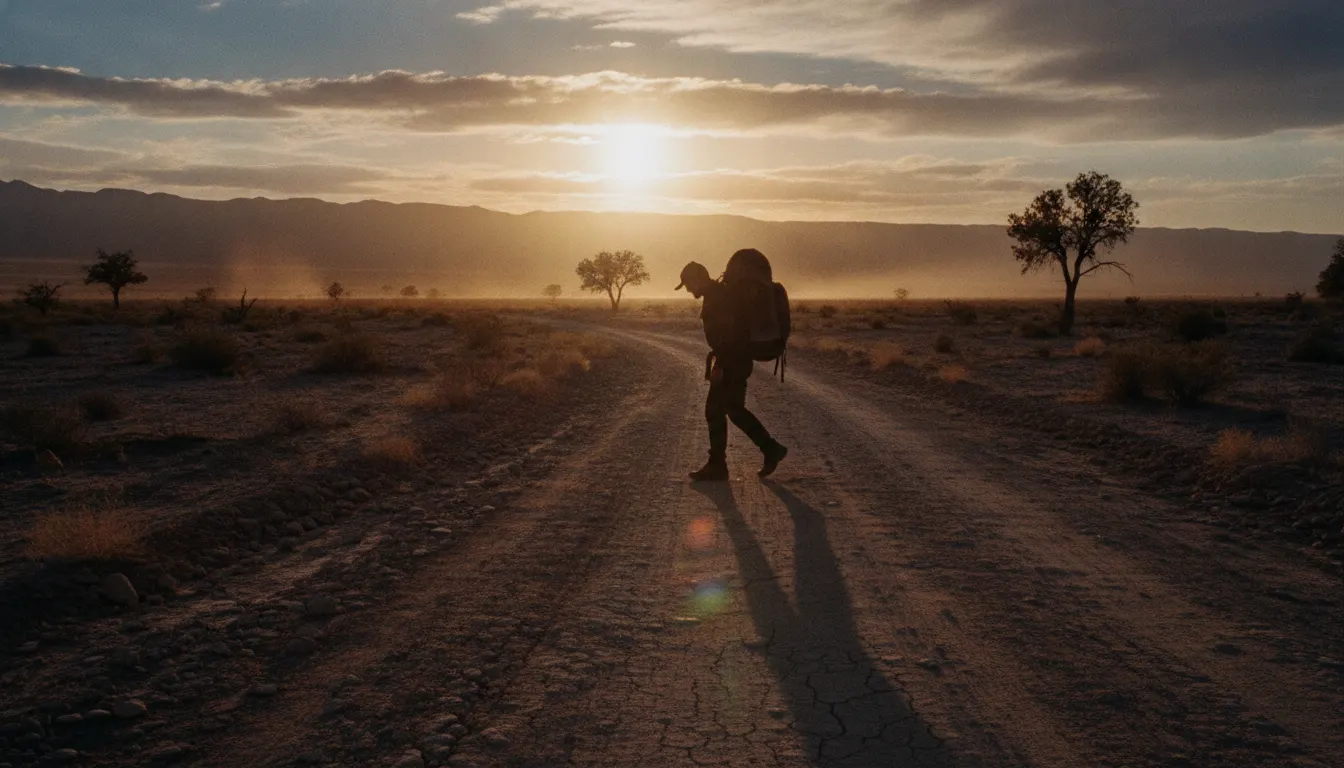
Frontline / 60-Minutes journalism. Neutral palette, low contrast, observational framing.
The moves a human crew would use to get here. Cue applies them for you, and knowing their names is how you ask for a change.
Soft off-axis key, shadow-opening fill, and subject-separating backlight calibrated for maximum legibility with minimum aesthetic statement.
Interview subjects positioned in environments contextually connected to their testimony - expert in lab, survivor at location.
Handheld camera in observational sequences steady enough to be professional, loose enough to signal presence and participation.
Color grade that opens shadows, reduces contrast, and desaturates slightly to remove aesthetic interpretation.
Mid-range zoom focal lengths chosen to avoid drawing attention to the lens, keeping the visual grammar transparent.
Interview cuts placed on content rather than visual action - subjects are given time to complete thoughts before cutting.
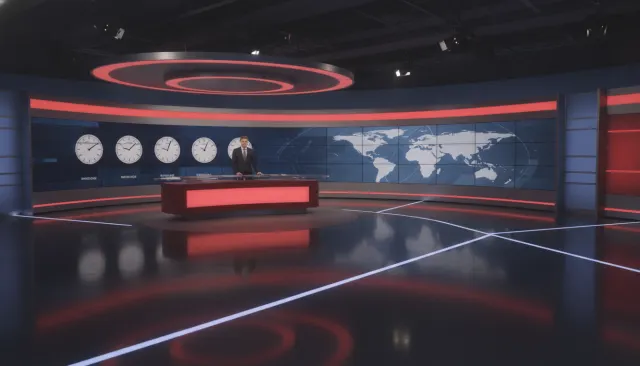
The documentary-classic aesthetic is the visual grammar of American investigative television journalism as established by 60 Minutes (CBS, launched 1968) and Frontline (PBS, launched 1983) - a vocabulary of neutral palettes, low-contrast observational framing, and the restrained authority of institutions that have nothing to prove.
Don Hewitt's 60 Minutes created the primary template for American broadcast journalism documentary. The central innovation was the correspondent-as-character: Mike Wallace, Morley Safer, Ed Bradley, Diane Sawyer, and Andy Rooney developed on-screen personas that gave the program a sense of ongoing institutional identity. The visual grammar served this: talking-head interviews against neutral environments, correspondent walk-and-talks in relevant locations, archival inserts for historical context.
The lighting standard established by 60 Minutes is deliberately neutral: a soft key from slightly off-axis, a fill that opens shadows without creating modeling, and a rim or backlight that separates the subject from the background. The goal is not to make the subject look beautiful or interesting in a cinematographic sense but to ensure that their words and expressions register without visual distraction. This self-effacing craft philosophy is itself a statement about journalistic values: the camera is a recording instrument, not an interpretive one.
Frontline extended the CBS template toward longer-form investigation. Its producers - Ofra Bikel, Lowell Bergman, Ofra Bikel, Rachel Dretzin, Raney Aronson-Rath - treated episodes as authored documentary investigations rather than assembled reports. The visual grammar reflected this: tighter correspondence between visual style and subject matter, more deliberate use of location environment, and a willingness to let observational sequences run at documentary length rather than broadcast-news brevity.
The Frontline house style uses the same neutral palette as 60 Minutes but applies it with more compositional care: interview backgrounds are chosen for their relevance to the subject (expert in relevant institutional setting; survivor at a significant location), and the editing rhythm allows the interview to develop rather than cutting every 8-12 seconds.
The classic-documentary technical standard: 16mm (pre-1990s), then Beta SP (1990s), then HD after 2005. Lenses are standard zoom ranges (17-55mm equivalent), deployed to avoid drawing attention to the lens choice. Handheld work is used for observational sequences but controlled rather than expressive - the camera is steady enough to be professional, loose enough to be present. Natural light augmented with a small interview kit (key, fill, backlight on stands) is the default setup.
Netflix and streaming-era documentary production has inherited and mutated this grammar. Making a Murderer (2015), The Keepers (2017), and Wild Wild Country (2018) all operate within the classic-documentary visual vocabulary while adapting it to the pacing conventions of binge-watching. The neutral, restrained aesthetic retains its authority signal even as its content has shifted toward entertainment and spectacle.
CBS News / Don Hewitt (creator) · 1968-present
Foundational American investigative broadcast documentary format
PBS / WGBH Boston · 1983-present
Long-form investigative documentary; auteur-producer approach
Errol Morris · 1988
Investigative documentary that overturned a wrongful conviction; neutral-aesthetic authority
Laura Ricciardi / Moira Demos / Netflix · 2015
Streaming era true-crime within classic-documentary visual grammar
Joshua Oppenheimer · 2012
Investigative documentary using perpetrator reenactment; classic observational frame
Laura Poitras · 2014
Vérité journalism documentary; observational neutrality in live investigative context
A Look is not a filter. It is a set of stored decisions the pipeline reads before it makes a single frame, so two videos in the same Look actually match.