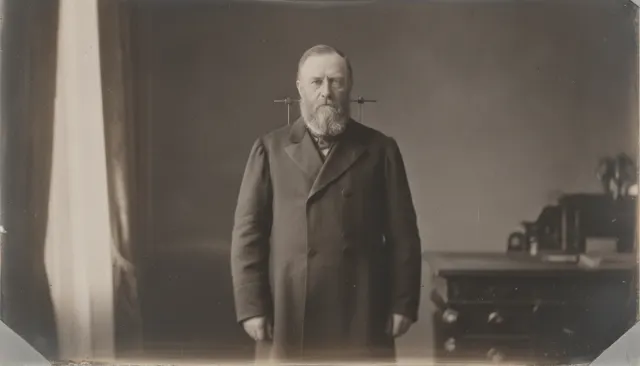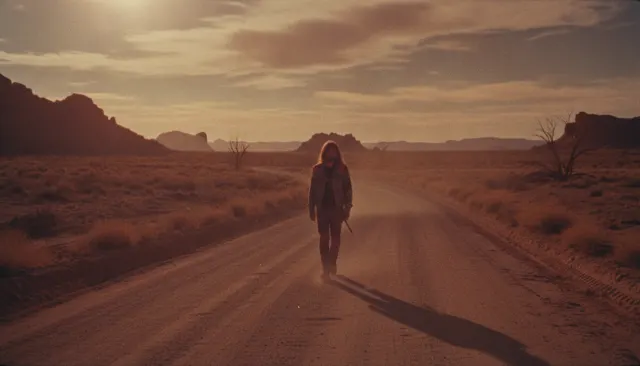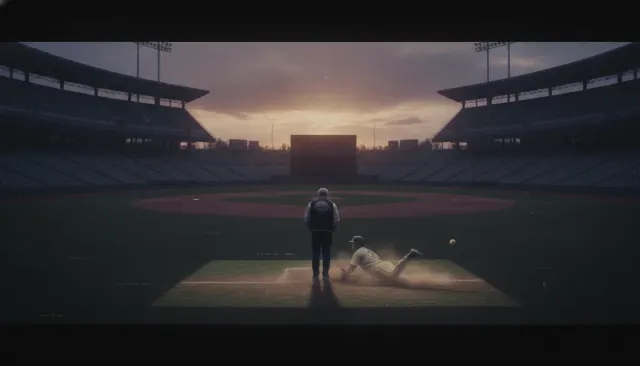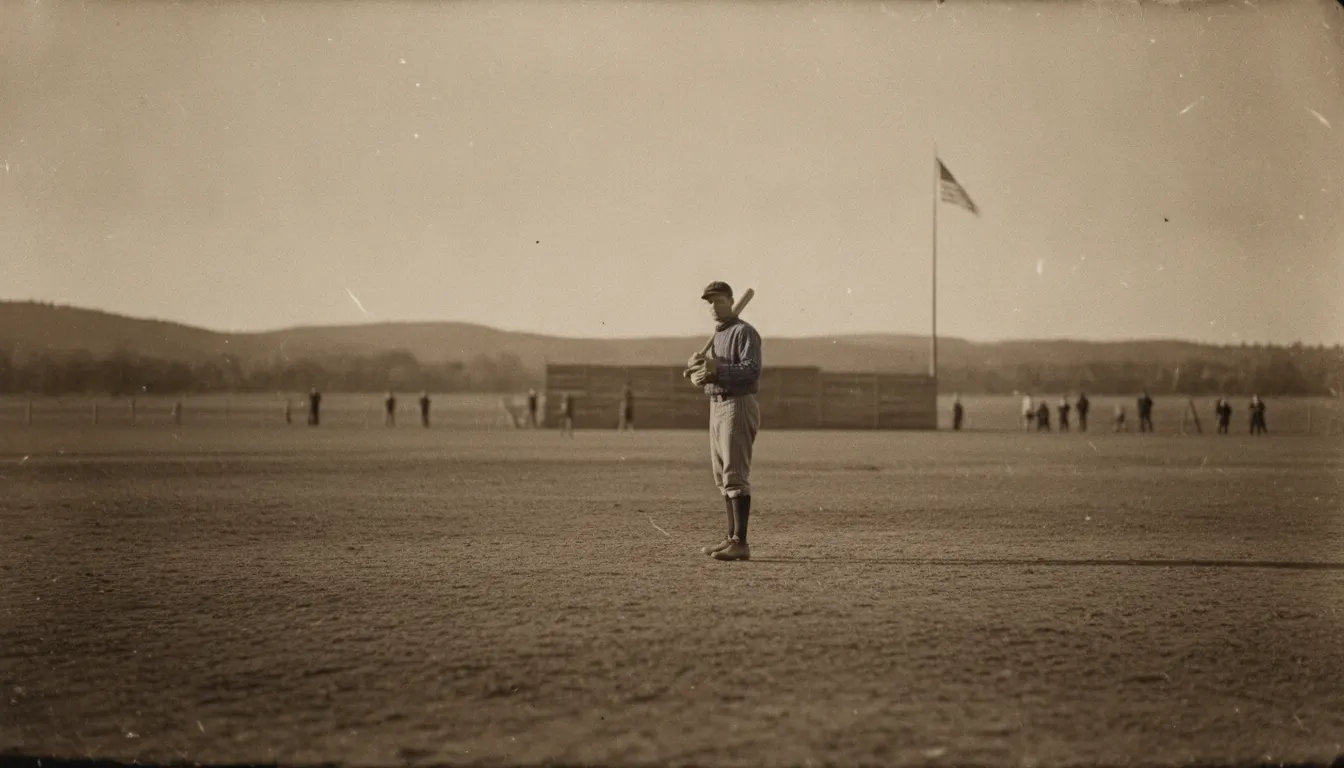
The Civil War
Ken Burns · 1990
The foundational PBS series that codified the archival pan-and-zoom technique and drew 40 million viewers
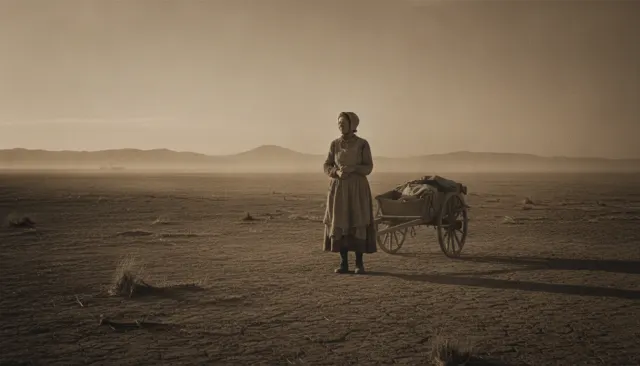
Ken Burns archival photo doc. Slow zoom across sepia stills, period-letter voiceover, Civil War and Baseball PBS pacing, contemplative.
The moves a human crew would use to get here. Cue applies them for you, and knowing their names is how you ask for a change.
A deliberate horizontal or diagonal move across a photograph, typically 10-30 seconds, creating the impression of a camera exploring a frozen moment.
Color grade that strips or warms the image to signal historical distance, typically pushing toward warm browns and tans.
Long, gentle dissolves between photographs that create a contemplative rhythm and avoid the jarring cut of modern editing.
Narration drawn from letters, diaries, or speeches read in character, anchoring the imagery to documented human experience.
Acoustic or orchestral scoring that matches the historical period depicted, often folk, classical, or jazz depending on subject.
A slow zoom out from a detail in a photograph to reveal the full image, building dramatic tension within a static frame.
Simple, typographically restrained title cards identifying subjects, dates, and locations that maintain the archival register.
The Ken Burns archival aesthetic is one of the most recognizable documentary styles in American television history. Named after filmmaker Ken Burns, who refined and popularized the technique over four decades of PBS documentary filmmaking, it transforms static photographs and historical documents into living cinema.
Burns developed his signature approach while making The Civil War (1990), a nine-episode PBS series that became a cultural phenomenon, drawing 40 million viewers and winning two Emmy Awards. The technique - slow, deliberate pans and zooms across archival photographs - predated Burns, but he systematized it into a grammar. The "Ken Burns effect" entered common parlance and was formalized as a built-in feature in Apple iMovie in 2003, cementing its place in the cultural vocabulary.
The look is defined by its restraint. Still photographs are photographed on a rostrum camera, then slowly zoomed or panned to create the illusion of movement through time. Dissolves between images create a meditative rhythm. Sepia and desaturated color grades signal historical distance. Narrator voiceover - often drawn from primary source letters or diaries - runs over period-appropriate music. David McCullough's narration on The Civil War and Baseball (1994) became inseparable from the aesthetic: a baritone authority that carries the weight of archival legitimacy.
Burns extended the technique across American subjects: Baseball (1994) ran eighteen and a half hours and used over 10,000 photographs. Jazz (2001) applied the same grammar to the history of American music. The National Parks (2009) expanded it to landscape photography. Each series deepened the association between the technique and serious, reverential historical inquiry.
The digital era democratized the look. Non-linear editors built Ken Burns sliders into every consumer product. YouTube creators adopted the style for personal histories, brand origin stories, and educational content. By the 2020s, the approach had bifurcated: prestige documentary filmmakers continued to use it with genuine archival sources, while creators applied it to any still images to invoke historical weight.
Contemporary creators use the Ken Burns archival look for brand documentaries, founder origin stories, institutional histories, and educational content. The visual grammar now carries an immediate shorthand: slow motion across a photograph signals depth, seriousness, and time. The sepia or desaturated palette invokes the past even when applied to photographs from 2010.
Ken Burns · 1990
The foundational PBS series that codified the archival pan-and-zoom technique and drew 40 million viewers
Ken Burns · 1994
Eighteen-and-a-half hour expansion of the form using over 10,000 photographs across American baseball history
Ken Burns · 2001
Nineteen-hour history of American music applying the archival aesthetic to jazz photography and recordings
Ken Burns · 2009
Twelve-hour documentary applying the form to landscape photography and the conservation movement
Ken Burns & Lynn Novick · 2017
Ten-part series combining archival stills with color footage, demonstrating the style's adaptation to color photography
Ken Burns · 2021
Four-part portrait using the archival form to examine boxing, race, and the 1960s-70s American cultural moment
Ken Burns · 1992
Single-film study of Abraham Lincoln that established Burns's approach to portraiture through daguerreotypes and photographs
A Look is not a filter. It is a set of stored decisions the pipeline reads before it makes a single frame, so two videos in the same Look actually match.