The Godfather
Francis Ford Coppola / Gordon Willis · 1972
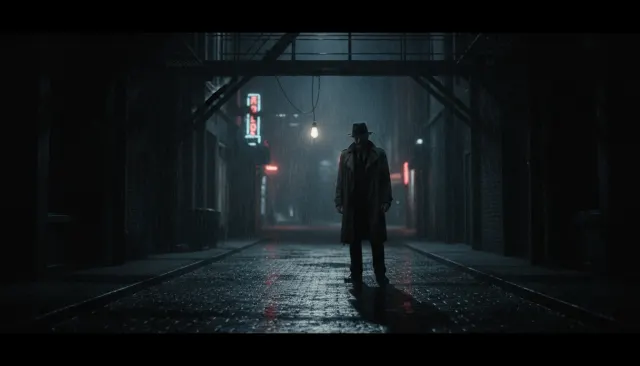
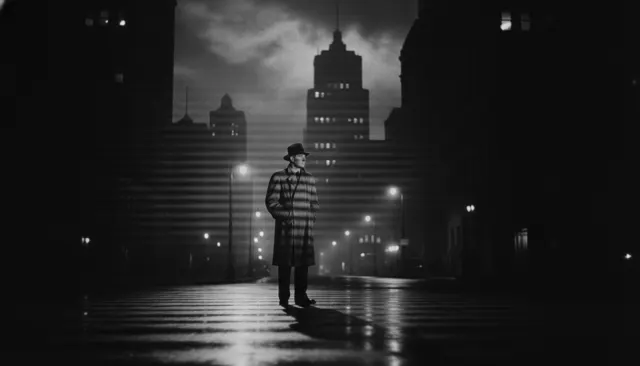
Willis's underexposed frames and top-key lighting created the darkest, most deliberately obscured cinematography of the studio era
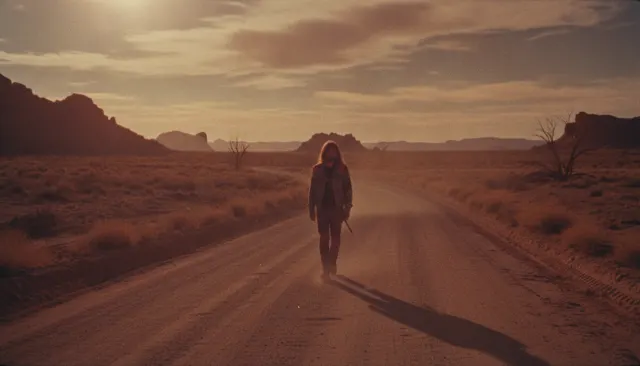
Scorsese and Coppola era. Gordon Willis underexposure, Kodak 5247 grain, brown-orange palette, naturalist performance.
The moves a human crew would use to get here. Cue applies them for you, and knowing their names is how you ask for a change.
Deliberate underexposure of interiors, particularly faces, so subjects emerge from genuine shadow rather than being lit for legibility.
Warm, fine-but-visible grain characteristic of the era's dominant stock, now achieved through LUTs and grain overlays.
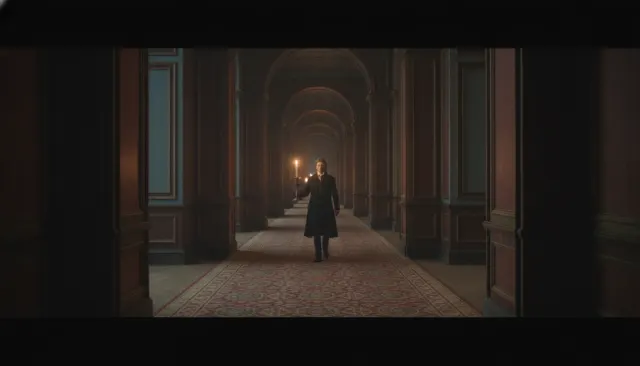
Warm, slightly desaturated color palette in interior scenes, characteristic of tungsten-balanced film stock in practical-lit spaces.
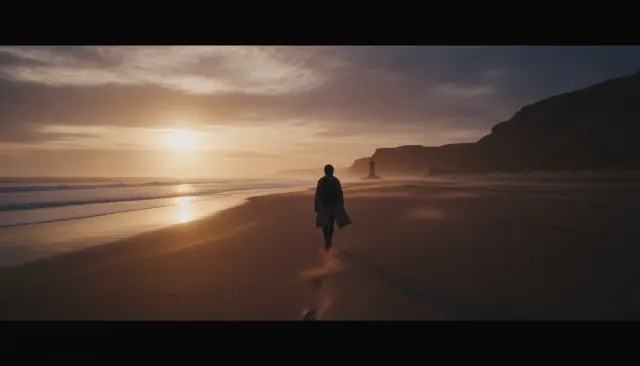
Camera movement that suggests the presence of a responsive human observer rather than a mechanically precise support.
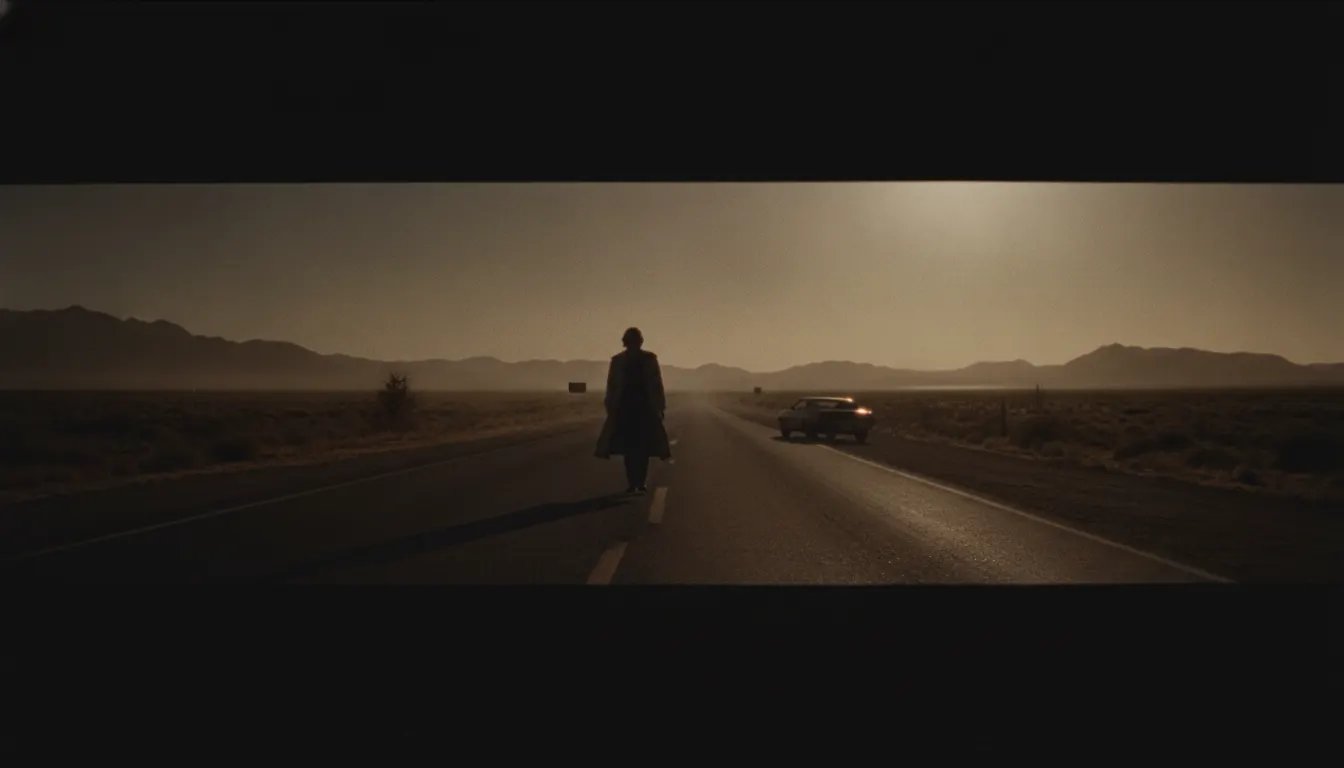
Interiors supplemented by window light with minimal additional fill, creating natural contrast between bright zones and deep shadow.
Sources positioned above and slightly in front of subjects to create dramatic shadow under the eyes and chin.
Real locations - diners, apartments, public spaces - rather than constructed sets, with their authentic wear and texture visible.
The New Hollywood era - roughly 1967 to 1980 - represents the most creatively fertile period in American studio cinema, when a generation of film school-educated directors took control of studio resources and made films that combined European art cinema aesthetics with American genre forms. The visual language of this period is among the most studied and imitated in cinema history: its grain, its earthy color palette, its willingness to underexpose, and its use of the camera as an extension of character psychology.
The camera of New Hollywood cinema was freed from the tripod. Gordon Willis - the most influential cinematographer of the era - developed a philosophy of deliberate underexposure that gave his images a dark, specific quality unlike anything in studio cinema before. His work on The Godfather (1972) and The Godfather Part II (1974) used heavy top-lighting and underexposed frames to place characters literally in shadow. Faces emerge from darkness rather than being lit for legibility; scenes in rooms lit by single practicals cast most of the frame into near-black.
Owen Roizman shot The French Connection (1971) and Network (1976) with a handheld, documentary-influenced style that brought the grain and movement of cinema verité into studio production. Conrad Hall brought painterly compositions and natural light preference to Butch Cassidy and the Sundance Kid (1969) and Fat City (1972).
New Hollywood's visual texture is inseparable from Kodak 5247 color negative film, the dominant stock of the period. Rated at EI 100 in standard conditions, it produces a characteristic warm, fine-but-visible grain, a brown-orange palette in tungsten-lit interiors, and a latitude that holds shadow detail while compressing highlights. Directors of photography pushed the stock to EI 200 or 400 for available-light work, increasing grain and reducing saturation in ways that became the decade's signature look.
New Hollywood films positioned themselves against both the Hollywood studio style and the glamorized genre film. Characters were morally ambiguous, narratives often ended without resolution, and the camera's relationship to action was uncertain rather than servicing. Chinatown (1974, Roman Polanski), Taxi Driver (1976, Martin Scorsese), Network (1976, Sidney Lumet), Dog Day Afternoon (1975, Sidney Lumet), and All the President's Men (1976, Alan J. Pakula) all use the visual grammar to express systemic cynicism and institutional failure.
New Hollywood's cinematographic innovations became the baseline for prestige American cinema. Digital colorists regularly reference the 5247 look when grading contemporary films. The brown-orange interior palette has become so associated with serious dramatic filmmaking that it functions as a genre marker independent of historical period.
Francis Ford Coppola / Gordon Willis · 1972
Willis's underexposed frames and top-key lighting created the darkest, most deliberately obscured cinematography of the studio era
William Friedkin / Owen Roizman · 1971
Handheld documentary-influenced work that brought cinema verité energy into a major studio crime film
Roman Polanski / John A. Alonzo · 1974
1930s-set neo-noir with desaturated, hard-lit cinematography expressing the era's moral exhaustion
Martin Scorsese / Michael Chapman · 1976
Night-blooming New York noir using available light and neon reflections to externalize Travis Bickle's psychological deterioration
Alan J. Pakula / Gordon Willis · 1976
Institutional thriller using the Washington Post's fluorescent-lit newsroom as a naturalistic environment of democratic crisis
Terrence Malick / Nestor Almendros · 1978
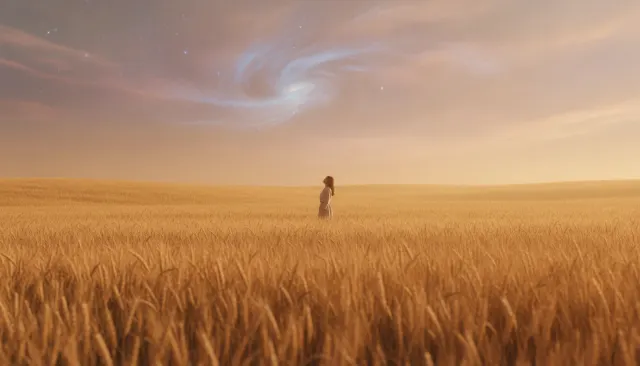
Magic-hour wheat field photography that used the New Hollywood natural light preference to near-painterly extremes
Francis Ford Coppola / Vittorio Storaro · 1979
Expressionist cinematography that pushed color symbolism into the New Hollywood naturalist framework
A Look is not a filter. It is a set of stored decisions the pipeline reads before it makes a single frame, so two videos in the same Look actually match.