Chinatown
Roman Polanski / John A. Alonzo · 1974
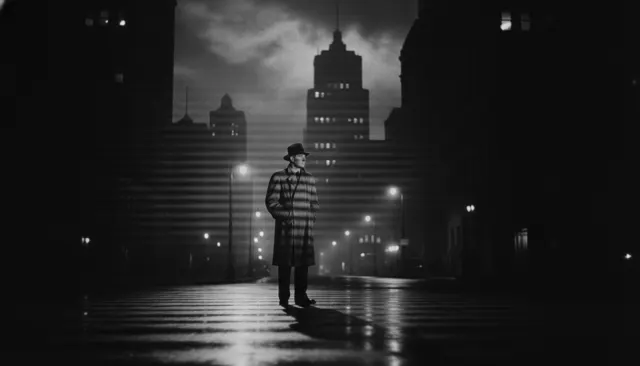
The founding neo-noir text establishing desaturated color, harsh side lighting, and the post-Watergate moral exhaustion of the genre
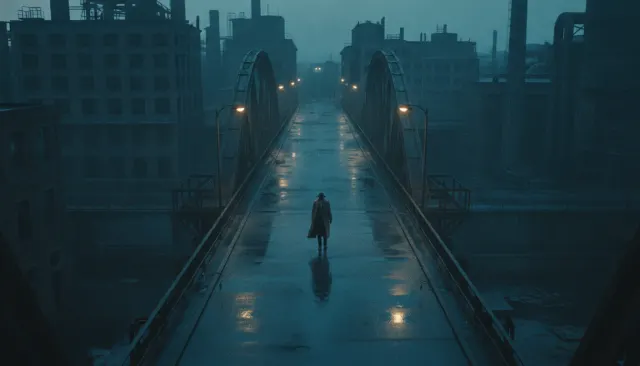
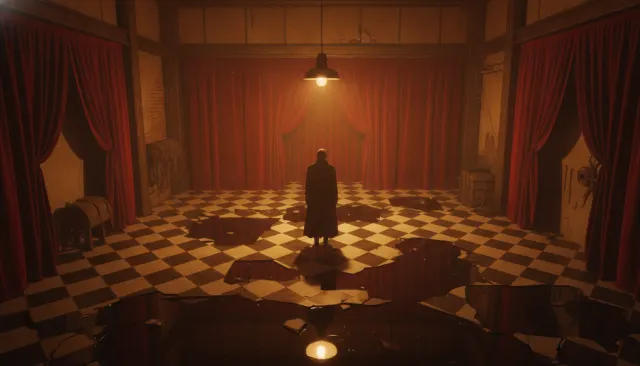
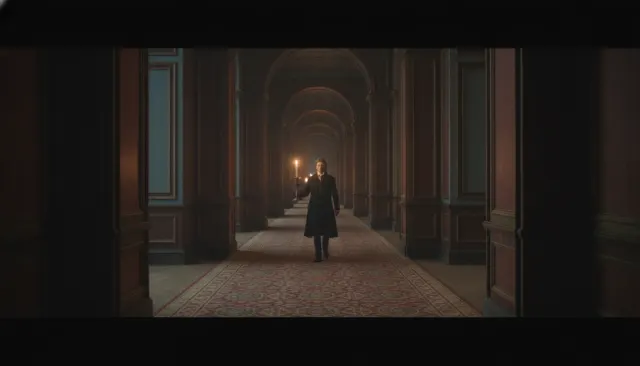
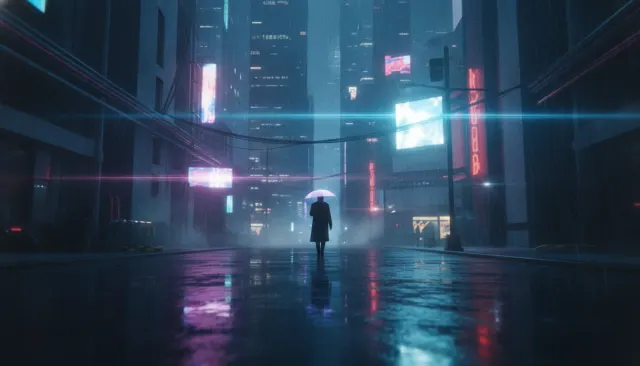
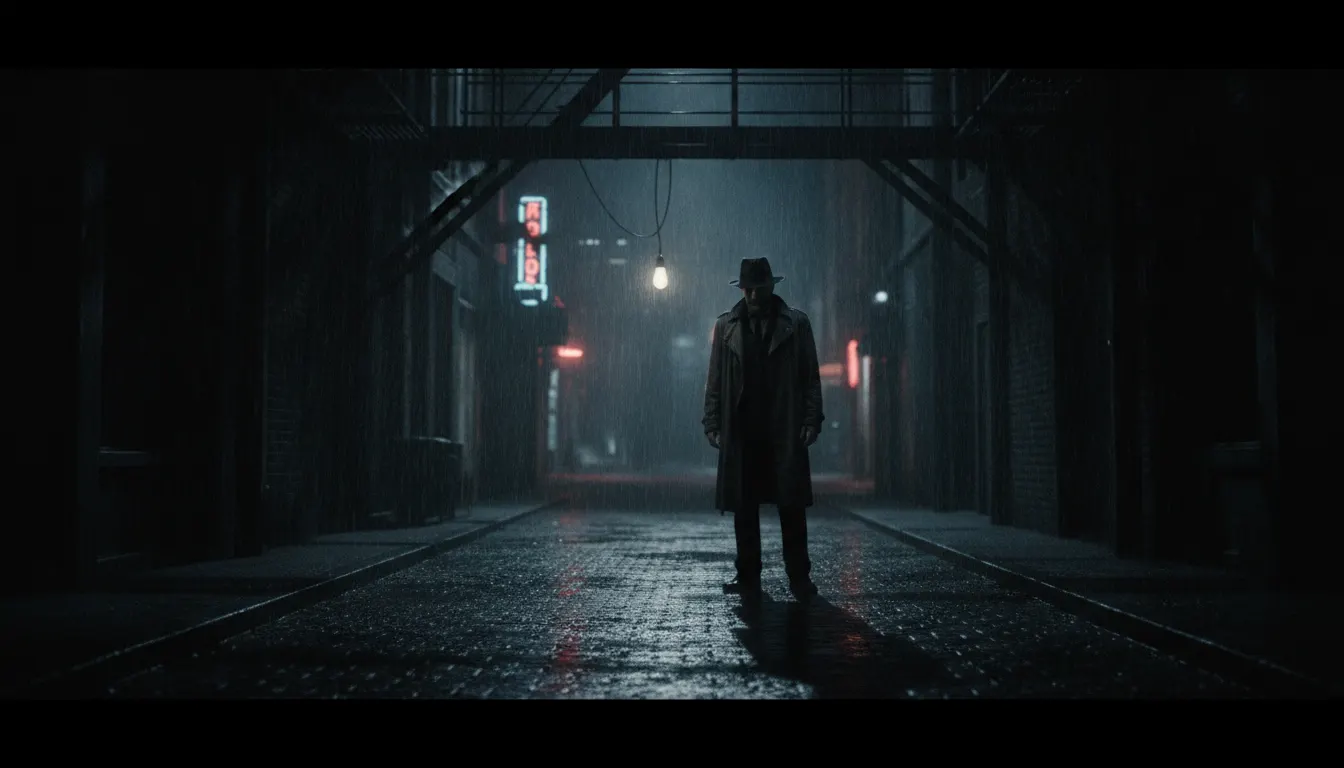
Hard chiaroscuro, side-key lighting, desaturated. Pools of dark, single accent light.
The moves a human crew would use to get here. Cue applies them for you, and knowing their names is how you ask for a change.
Strong side-key lighting that divides the face into light and shadow halves, with minimal fill, creating pools of illumination in dark environments.
Digital color grade that pushes shadow values toward blue-cyan, characteristic of the Fincher/Cronenweth neo-noir look.
All on-set lighting motivated by a single practical source - a lamp, a window, a screen - even when additional lights are used to augment it.
Color grade that compresses the dynamic range and removes saturation, particularly from mid-tones and skintones.
Wet streets, glass, and metal surfaces that multiply and fragment light sources, adding visual complexity to dark exterior locations.
Backgrounds that recede into darkness with minimal environmental detail visible, isolating subjects in pools of light.
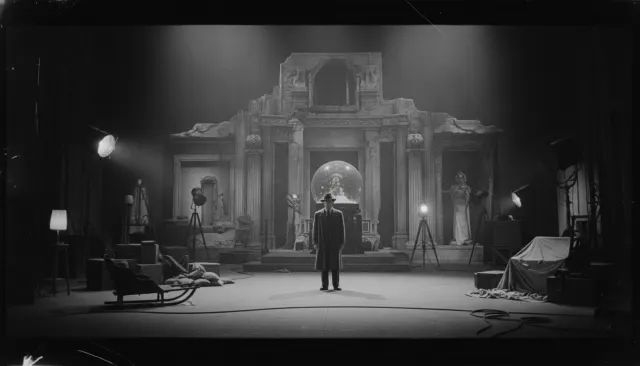
Light filtered through venetian blinds, grates, or windows to cast geometric shadow patterns on subjects, referencing classic noir visual grammar.
Neo-noir is the dominant visual vocabulary of contemporary prestige thriller cinema, descending from the American film noir of the 1940s and 1950s and synthesized in the 1970s-1990s through a wave of revisionist crime films that updated the genre's visual grammar for color photography and modern story concerns. Today, neo-noir cinematography - hard chiaroscuro, desaturated color, side-key lighting, and pools of isolation darkness - is the default visual register for psychological thriller across cinema, television, and streaming.
Classic film noir was a product of technical limitation and German Expressionist influence. The studios that produced 1940s noirs - RKO, Warner Bros., Columbia - used high-contrast black and white photography to mask low budgets and create atmosphere. Cinematographers including John Alton (T-Men, 1947; He Walked by Night, 1948) developed a vocabulary of extreme shadow, single-source side lighting, and geometric compositions that expressed the moral ambiguity of the narratives.
Neo-noir emerged as filmmakers began working in color and needed to translate the noir grammar. Roman Polanski's Chinatown (1974), shot by John A. Alonzo, is the founding neo-noir text: desaturated 1930s-period color, harsh side lighting on Jack Nicholson's weathered face, and a narrative that updated the Chandler detective formula for post-Watergate cynicism. Gordon Willis's work on the Godfather films created a parallel grammar of extreme underexposure and key-lit isolation.
David Fincher's cinematographers - Jeff Cronenweth on Fight Club (1999), The Social Network (2010), Gone Girl (2014), and others - established the digital neo-noir standard: heavy cyan push in shadows, compressed highlights, faces lit from a single motivated source, environments that recede to near-black. The grade became the defining color science of streaming prestige drama.
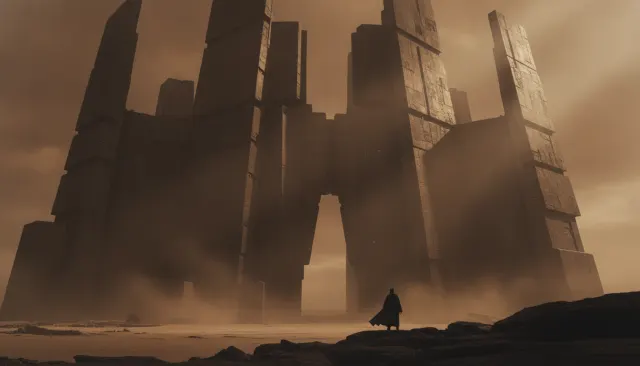
Denis Villeneuve and cinematographer Roger Deakins developed a further refinement in Prisoners (2013) and Sicario (2015): golden-hour naturalism that exists in tension with dark interiors, so the contrast between the warm outdoor world and the shadowed indoor world becomes itself a dramatic argument. Villeneuve's collaboration with Greig Fraser on Dune (2021) extended neo-noir's monolithic qualities into science fiction.
Neo-noir became the default visual register of prestige television drama. True Detective (2014, Carey Joji Fukunaga), Mindhunter (2017-2019, David Fincher), Ozark (2017-2022), and Sharp Objects (2018, Jean-Marc Vallee) all deployed variations of the neo-noir grammar for streaming audiences who had absorbed the visual vocabulary through decades of cinema.
Roman Polanski / John A. Alonzo · 1974
The founding neo-noir text establishing desaturated color, harsh side lighting, and the post-Watergate moral exhaustion of the genre
Ridley Scott / Jordan Cronenweth · 1982
Science fiction neo-noir with rain-slicked streets, neon in darkness, and the visual grammar of urban dystopia
David Fincher / Darius Khondji · 1995
Desaturated, rain-soaked procedural thriller that established Fincher's neo-noir grammar and influenced a decade of crime cinema
David Fincher / Jeff Cronenweth · 1999
Digital neo-noir with heavy cyan grades and the single-source hard light that became Fincher's signature cinematographic approach
Denis Villeneuve / Roger Deakins · 2013
Pennsylvania winter thriller using the contrast between golden exteriors and dark interiors as a moral and spatial argument
Cary Joji Fukunaga · 2014
Louisiana bayou neo-noir that brought the prestige cinema visual grammar to television and established the streaming thriller look
David Fincher / Erik Messerschmidt · 2017
FBI procedural using 1970s institutional interiors and the Fincher dark grade to extend neo-noir into psychological characterization
A Look is not a filter. It is a set of stored decisions the pipeline reads before it makes a single frame, so two videos in the same Look actually match.