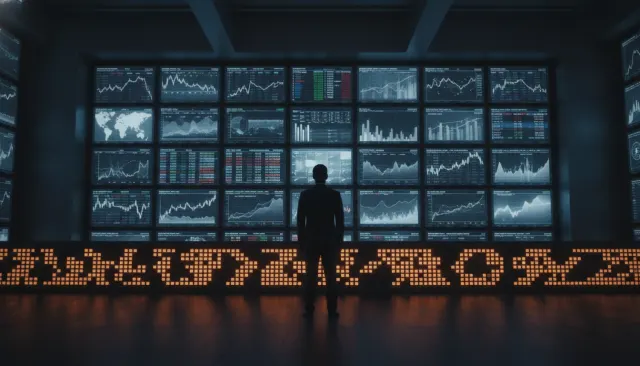
Blade Runner
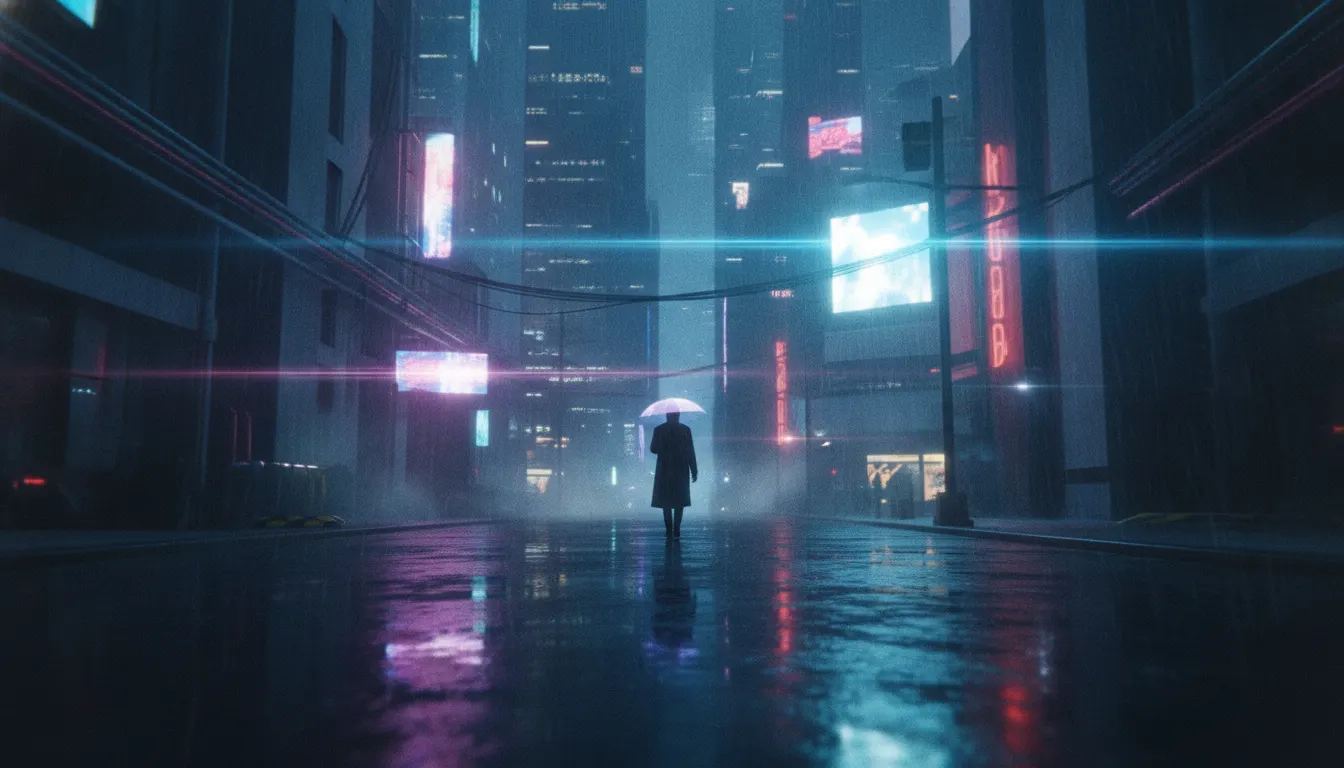
Ridley Scott / Jordan Cronenweth (DP) · 1982
Foundational cyber-noir; wet streets, neon key, and anamorphic flare
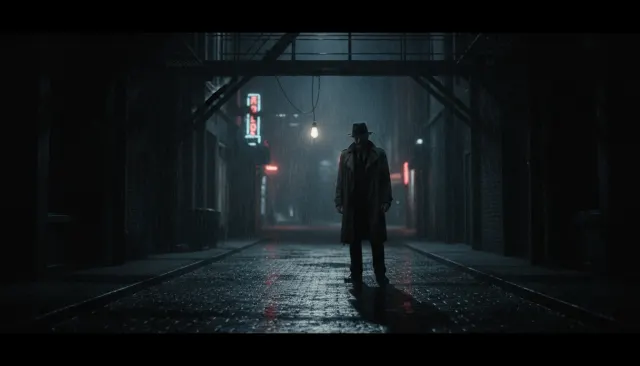
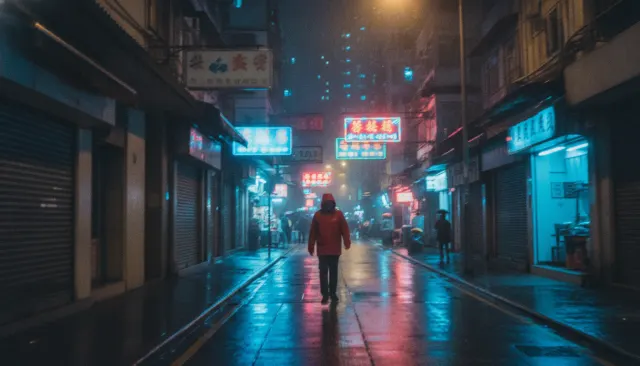
Neon-soaked anamorphic cyberpunk. Wet streets, magenta/teal split, deep crushed blacks.
The moves a human crew would use to get here. Cue applies them for you, and knowing their names is how you ask for a change.
Neon practical sources produce characteristic horizontal blue or multi-color flares through anamorphic glass, painting light across the frame.
Faces and subjects lit from one side in warm magenta and from the other in cool teal/cyan, splitting the face across the genre's color opposition.
Rain-soaked or wet-hosed pavement reflects and multiplies neon sources, creating light below as well as above.
Continuous atmospheric haze makes light beams physically visible, turning air into a light-rendering medium.
Shadow areas graded to near-pure black, eliminating detail and creating graphic high-contrast pools of darkness around light sources.
Actual or replicated neon signage used as primary key source, creating motivated color and visual environment simultaneously.
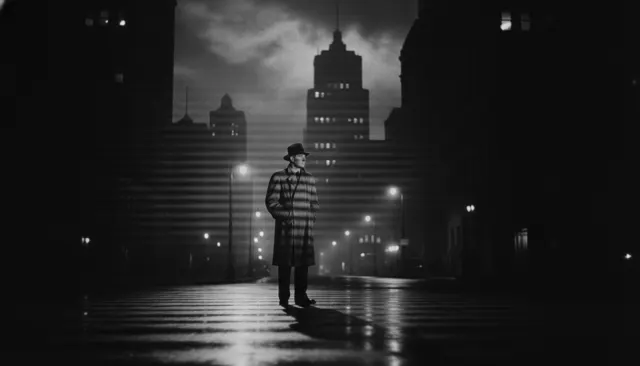
Cyber-noir is the visual language that emerges at the intersection of 1940s film noir and science-fiction urbanism - a genre aesthetic defined by rain-slicked nocturnal streets, magenta/teal split-lit faces, deep crushed blacks, and anamorphic lens flare that transforms neon signage into abstract light painting.
Ridley Scott's Blade Runner (1982), photographed by Jordan Cronenweth, is the foundational document of the aesthetic. Cronenweth worked with Scott and production designer Lawrence G. Paull to create a 2019 Los Angeles that synthesized Raymond Chandler's noir city with Fritz Lang's Metropolis (1927) and Philip K. Dick's dystopian urbanism. The visual strategy was wet streets (allowing light to reflect and multiply neon sources), practical Chinese-character signage backlit as key sources, and fog machines running continuously to give the light visible texture.
Cronenweth used anamorphic lenses throughout - specifically Panavision C- and E-Series primes - which produced the characteristic horizontal elliptical bokeh and the horizontal lens flares from practical neon sources that became the genre's most recognizable signature. The image is always underexposed overall, with pockets of saturated color in warm amber and cool cyan/green sources.
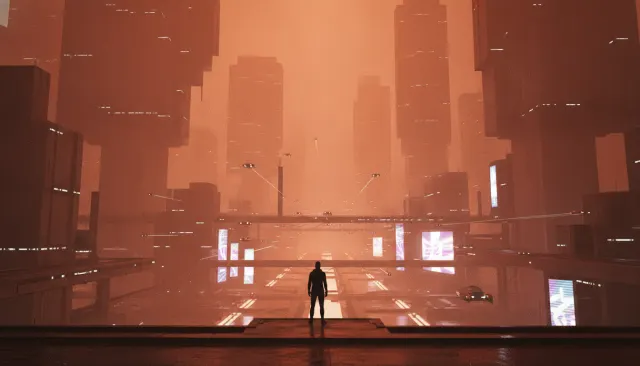
Denis Villeneuve's Blade Runner 2049 (2017), photographed by Roger Deakins, extended the aesthetic into a colder, more desolate register. Where Cronenweth's 2019 LA was dense and humid, Deakins's 2049 is expansive and depopulated. The color design is more systematic: the Las Vegas 'memory sequence' is rendered in amber-orange particulate light; the Wallace Corporation headquarters in cold industrial whites; Ryan Gosling's apartment in gray-blue coastal fog.
Deakins chose anamorphic lenses (Panavision Sphero 65 in some sequences) and used LED panels to replicate and control the neon-source quality that Cronenweth had achieved with practical sources. Blade Runner 2049 won Deakins his first Academy Award for Cinematography.
The aesthetic has a parallel visual tradition in anime: Mamoru Oshii's Ghost in the Shell (1995) brought cyber-noir to animation with Hiroyuki Okiura's art direction translating the Blade Runner city grammar into a future Hong Kong. The film's rain-sequences, underwater consciousness scenes, and the Ghost protagonist's urban traversal through neon-dense night city became the visual template for cyberpunk animation and subsequently for The Wachowskis' The Matrix (1999).
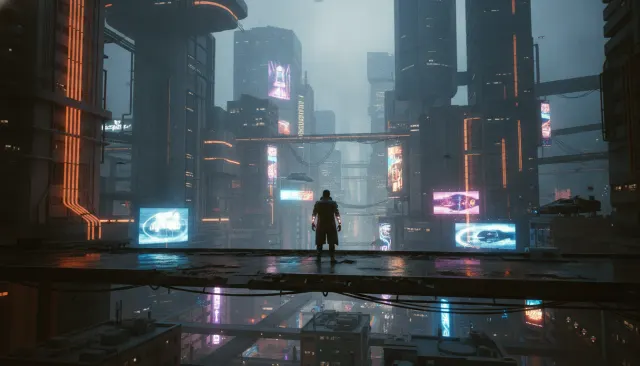
The cyber-noir grammar now appears in music video (The Weeknd's Blinding Lights, 2019), fashion photography, luxury automotive advertising, and game cinematics (Cyberpunk 2077, 2020). Any content wanting to signal technological sophistication, moral ambiguity, and nocturnal danger reaches for this language.
Ridley Scott / Jordan Cronenweth (DP) · 1982
Foundational cyber-noir; wet streets, neon key, and anamorphic flare
Denis Villeneuve / Roger Deakins (DP) · 2017
Academy Award Cinematography; cold systematic color-zone extension
Mamoru Oshii / Hiroyuki Okiura (Art Direction) · 1995
Anime cyber-noir; future Hong Kong rain-and-neon template
The Wachowskis / Bill Pope (DP) · 1999
Green-tinted code aesthetic and cyber-noir urban action grammar
CD Projekt Red · 2020
Night City; most comprehensive contemporary cyber-noir environmental design
Alex Proyas / Dariusz Wolski (DP) · 1998
Eternal-night city in maximum-noir expressionist architecture
Panos Cosmatos / Benjamin Loeb (DP) · 2018
Psychedelic cyber-noir color pushed to hallucinatory saturation
A Look is not a filter. It is a set of stored decisions the pipeline reads before it makes a single frame, so two videos in the same Look actually match.