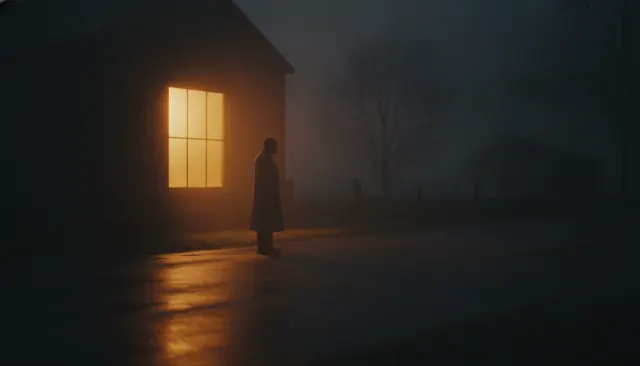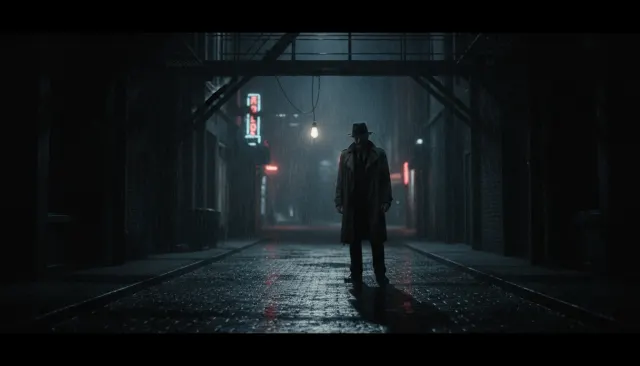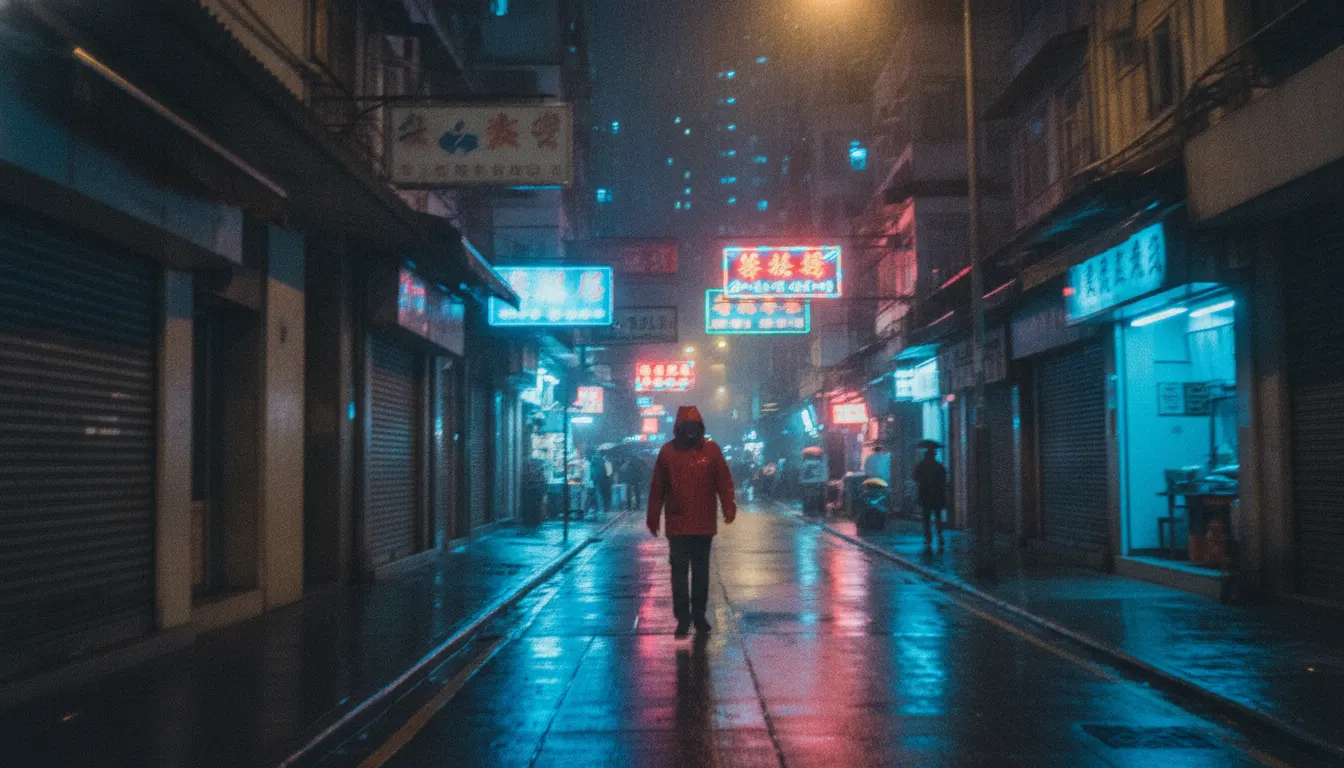
Chungking Express
Wong Kar-wai / Christopher Doyle (DP) · 1994
Defining push-processed neon handheld aesthetic; Maggie Cheung red-blur sequence
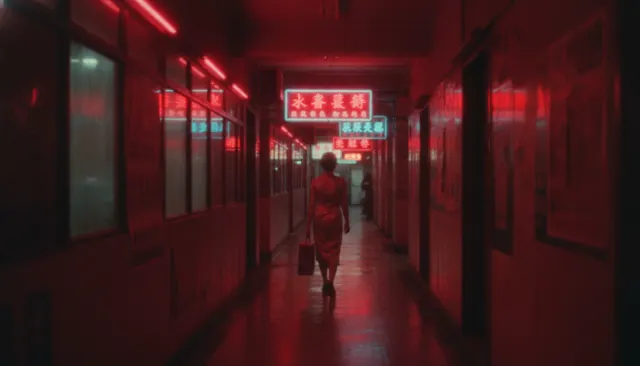
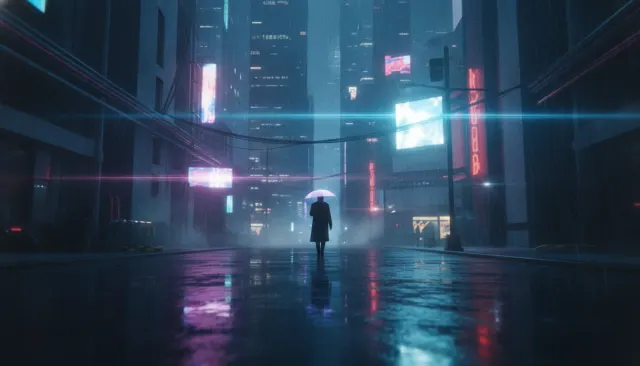
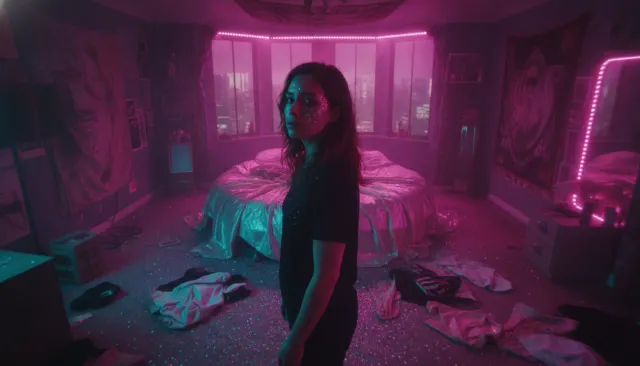
Christopher Doyle wide-handheld intimacy. Chungking Express smear and saturation, Hong Kong density, lived-in proximity, push-processed neon.
The moves a human crew would use to get here. Cue applies them for you, and knowing their names is how you ask for a change.
Film stock pushed one-to-two stops and developed to compensate, amplifying grain and making neon colors bleed into darkness.
21-28mm handheld camera operated within arm's reach of subjects, creating proximity that feels inadvertent.
Shooting at 6fps then printing every frame twice creates a motion stutter that abstracts movement into emotional sensation.
Hong Kong urban environment's red, orange, and magenta neon signs used as motivated key sources within a deep-shadow background.
Selected moments slowed to extreme rates - staircase encounters, dress movements - creating suspended emotional time.
Months of location shooting in actual apartments, restaurants, and streets producing environmental authenticity that designed sets cannot replicate.
Christopher Doyle is the Australian-born, Hong Kong-based cinematographer whose collaboration with director Wong Kar-wai - across Chungking Express (1994), Fallen Angels (1995), Happy Together (1997), In the Mood for Love (2000), and 2046 (2004) - created the most imitated cinematographic style of the 1990s and one of the defining visual systems of world cinema.
Doyle and Wong Kar-wai developed their aesthetic in close collaboration under conditions of deliberate formal freedom. Wong's production method involves minimal pre-scripted dialogue and extended location shooting periods - In the Mood for Love was shot over approximately 15 months of intermittent location work. This process shaped Doyle's approach: rather than pre-planned lighting setups, he worked with available neon and practical light in Hong Kong's nighttime urban environment, responding to the location's inherent visual qualities.
The signature visual moves emerged from this method: the camera is almost always handheld, operated by Doyle himself with a small body-held unit. Lenses are wide (21-28mm), keeping the environment present. The camera stays close to subjects - within arm's reach - creating an intimacy that feels inadvertent rather than designed.
For Chungking Express, Doyle and Wong used push-processed Kodak 5248 and 7298 stocks, exposing them one to two stops under and developing to compensate. This produced grain amplification, boosted contrast, and a particular quality of neon saturation where warm reds and magentas bleed into the dark street environment. The film's hallmark - the blur/stutter of Maggie Cheung's red dress in the supermarket, achieved by shooting at 6fps and printing every frame twice - is the most recognizable single visual moment from Doyle's career.
In the Mood for Love used a different strategy: slower, more composed handheld work, and a color palette of deep warm reds, greens, and golds that references the mid-century Chinese cheongsam dress and the social confinement of 1962 Hong Kong. The slow-motion staircase scenes (Tony Leung and Maggie Cheung passing each other, again and again, to the string melody of Shigeru Umebayashi) are among the most analyzed cinematographic sequences in contemporary film scholarship.
Doyle has worked outside Hong Kong throughout his career: Hero (Yimou Zhang, 2002) used his approach for maximalist period color design, each act color-coded in a different hue. The Limits of Control (Jim Jarmusch, 2009) applied his looser, location-responsive method to European locations. He shot Stanley Kubrick's visual consultant Christiane Kubrick's introduction segments for the Eyes Wide Shut press materials.
The Doyle/Wong visual grammar has been cited as a direct influence by Wes Anderson, Sofia Coppola, Gus Van Sant, Autumn Durald Arkapaw, and virtually every cinematographer working in emotional-intimacy film since 2000.
Wong Kar-wai / Christopher Doyle (DP) · 1994
Defining push-processed neon handheld aesthetic; Maggie Cheung red-blur sequence
Wong Kar-wai / Christopher Doyle (DP) · 2000
Time magazine's best film of 2000; slow-motion staircase in cheongsam palette
Wong Kar-wai / Christopher Doyle (DP) · 1995
Extreme wide-angle night-city hitman-and-longing companion to Chungking Express
Wong Kar-wai / Christopher Doyle (DP) · 1997
Buenos Aires gay romance in Wong's wandering-relationship grammar
Wong Kar-wai / Christopher Doyle, Lai Yiu-fai, Kwan Pun-leung (DPs) · 2004
Period-sci-fi dual timeline; extended visual meditation on In the Mood for Love
Yimou Zhang / Christopher Doyle (DP) · 2002
Act-by-act color-coded wuxia epic; Doyle's approach at period-spectacle scale
A Look is not a filter. It is a set of stored decisions the pipeline reads before it makes a single frame, so two videos in the same Look actually match.