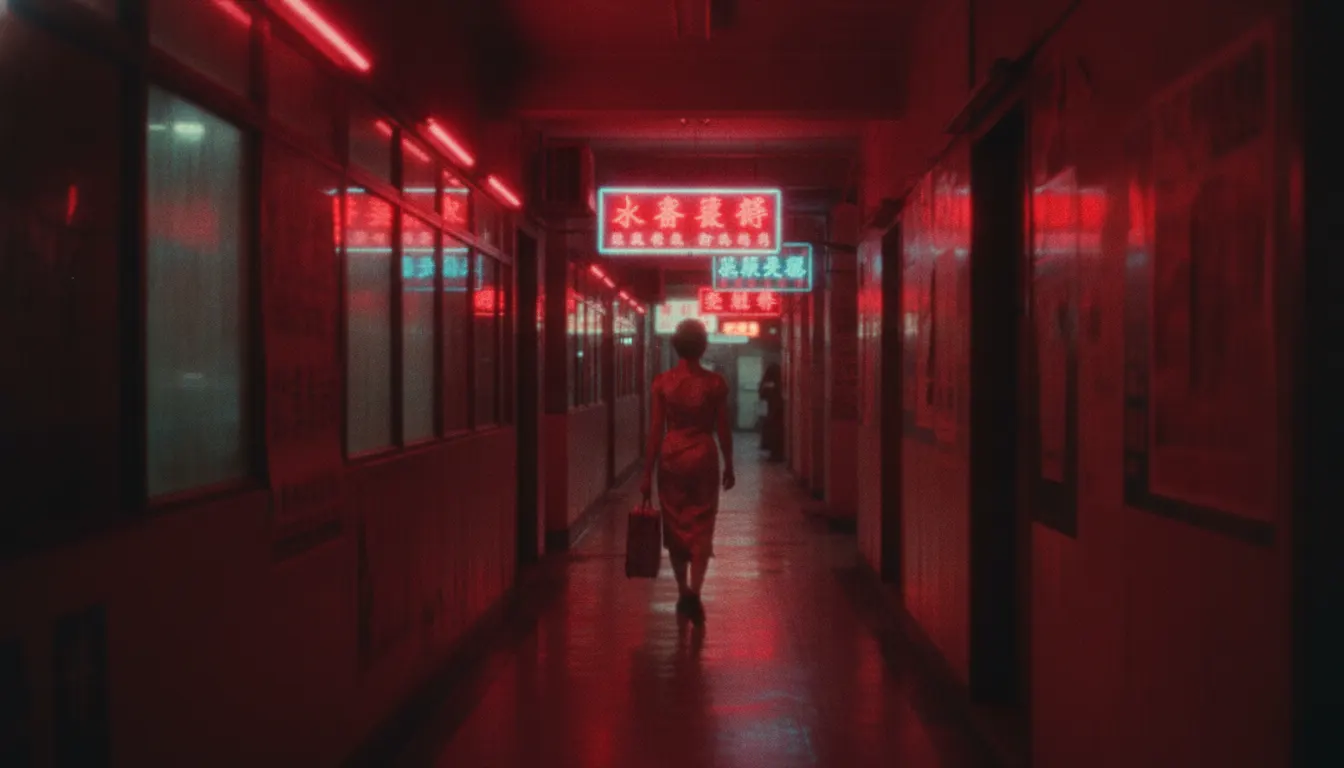
Chungking Express
Wong Kar-wai · 1994
Christopher Doyle; step-printing and Chungking Mansions neon first fully developed; Faye Wong at the California Dreamin counter
Wong Kar-wai romantic step-printed slowmo. In the Mood for Love saturated reds, Hong Kong neon corridor, Christopher Doyle handheld intimacy.
The moves a human crew would use to get here. Cue applies them for you, and knowing their names is how you ask for a change.
Frame duplication in optical printing or digital simulation that creates staggered, stuttering slow motion that feels distinctly different from smooth digital slow-mo.
High-ISO film or digital simulation that pushes neon reds, greens, and golds to maximum saturation while surrounding areas fall into grain.
Wide-angle handheld camera held extremely close to subjects within tight corridor spaces, creating spatial urgency and physical proximity.
Shadow areas allowed to compress to heavy grain without full black crush, retaining color information in darkness.
Protagonist costuming as a primary structural color element - Maggie Cheung's cheongsam variations in In the Mood for Love as a visual score.
Faces caught in movement through corridors, stairs, or streets - not held for contemplative close-ups but glimpsed in motion, as memory offers its subjects.
Wong Kar-wai is Hong Kong cinema's most visually distinctive auteur, and his collaboration with cinematographer Christopher Doyle across Chungking Express (1994), Fallen Angels (1995), Happy Together (1997), and In the Mood for Love (2000) produced one of cinema's most imitated visual grammars: saturated primary colors within atmospheric grain, step-printed motion that stretches and compresses time, handheld intimacy within tightly framed corridors and interiors, and a suffused melancholy that makes every frame feel like a memory of a moment already lost.
Christopher Doyle (known by his Cantonese nickname Du Kefeng) is Australian-born but developed his sensibility entirely within Hong Kong cinema. His approach to Wong's films was shaped by production conditions - both men made films quickly, improvisationally, often without complete scripts, in locations that demanded creative response. The neon-drenched corridors of Chungking Mansions, the intimate apartments of mid-level Hong Kong, and the 1960s Shanghai-in-Hong Kong of In the Mood for Love all became visual environments that Doyle responded to rather than controlled.
Doyle worked primarily with available or minimally supplemented light, pushing high-speed film stocks (often Kodak Vision or its predecessors at 800-3200 ISO equivalents) to capture Hong Kong neon without additional lighting. This produced the characteristic grain and color push that defines the look: shadows are crushed to grain but hold color information; neon sources bloom without specular control; skin tones are pushed warm and golden against cool green and red neon environments.
Step-printing - duplicating individual frames in the optical printing process to slow motion without the smooth interpolation of digital slow-motion - is the Wong Kar-wai look's most distinctive technical property. In Chungking Express and Fallen Angels, characters move through crowded Hong Kong environments at step-printed 12-16fps while surrounding crowds continue at normal speed, creating a dissociative effect where protagonists appear to slip between time registers. In In the Mood for Love, step-printed slow motion during Mrs. Chan's (Maggie Cheung) staircase scenes transforms mundane daily movement into exquisite sorrow.
In the Mood for Love, shot by Christopher Doyle and Mark Lee Ping-bin, is the peak expression of the Wong Kar-wai look. The film's visual grammar - Maggie Cheung in a different cheongsam in almost every scene, the green-wallpapered corridor of the neighbors' building shot in extreme slow motion, the handheld intimacy of faces caught in passing - has been analyzed more than almost any film of its era. The color palette commits to deep red, forest green, and gold as structural choices: every frame is a painting organized by these three hues.
2046 (2004), shot by Christopher Doyle, Lai Yiu-fai, and Kwan Pun-leung, extended the In the Mood for Love grammar into a near-future science fiction space while maintaining the same color saturation and step-printing vocabulary. Wong Kar-wai's The Grandmaster (2013), shot by Philippe Le Sourd, brought the grammar to martial arts cinema with exceptional results.
Wong Kar-wai · 1994
Christopher Doyle; step-printing and Chungking Mansions neon first fully developed; Faye Wong at the California Dreamin counter
Wong Kar-wai · 1995
Doyle's most extreme fish-eye and grain work; Kowloon late-night at its most expressionistically intense
Wong Kar-wai · 1997
Buenos Aires in the Hong Kong color grammar; Doyle shooting a same-sex love story with the full saturated step-print vocabulary
Wong Kar-wai · 2000
Christopher Doyle and Mark Lee Ping-bin; peak expression of the grammar - cheongsam as color score, corridor slow motion as sorrow
Wong Kar-wai · 2004
Grammar extended to near-future science fiction while maintaining saturated grain and step-printing from its predecessor
Wong Kar-wai · 2007
Darius Khondji bringing the Wong grammar to American locations - warm New York diner neon and saturated road trip color
Wong Kar-wai · 2013
Philippe Le Sourd applying the step-print and color saturation grammar to martial arts choreography
A Look is not a filter. It is a set of stored decisions the pipeline reads before it makes a single frame, so two videos in the same Look actually match.
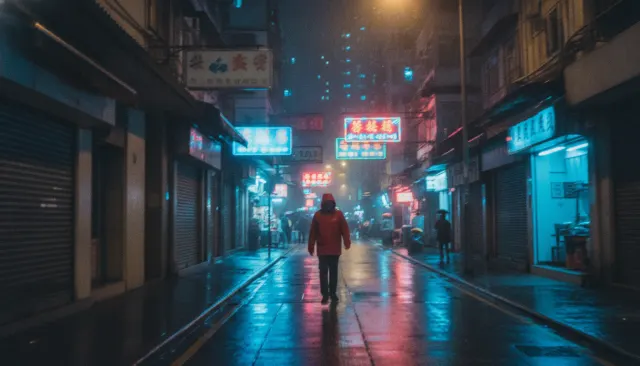 CinematographerChristopher Doyle Handheld
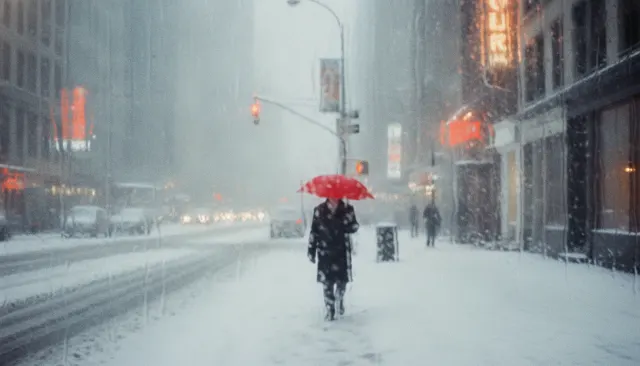 Street PhotographySaul Leiter Color Painterly
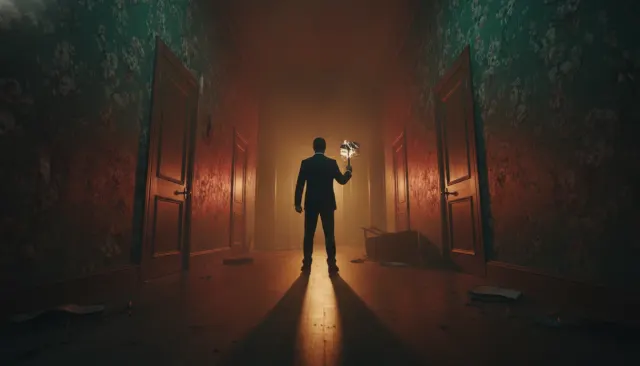 Director Aesthetic ModernPark Chan-wook Revenge Saturated
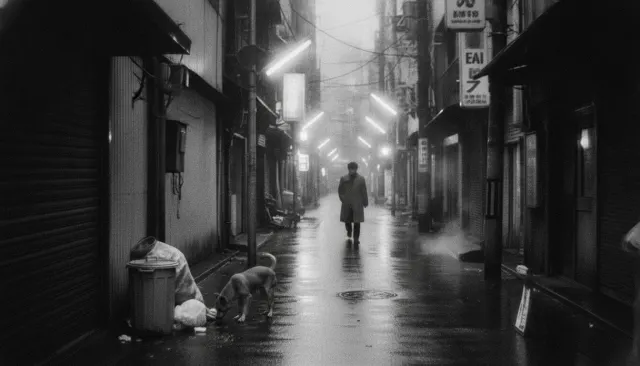 Street PhotographyDaido Moriyama BW Grain Japan
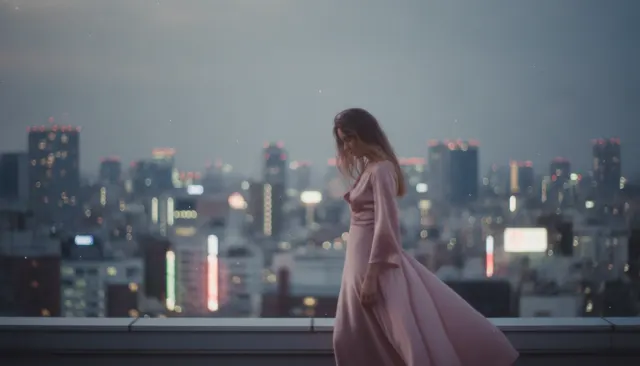 Director Aesthetic ModernSofia Coppola Pastel Melancholy
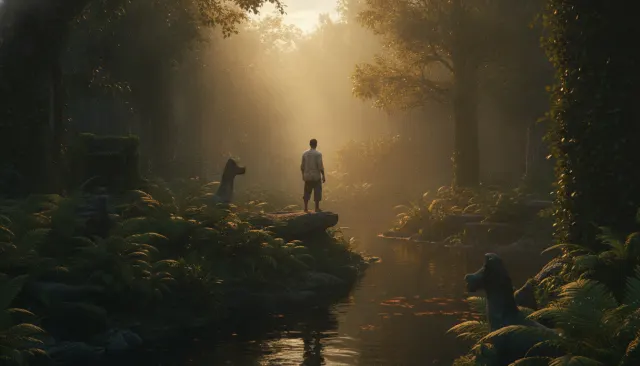 Director Aesthetic ModernApichatpong Weerasethakul Tropical Meditative