Uncle Boonmee Who Can Recall His Past Lives
Apichatpong Weerasethakul · 2010
Palme d'Or; a dying man's ghost-populated farewell in Northeast Thai jungle
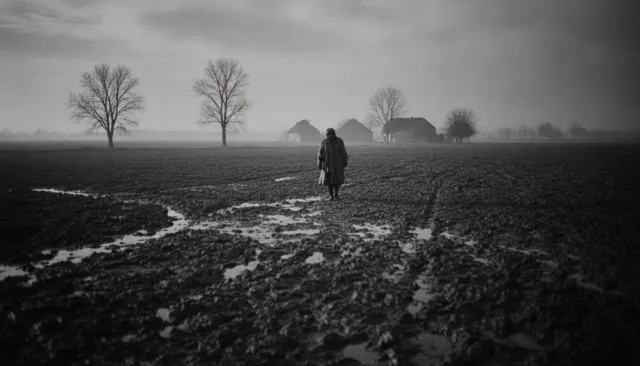
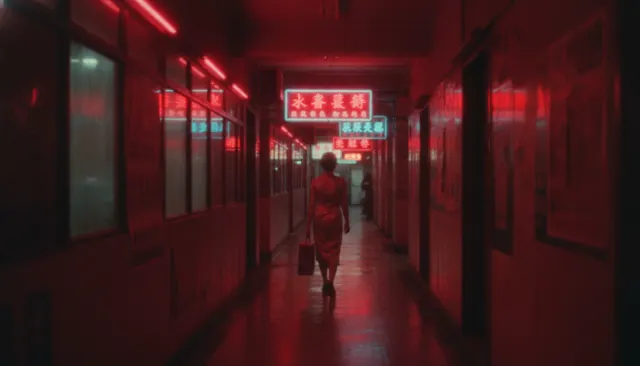
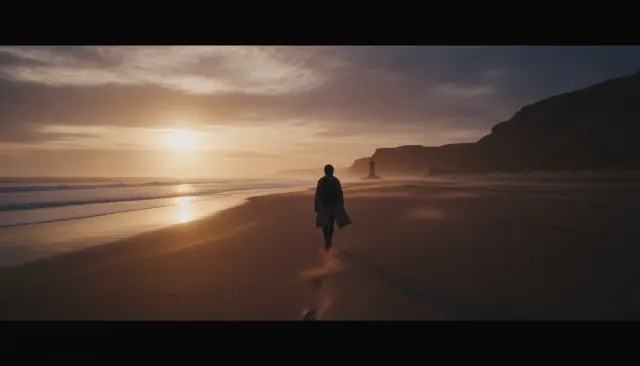
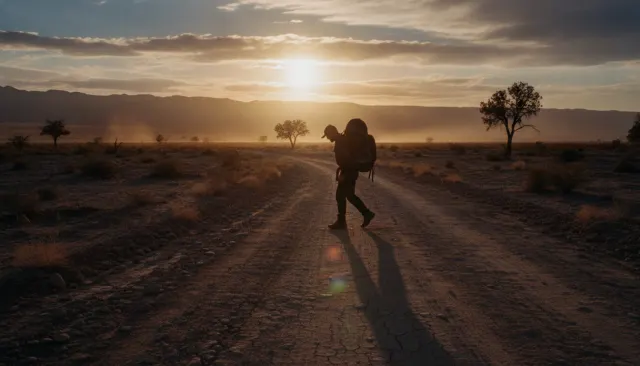
Apichatpong Weerasethakul Thai meditative cinema. Uncle Boonmee jungle dusk, Memoria sonic stillness, locked-off long take, tropical animism.
The moves a human crew would use to get here. Cue applies them for you, and knowing their names is how you ask for a change.
Shots lasting minutes rather than seconds allow landscape and ambient sound to become the primary narrative agents.
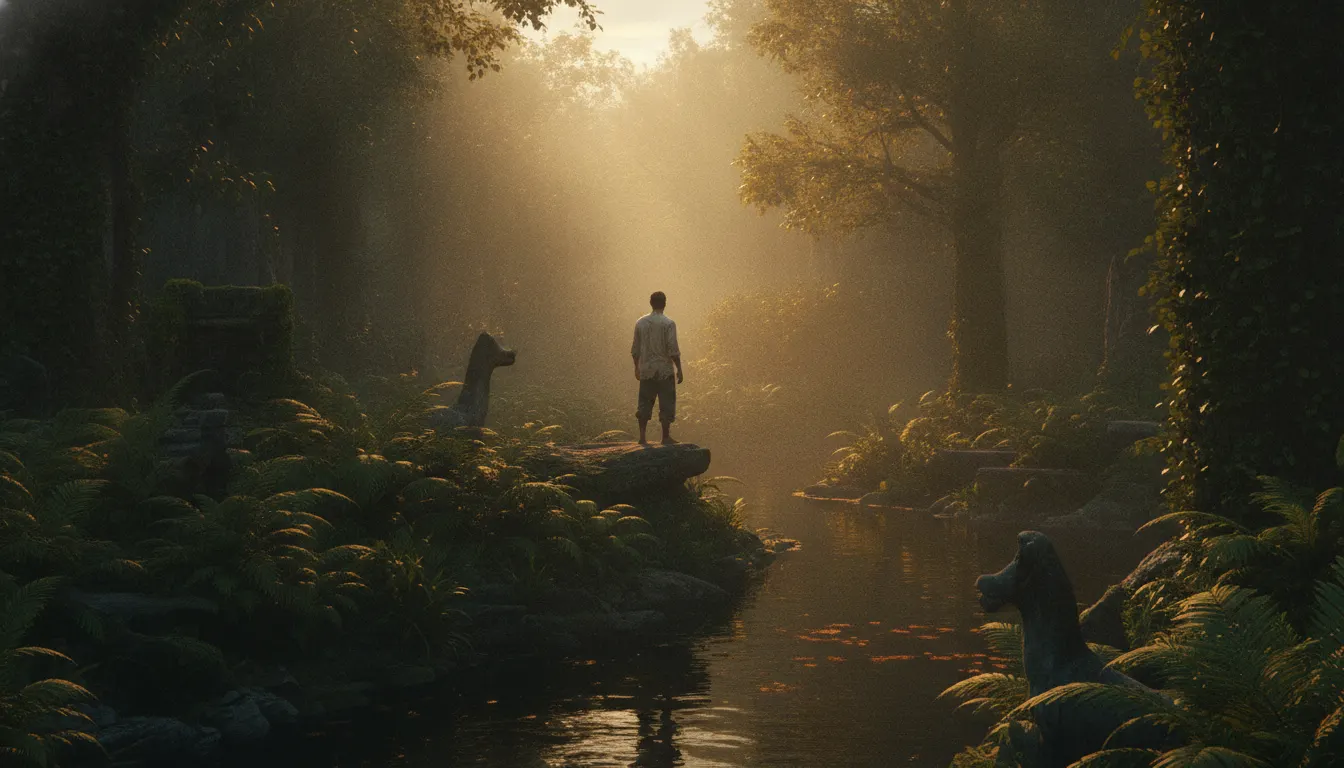
Dusk through jungle canopy, fluorescent hospital corridors, and single-lamp rural interiors; no artificial supplementation.
Dense foliage compositions in which human figures are partial, obscured, or absorbed by the environment.
Films or sequences split into two halves that rhyme thematically while diverging formally toward the oneiric.
Insect chorus, distant water, and wind treated as structurally equal to spoken dialogue.
Ghosts and supernatural elements depicted in the same visual register as ordinary events - no genre lighting or musical cue.
Apichatpong Weerasethakul, known internationally as 'Joe', is the Thai director whose patient, animist cinema constitutes one of the most distinctive visual systems in 21st-century filmmaking. His work synthesizes Thai Buddhist cosmology, Northeast Thai folklore, and a rigorous structural formalism to produce films that operate more like expanded meditation than conventional narrative.
Born in Khon Kaen, Northeast Thailand in 1970, Apichatpong trained in architecture in Thailand before studying filmmaking at the Art Institute of Chicago. His feature debut Mysterious Object at Noon (2000) established the documentary-fiction hybridity that would define his career. The Palme d'Or-winning Uncle Boonmee Who Can Recall His Past Lives (2010) is his most celebrated work: a dying man in a jungle house receives visitations from his dead wife and a ghost-eyed son who has become a forest spirit, all shot with the unhurried patience of someone recording rather than dramatizing.
Blissfully Yours (2002), Tropical Malady (2004), and Syndromes and a Century (2006) each deploy his signature structural device: a film split in two halves that rhyme thematically but diverge formally, often with the second half becoming more oneiric or formally abstract.
Memoria (2021), his first non-Thai-set production (filmed in Colombia with Tilda Swinton), brought his meditative approach to international mainstream attention and became notable as a film officially released only as a traveling roadshow theatrical event - no streaming, no home video.
Apichatpong's cinematographic approach is defined by extreme duration. Shots last far beyond conventional comfort, allowing the landscape - jungle, river, roadside, hospital corridor - to become a presence rather than a backdrop. Light is always available and motivated: dusk filtering through jungle canopy, fluorescent hospital corridors at night, a single lamp in a rural interior.
Camerawork is predominantly locked-off or minimally handheld with almost imperceptible drift. The jungle is a recurring protagonist: dense, humid, ambiguously liminal between the human and spirit worlds. Sound design (handled by the director himself or in close collaboration) treats ambient sound - insect chorus, distant engine, wind through bamboo - as structurally equal to dialogue.
Apichatpong's aesthetics are inseparable from Theravada Buddhist cosmology and Thai spirit beliefs. Ghosts are not monsters but relatives returning; the forest is not threatening but continuous with domestic space. This produces a visual grammar in which the uncanny is gentle, the supernatural mundane, and death simply another state of proximity.
His influence on international slow cinema is extensive: directors including Carlos Reygadas, Lav Diaz, and Lisandro Alonso share formal affinities. For videomakers, invoking this aesthetic signals contemplative depth, non-Western spiritual perspective, and a rejection of narrative urgency.
Apichatpong Weerasethakul · 2010
Palme d'Or; a dying man's ghost-populated farewell in Northeast Thai jungle
Apichatpong Weerasethakul · 2004
Romance split into realist and mythological-jungle halves
Apichatpong Weerasethakul · 2006
Hospital memory film in two formal registers
Apichatpong Weerasethakul · 2002
Cannes Un Certain Regard; Thai-Burmese border naturalism
Apichatpong Weerasethakul / Tilda Swinton · 2021
Colombian-set sonic meditation; roadshow-only theatrical release
Apichatpong Weerasethakul · 2015
Sleeping soldiers and spirit possession in fluorescent-lit Thai hospital
A Look is not a filter. It is a set of stored decisions the pipeline reads before it makes a single frame, so two videos in the same Look actually match.