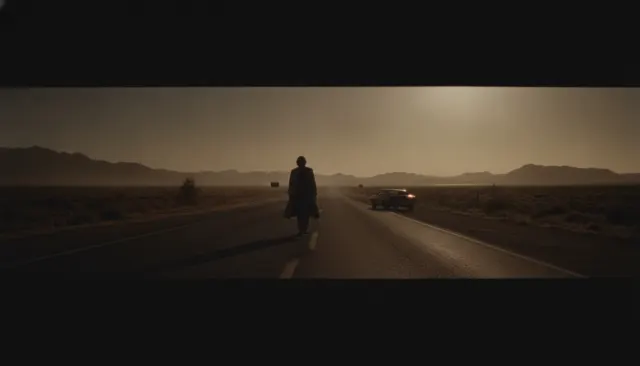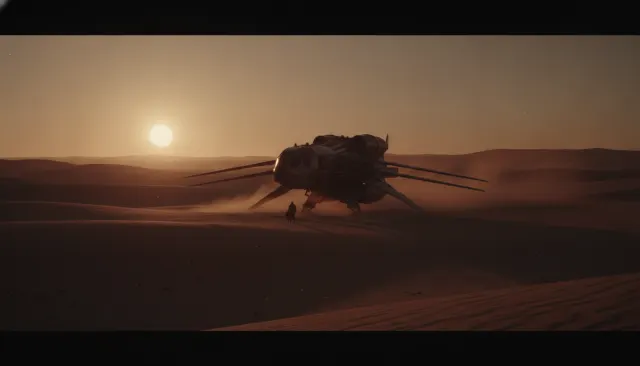
Children of Men
Emmanuel Lubezki / Alfonso Cuaron · 2006
Long-take battle sequences combining naturalistic light with the illusion of continuous time, setting a new standard for immersive cinema
Emmanuel Lubezki Chivo ultrawide natural-light. Birdman and Revenant single-take, only-magic-hour mandate, handheld floating proximity.
The moves a human crew would use to get here. Cue applies them for you, and knowing their names is how you ask for a change.
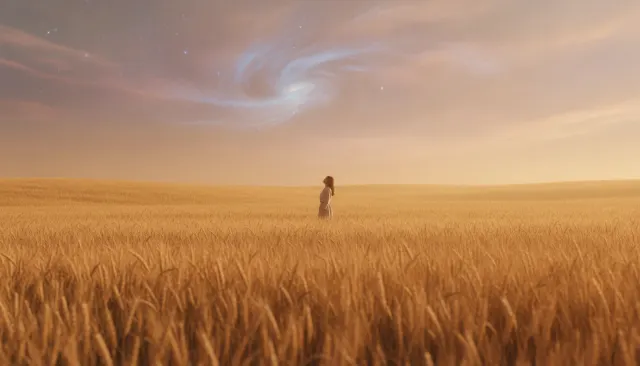
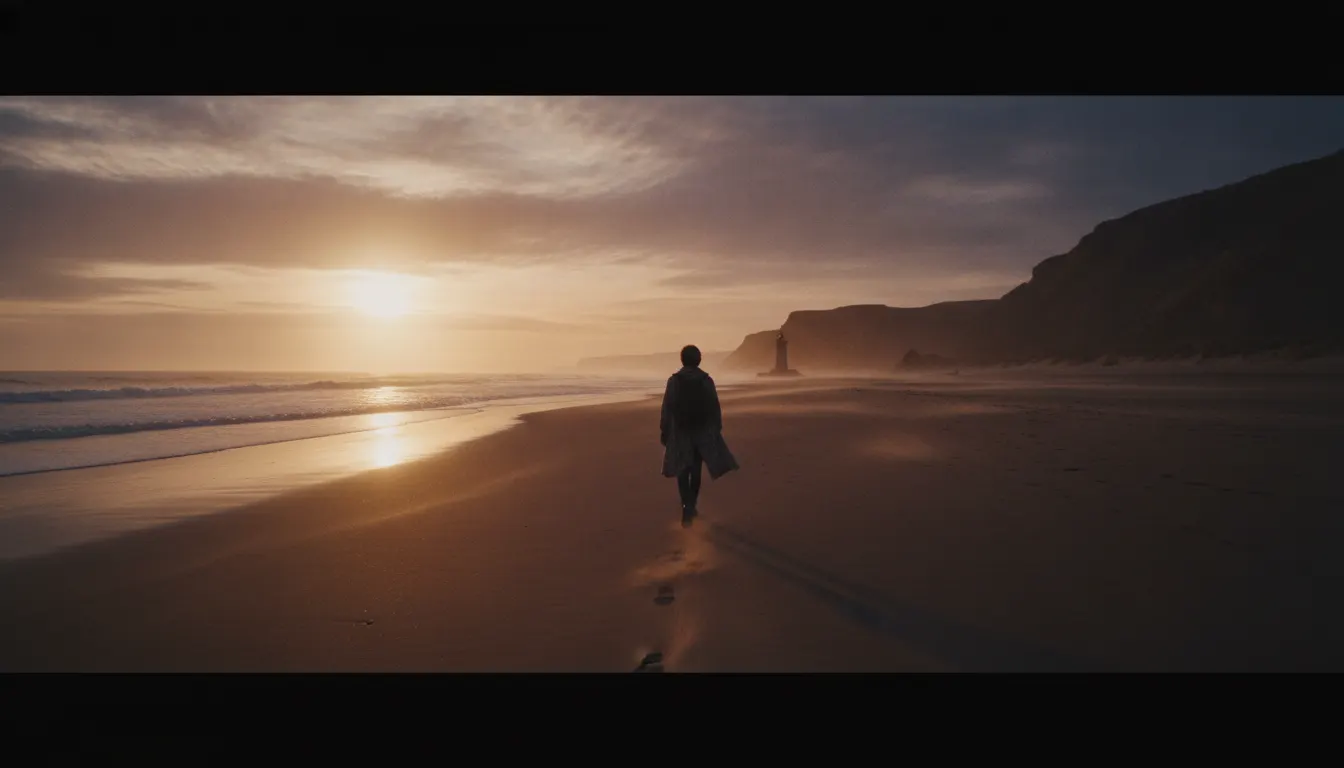
Scheduling production to shoot outdoor scenes in the golden and blue hours at dawn and dusk, when natural light is warm and directional.
Lenses in the 12-21mm range combined with close physical proximity to subjects, creating spherical perspective and viewer immersion.
Extended single takes lasting several minutes, requiring actors to sustain performance while the camera moves freely through space.
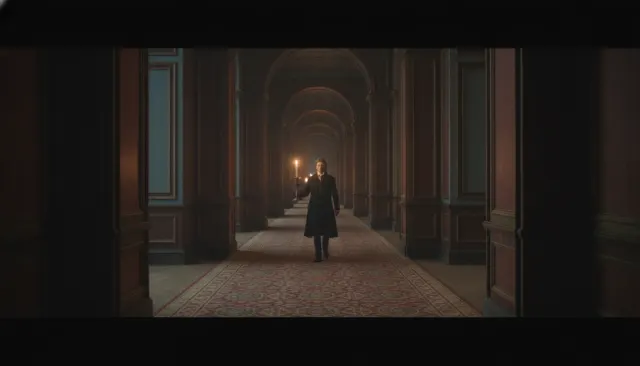
Interior sequences lit entirely by fire, candles, or practical fixtures, with cameras capable of exposing correctly at ISO 3200 or higher.
Camera movement that follows subjects with an organic, searching quality rather than the mechanical precision of a dolly or slider.
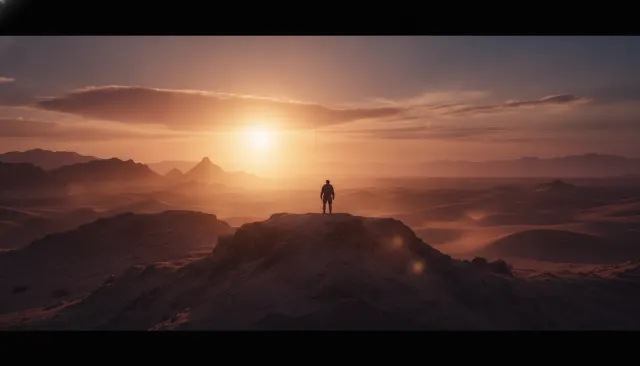
Positioning subjects against strong natural backlight to create rim-lit silhouettes with lens flare halos characteristic of the aesthetic.
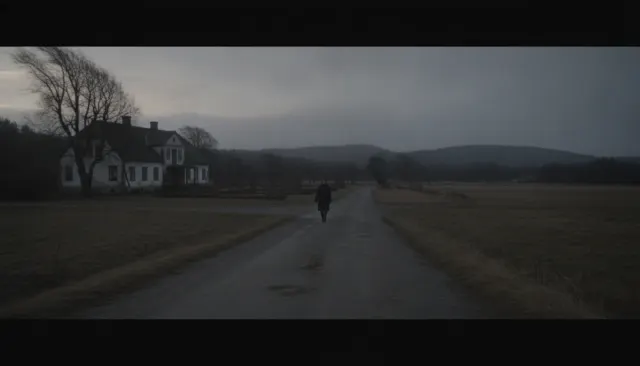
Embracing grey overcast light as a soft, directionless source that wraps subjects evenly without artificial fill.
Emmanuel "Chivo" Lubezki is the only cinematographer in history to win three consecutive Academy Awards for Best Cinematography, earning the honor for Gravity (2013), Birdman (2014), and The Revenant (2015). His body of work represents the most sustained exploration of natural and available light in contemporary cinema, carried out through long-take, ultrawide-lens photography that immerses the audience in the sensory reality of his subjects.
Lubezki's defining principle is the rejection of conventional film lighting. While most productions establish controlled lighting setups that can be recreated consistently across multiple shooting days, Lubezki works primarily with the light that exists in a location - sunlight, firelight, and practicals. This approach requires exceptional responsiveness to light conditions, a willingness to shoot only during specific windows (most famously magic hour), and camera and lens technology capable of capturing low-light imagery without artificial augmentation.
For The Revenant (2015), directed by Alejandro G. Inarritu, Lubezki was quoted insisting on no artificial lighting on location in Canada and Argentina. The production shot exclusively in natural light, which limited usable shooting days and drove the production famously over budget and schedule, but produced imagery of extraordinary naturalism and physical weight.
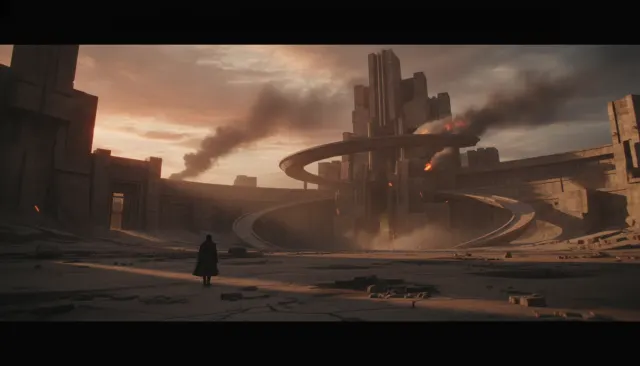
Lubezki pairs his natural light approach with two formal strategies: extremely long takes and ultrawide lenses. The opening battle sequence in Children of Men (2006, directed by Alfonso Cuaron) appears as a single continuous take lasting several minutes, achieved through a combination of practical filmmaking and invisible digital stitching. The single-take conceit of Birdman (2014) extended this to the entire film.
His preference for lenses in the 12-21mm range creates a close-proximity quality: the camera is physically near to subjects, and the wide angle creates a spherical perspective that envelops the viewer rather than observing from a distance. In The Tree of Life (2011, directed by Terrence Malick), this proximity becomes metaphysical - the camera moves through space like a searching consciousness rather than an observing eye.
Lubezki's decade-long collaboration with Malick on The New World (2005), The Tree of Life (2011), To the Wonder (2012), Knight of Cups (2015), and Song to Song (2017) represents the fullest development of his aesthetic. Malick's improvisational, non-narrative approach demanded that Lubezki be prepared to shoot anything at any moment in the available light, and the results established a new vocabulary for spiritual or contemplative cinema.
Emmanuel Lubezki / Alfonso Cuaron · 2006
Long-take battle sequences combining naturalistic light with the illusion of continuous time, setting a new standard for immersive cinema
Emmanuel Lubezki / Terrence Malick · 2011
Cannes Palme d'Or winner using natural light and ultrawide proximity to explore memory, grief, and cosmological time
Emmanuel Lubezki / Alfonso Cuaron · 2013
Academy Award-winning work using natural-light simulation in space via an LED cube lighting system of unprecedented scale
Emmanuel Lubezki / Alejandro G. Inarritu · 2014
Second consecutive Oscar for a film appearing as a single continuous take through a Broadway theater, shot in available light
Emmanuel Lubezki / Alejandro G. Inarritu · 2015
Third consecutive Oscar, shot entirely in natural light in Canada and Argentina with no artificial augmentation on location
Emmanuel Lubezki / Terrence Malick · 2005
First major collaboration with Malick establishing the magic-hour, ultrawide, improvisational visual approach
Emmanuel Lubezki · 2014
Available-light cinematography in cramped backstage conditions demonstrating natural light's viability in interior spaces
A Look is not a filter. It is a set of stored decisions the pipeline reads before it makes a single frame, so two videos in the same Look actually match.