No Country for Old Men
Coen Brothers / Roger Deakins (DP) · 2007
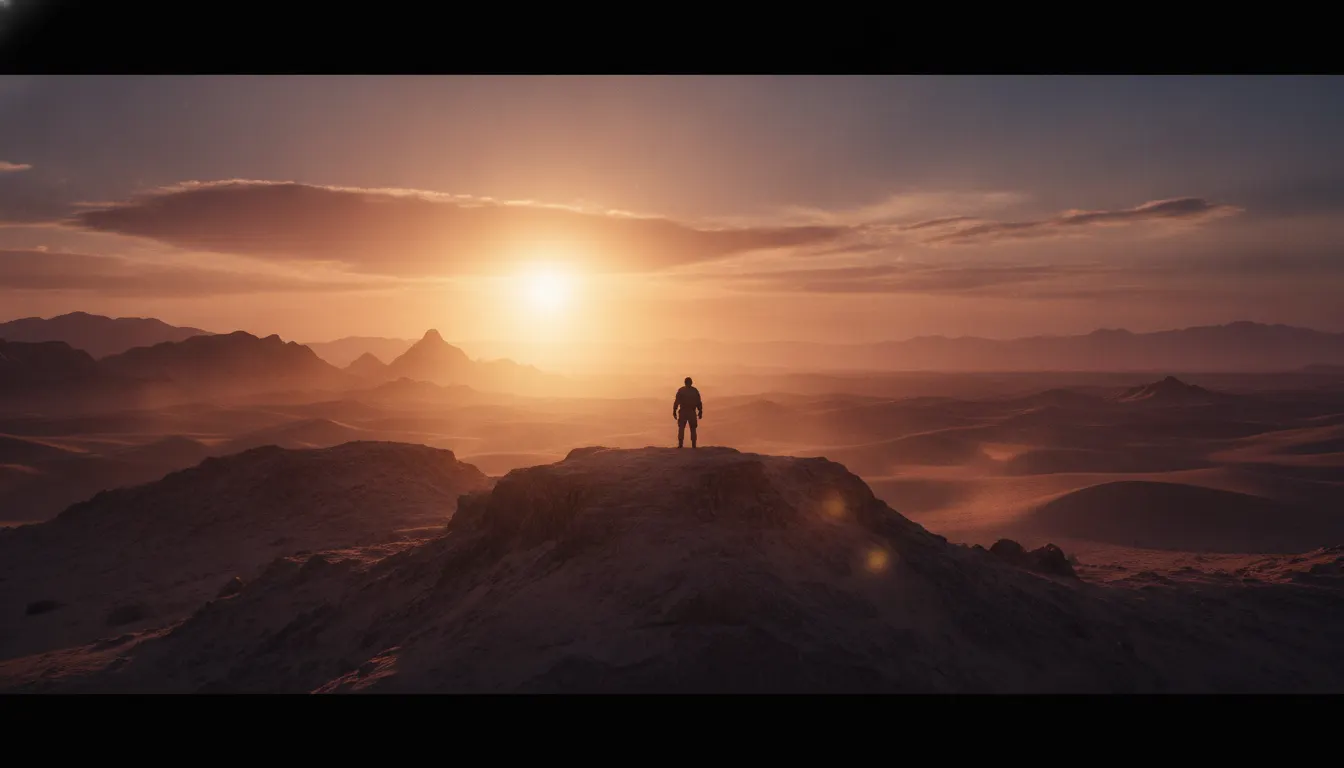
West Texas single-sun naturalism; ASC Award; 15th Oscar nomination
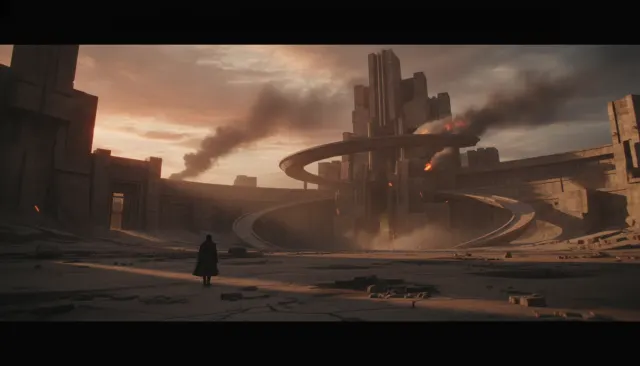
Roger Deakins golden-hour signature. Single hard sun source, naturalist motivated lighting, Skyfall Shanghai or Sicario border desert.
The moves a human crew would use to get here. Cue applies them for you, and knowing their names is how you ask for a change.
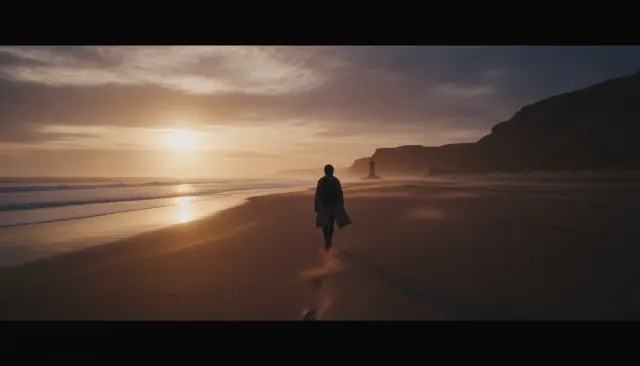
Late-afternoon or magic-hour sun used as sole or primary key source, creating long directional shadows and raking sidelight.
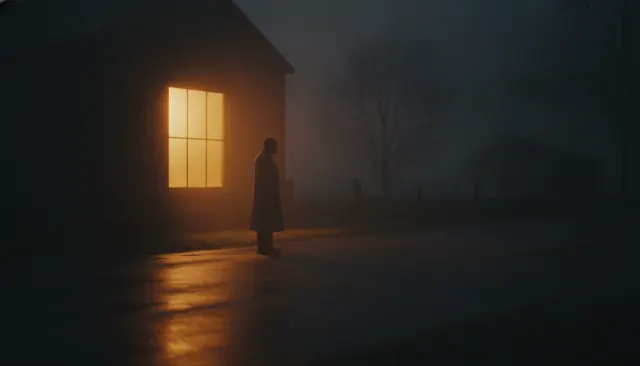
Every light in a scene justified by a physical source within the location - window, lamp, fire, screen.
Sun at 10-15 degrees above horizon produces maximum raking angle on terrain, making ground texture tactile and three-dimensional.
Bounce or reflector fill kept to the minimum needed to prevent shadow areas from blocking detail, preserving contrast.
Genuine fire, flare, and explosion light used as key in nocturnal sequences, maintaining visual truth even in artificial environments.
Each distinct setting assigned a color temperature identity derived from its logical light sources - desert amber, office fluorescent gray, tunnel blue.
Roger Deakins CBE ASC BSC is widely regarded as the greatest living cinematographer. Across more than 60 feature films - including Fargo (1996), Kundun (1997), O Brother, Where Art Thou? (2000), No Country for Old Men (2007), True Grit (2010), Skyfall (2012), Prisoners (2013), Sicario (2015), Hail, Caesar! (2016), Blade Runner 2049 (2017), and 1917 (2019) - Deakins developed a naturalistic philosophy grounded in the belief that the most powerful cinematic light is motivated light: the sun, practical sources, and their logical extensions.
Deakins has articulated his approach across decades of interviews and his own web forums: he is skeptical of light that cannot be justified by the scene's physical reality. If there is one window in a room, that window is the key. If the scene takes place outdoors at golden hour, the sun - single, directional, warm - is the key. He describes the cinematographer's primary job as identifying what the light in a given scene naturally is, and then making it as beautiful as possible within that constraint.
This philosophy produces images of extraordinary clarity and conviction. When Deakins lights a face, the viewer knows exactly where the light is coming from and can intuitively feel its quality. There is no mystery about the light source - the mystery is all in what that light reveals about the character.
Deakins's collaboration with Joel and Ethan Coen on No Country for Old Men is the most widely cited example of his approach applied to western landscape. The West Texas exteriors use the late-afternoon sun as a single hard key, creating long shadows and raking sidelight that makes the desert terrain tactile. Interior motel scenes use practical lamp and window light supplemented minimally. The film won Deakins the American Society of Cinematographers Award and was his first of 15 Academy Award nominations (he won for Blade Runner 2049).
Denis Villeneuve's Sicario pushed Deakins's golden-hour naturalism into its most spectacular and politically loaded form. The film's opening aerial sequence over the Sonoran Desert, followed by the Juárez border-crossing sequence at sunset, uses the specific quality of late-afternoon Southwestern light - the long flat raking angle of a sun 10-15 degrees above the horizon - as both aesthetic information and political information. The light is simultaneously beautiful and threatening.
The tunnel assault sequence is shot in genuine low-light (thermal-imaging and night-vision aesthetics), demonstrating Deakins's equal command of darkness as a tool.
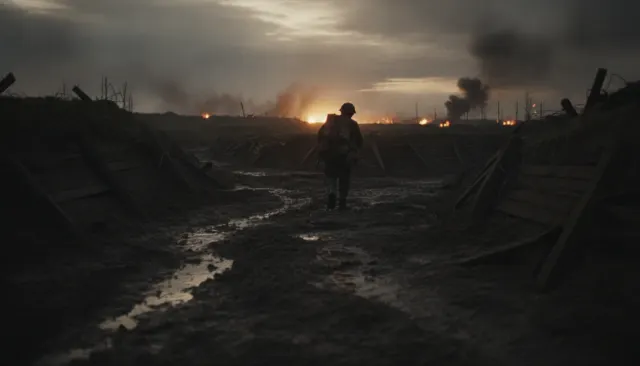
Sam Mendes's 1917 presented Deakins with the challenge of lighting a single-take-structured World War I film across multiple natural and artificial light conditions - daylight, magic hour, firelit nocturnal sequences, and flare-lit battle sequences. The nocturnal section through a bombed French town, lit by descending flares and fires, is among the most technically demanding practical-light sequences in Deakins's career. It won him his second Academy Award.
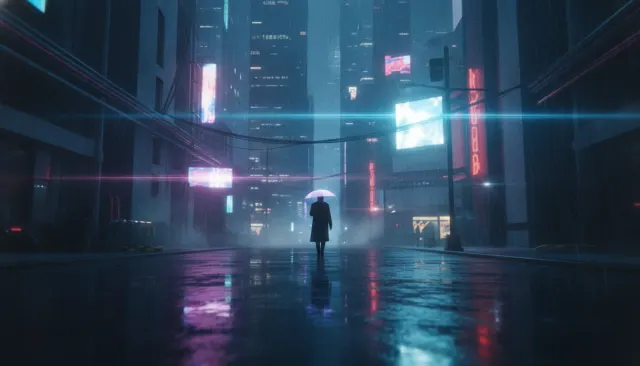
Working within the cyber-noir tradition established by Jordan Cronenweth, Deakins applied his motivating-light discipline to a science-fiction context, building each of the film's distinct locations as a self-contained color world with logical, motivated light sources. The film won his first Academy Award.
Coen Brothers / Roger Deakins (DP) · 2007
West Texas single-sun naturalism; ASC Award; 15th Oscar nomination
Denis Villeneuve / Roger Deakins (DP) · 2015
Sonoran Desert golden-hour border politics; Deakins's most political landscape
Denis Villeneuve / Roger Deakins (DP) · 2017
First Academy Award for Cinematography; motivated-light in sci-fi context
Sam Mendes / Roger Deakins (DP) · 2019
Second Academy Award; flare-lit nocturnal WWI practical-light sequences
Sam Mendes / Roger Deakins (DP) · 2012
Shanghai neon reflection and Scottish moor magic hour; Bond's most cinematic
Denis Villeneuve / Roger Deakins (DP) · 2013
Pennsylvania autumn rain palette; gray-sky diffuse as moral ambiguity
Coen Brothers / Roger Deakins (DP) · 2010
Period Western; winter plains cold light as historical authenticity
Coen Brothers / Roger Deakins (DP) · 2000
First digital intermediate color grade in Hollywood; Depression-era sepia
A Look is not a filter. It is a set of stored decisions the pipeline reads before it makes a single frame, so two videos in the same Look actually match.