Blade Runner 2049
Denis Villeneuve / Roger Deakins · 2017
Definitive contemporary sci-fi cinematography; Academy Award winner
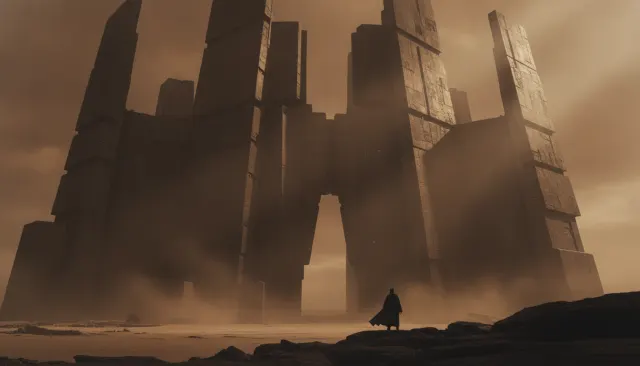
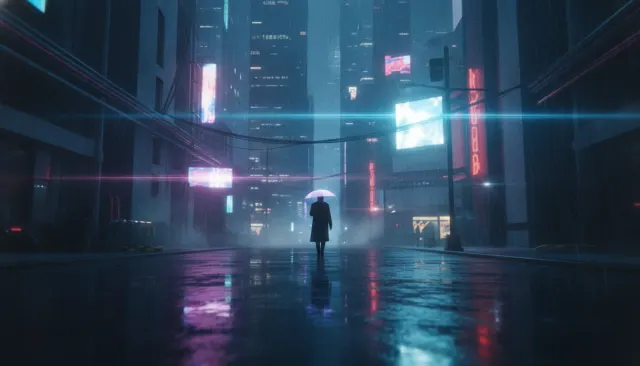
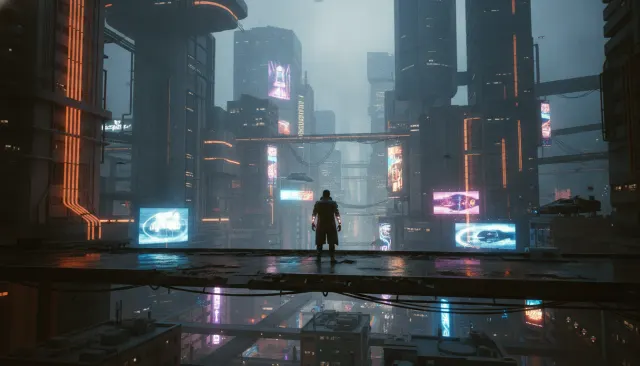
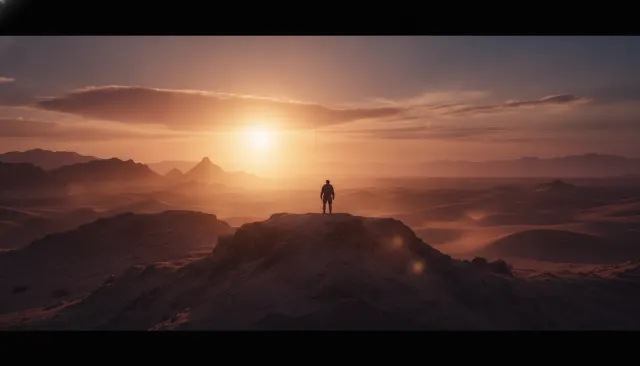
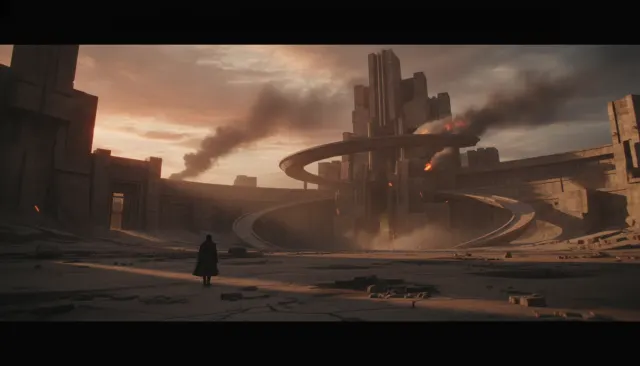
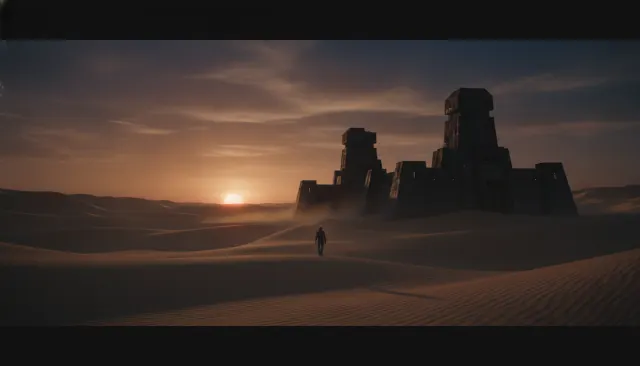
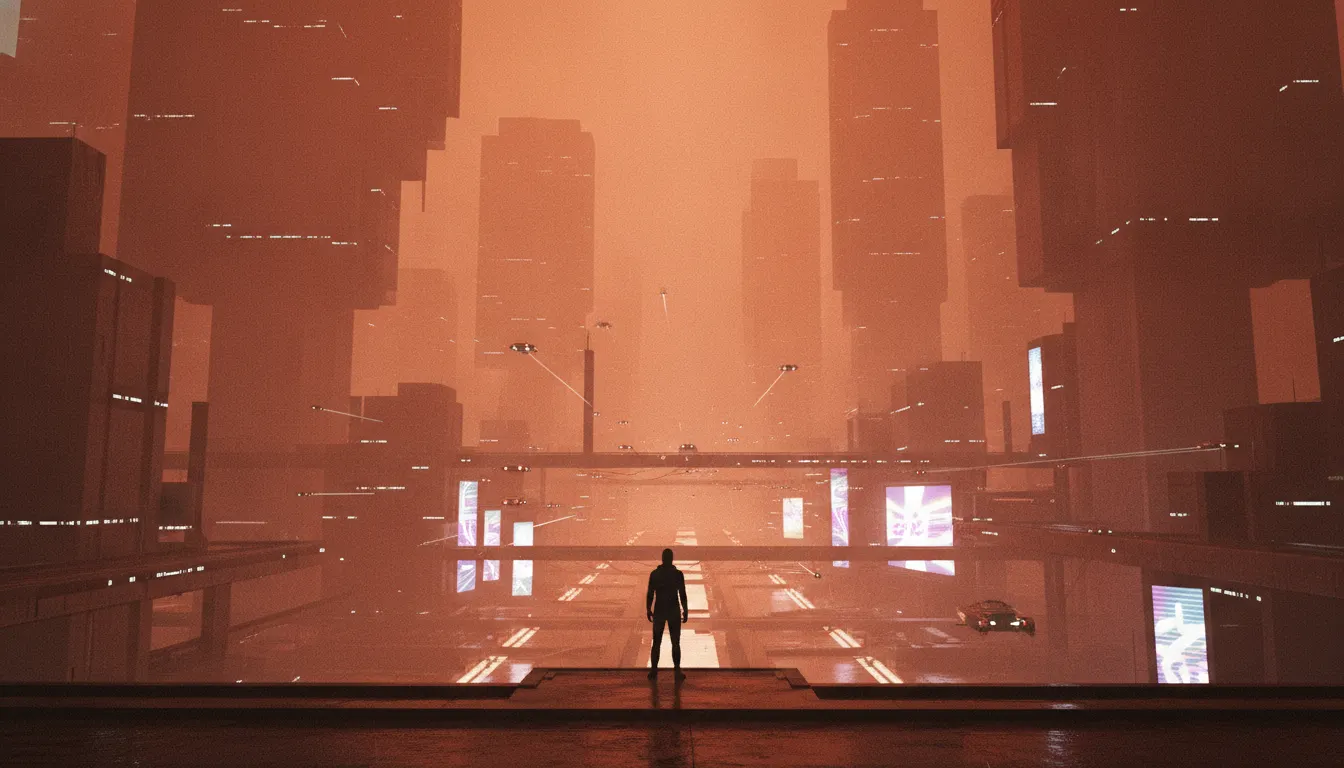
Deakins-shot dystopian sci-fi. Single-color volumetric haze, monolithic architecture, slow drift, contemplative scale.
The moves a human crew would use to get here. Cue applies them for you, and knowing their names is how you ask for a change.
Each narrative location is assigned a dominant colour - amber, blue-grey, white - that functions as spatial and thematic geography.
Vast interior spaces lit by one enormous practical source, producing gradual atmospheric falloff across scales that dwarf human figures.
Characters are deliberately dwarfed by architecture, communicating dehumanisation and systemic scale.
Real sets lit practically before digital elements are composited, ensuring light consistency between physical and virtual.
ARRI 65 format with modified lenses produces specific depth and aberration characteristics unavailable at smaller formats.
Rain, dust, and fog are present in nearly every exterior sequence, creating depth and texturing light across the frame.
Blade Runner 2049 (2017), directed by Denis Villeneuve and photographed by Roger Deakins, is widely regarded as the supreme achievement of contemporary science fiction cinematography. Deakins won the Academy Award for Best Cinematography, the first in his career after 14 nominations, and the film's visual language has since become the dominant reference point for serious sci-fi visual work: colour-divided environments, monumental scale, and the use of single-source practical lighting in vast digital spaces.
Deakins and production designer Dennis Gassner divided the film's world into discrete colour climates, each establishing a different region of 2049's Los Angeles as a distinct sensory territory. The primary palette moves from the orange-brown dust of the San Diego wasteland to the cold blue-grey of rain-soaked Los Angeles, the warm amber of the Wallace Corporation interiors, and the muted white of the memory-maker's facility. These colour zones function as narrative geography: viewers understand where they are in the world by chromatic memory.
This extends the visual grammar established by Jordan Cronenweth's original Blade Runner (1982), which used darkness, neon, and steam to create a textured dystopia, but 2049 operates at a different scale: the colour zones are monumental, architecture-filling fields rather than noir-derived chiaroscuro.
One of Deakins's most discussed innovations was lighting enormous sets with single motivated sources. The Wallace Corporation interior, for instance, is lit almost entirely by a single massive window source - a practical light hundreds of square feet across that produces a gradual, atmospheric falloff across spaces that dwarf the human figures within them. This choice emphasises the dehumanising scale of corporate power while creating an almost painterly illumination quality.
The Las Vegas sequences, where orange nuclear dust has replaced all blue sky, use a monochromatic amber field that renders every surface in the same warm frequency. Deakins used practical LED panels to match the colour temperature of the enormous digital sky replacements, ensuring seamless integration between physical set and VFX elements.
Deakins shot largely on ARRI Alexa 65 with custom-modified lenses to achieve the specific aberration and depth characteristics he wanted at large-format scale. The film's practical-first approach - building real sets and lighting them practically before adding VFX elements - has become a production design principle for high-budget sci-fi, countering the tendency toward all-digital environments.
Denis Villeneuve / Roger Deakins · 2017
Definitive contemporary sci-fi cinematography; Academy Award winner
Ridley Scott / Jordan Cronenweth · 1982
Original noir-sci-fi grammar that 2049 extends and monumentalises
Denis Villeneuve / Bradford Young · 2016
Villeneuve's prior sci-fi: shadows, cold palettes, and scale as grammar
Denis Villeneuve / Greig Fraser · 2021
Next evolution of Villeneuve's monumental approach with Fraser
Alex Garland / Rob Hardy · 2014
Corporate sci-fi using single-source architecture lighting in smaller scale
Rupert Sanders / Jess Hall · 2017
Commercial attempt at the Blade Runner colour-zone grammar
Robert Rodriguez / Bill Pope · 2019
Warm dystopian city-world with zone-based colour separation
A Look is not a filter. It is a set of stored decisions the pipeline reads before it makes a single frame, so two videos in the same Look actually match.