Dune
Greig Fraser / Denis Villeneuve · 2021
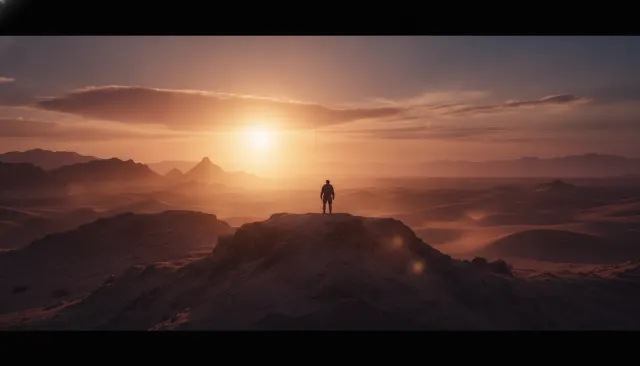
Academy Award for Best Cinematography - monochromatic amber Arrakis and monolithic scale grammar
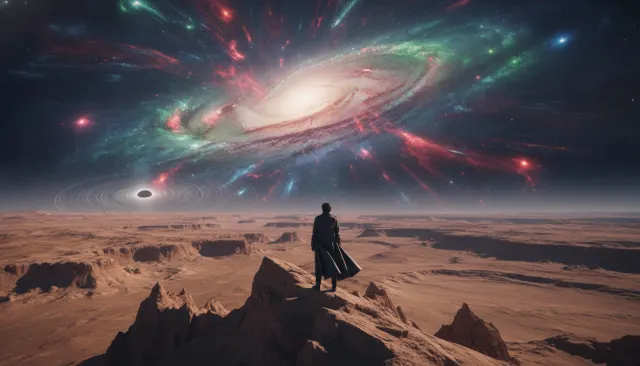
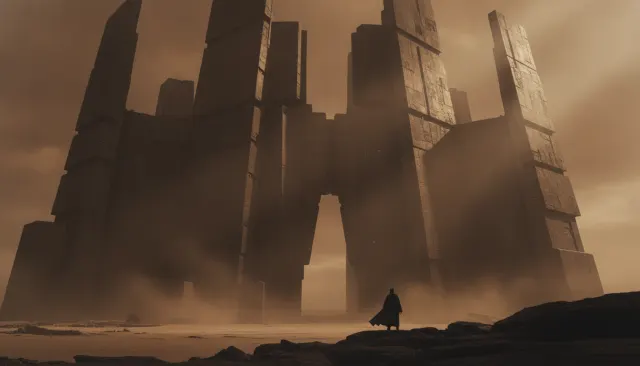
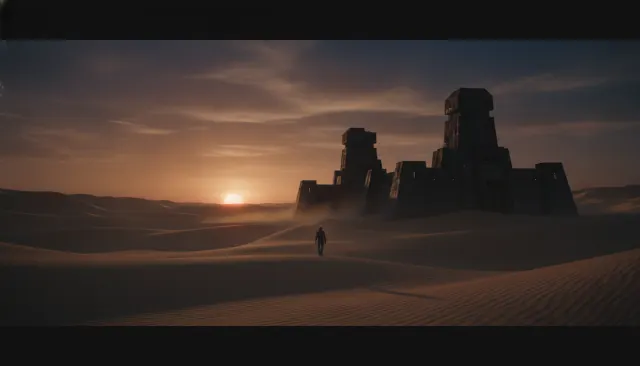
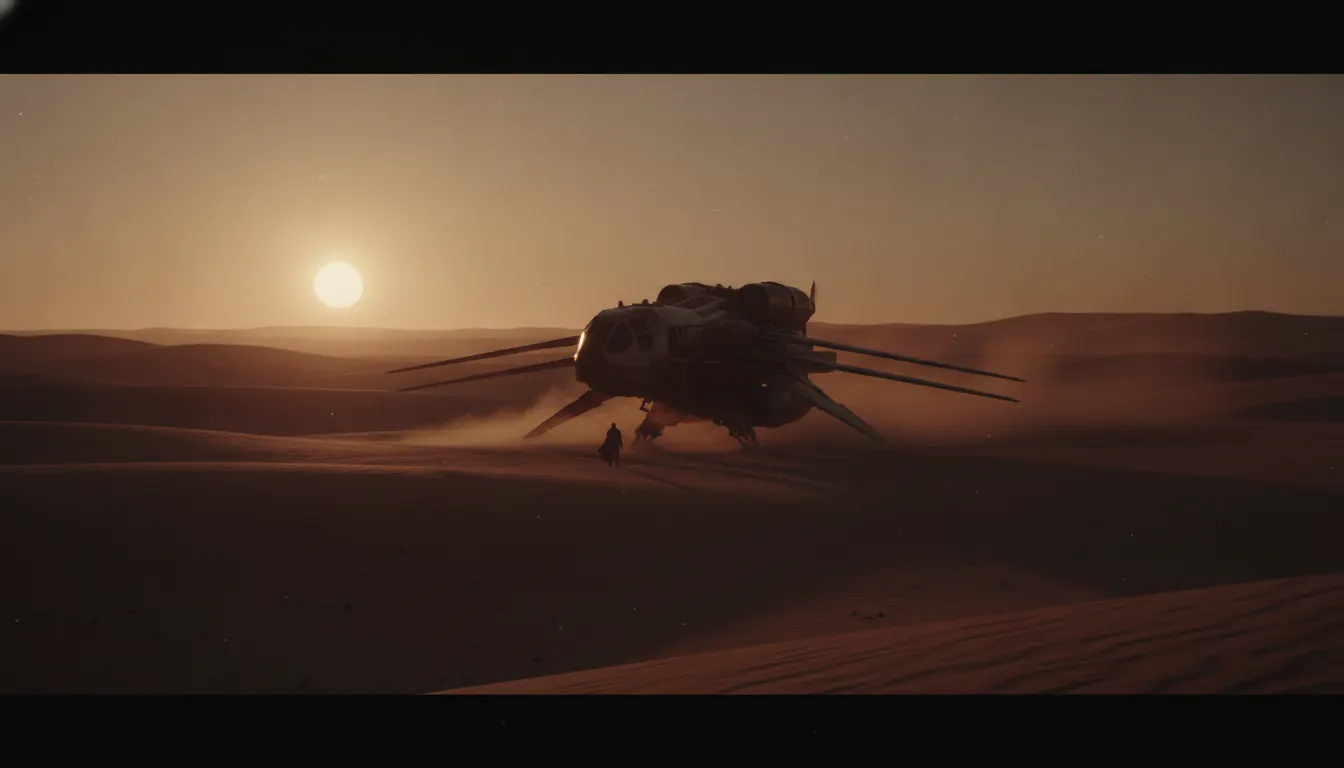
Greig Fraser Dune monolithic scale. Arrakis desert vastness, infrared-modified sensor, monochromatic single-color wash, brutalist Ornithopter.
The moves a human crew would use to get here. Cue applies them for you, and knowing their names is how you ask for a change.
Single-hue amber-yellow palette eliminates spectral diversity, creating a sensory deprivation effect appropriate to extreme desert environments.
Subjects placed as small dark forms against enormous sand ridges, Ornithopter wings, or architectural masses to assert environmental dominance.
Large-format sensor provides subtle depth rendering, micro-contrast latitude, and skin tone gradation impossible in smaller formats.
Camera modified for infrared sensitivity renders organic material as spectral white, creating perception-beyond-human-range imagery.
One source - the sun or a large HMI equivalence - with no fill creates deep shadows and monolith-quality mass definition.
Imperceptibly slow lateral or push-in camera movement reveals scale difference between figure and environment over time.
Greig Fraser is the Australian cinematographer who has redefined large-format science fiction cinematography in the 2020s. His work on Denis Villeneuve's Dune (2021) and Dune: Part Two (2024), alongside his earlier work on Lion (2016), Rogue One: A Star Wars Story (2016), Zero Dark Thirty (2012), and his Academy Award-winning work on Dune, established a visual philosophy of austere monumental scale that deliberately resists the spectacle logic of franchise filmmaking.
For Dune, Fraser and Villeneuve made a foundational decision: the films would not look like science fiction. Arrakis would look like a real place - an extreme desert environment documented with the same commitment to physical reality that documentary cinematographers bring to harsh environments. Fraser used ARRI Alexa LF and Mini LF cameras with large-format primes, gaining the shallow depth of field and subtle temporal rendering that separates the format from smaller sensors. The color science was monochromatic amber - the desert world washed in a single-hue palette that eliminated the spectrum and created a sense of heat and sensory deprivation.
For specific sequences in Dune: Part Two, Fraser worked with modified sensors that were sensitive to infrared light. This created effects impossible in conventional visible-light photography: foliage and organic material rendered bright white against dark skies, creating a spectral quality that signaled the film's access to perception beyond ordinary human range. The infrared work had precedent in Fraser's earlier experimentation and in Hoyte van Hoytema's similar choices for Interstellar.
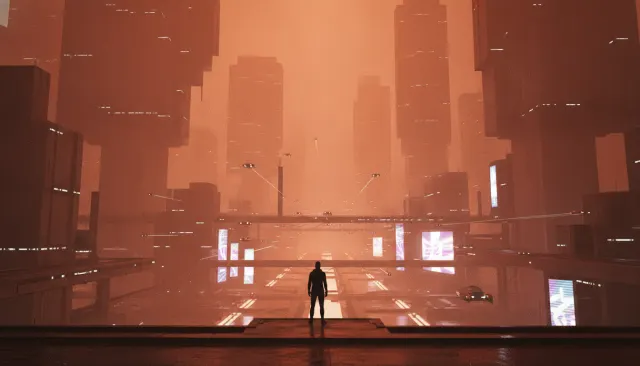
The defining compositional grammar of the Dune films is the relationship between human figures and the environment. Fraser and Villeneuve consistently place characters as tiny silhouettes against enormous dune ridges, Ornithopter shadows, or architectural vastness. This is not simply a scale trick; it is an argument about agency - that individual human beings are small against the forces of ecology, religion, and historical inevitability. The monolithic composition is an ideological position expressed visually.
Fraser's work on Matt Reeves's The Batman (2022) applied a different version of the same monolithic intelligence. Gotham is rendered in near-absolute darkness, with scenes lit only by practicals and a single source key. The rain-drenched streets, the oppressive brick architecture, and the permanent nocturnal palette create a city that functions as psychological landscape rather than geographical location. Fraser won his second Academy Award for Dune: Part Two at the 97th Oscars.
Greig Fraser / Denis Villeneuve · 2021
Academy Award for Best Cinematography - monochromatic amber Arrakis and monolithic scale grammar
Greig Fraser / Denis Villeneuve · 2024
Second Academy Award - infrared sequences and expanded monolithic architecture
Greig Fraser / Matt Reeves · 2022
Near-absolute darkness Gotham with practical-only sources and rain-saturated noir
Greig Fraser / Kathryn Bigelow · 2012
Procedural realism establishing Fraser's commitment to observed rather than fabricated light
Greig Fraser / Garth Davis · 2016
Indian street photography and Australian suburban contrast demonstrating Fraser's environmental range
Greig Fraser / Gareth Edwards · 2016
Documentary-influenced franchise cinematography placing handheld realism inside a studio blockbuster
Greig Fraser / Garth Davis · 2018
Biblical landscape photography with natural light rigor preceding Dune's environmental approach
A Look is not a filter. It is a set of stored decisions the pipeline reads before it makes a single frame, so two videos in the same Look actually match.