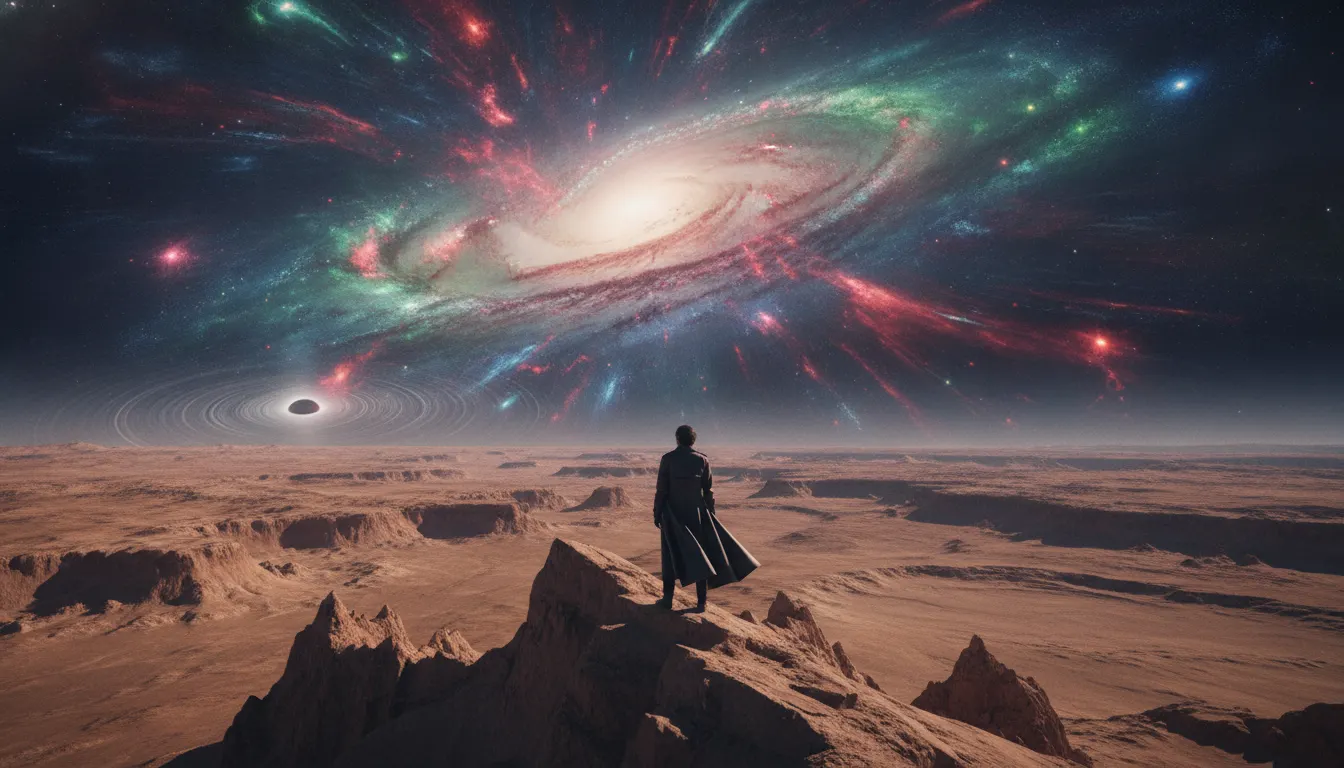
Oppenheimer
Hoyte van Hoytema / Christopher Nolan · 2023
Academy Award winner - custom B&W IMAX stock and practical Trinity test explosion photography
Hoyte van Hoytema IMAX scale. Interstellar and Oppenheimer 65mm large-format, infrared experimental sequences, vast cosmic detail.
The moves a human crew would use to get here. Cue applies them for you, and knowing their names is how you ask for a change.
Physical film frame 10x the area of 35mm provides resolution ceiling and temporal rendering that digital cameras cannot match.
Real pyrotechnic elements on physical sets photographed on film, capturing light interaction properties impossible to fully composite.
Deep absolute blacks with specular near-clipping highlights create a presence range that maximizes the IMAX format's dynamic capabilities.
Oppenheimer's bespoke black-and-white IMAX stock provides monochrome resolution and tonal range never previously captured at this format size.
Characters placed small beneath wormholes, atomic fireballs, or ocean storms - compositional argument about human scale.
Practical shooting at actual agricultural fields, oceans, and deserts on IMAX stock rather than substituting studio backdrops.
Hoyte van Hoytema is the Dutch-Swedish cinematographer who has become the primary visual collaborator for Christopher Nolan's large-format phase and Jordan Peele's sci-fi work. His IMAX photography for Interstellar (2014), Dunkirk (2017), Tenet (2020), and Oppenheimer (2023) has redefined what physical film formats can achieve in a digital era that had largely abandoned them.
Nolan and van Hoytema decided for Dunkirk that the film should be shot entirely on physical film - a combination of 70mm IMAX (which produces a 15-perf frame roughly 10x the area of a standard 35mm frame) and 65mm anamorphic. This was not nostalgia but a photographic argument: the resolution ceiling of 70mm IMAX negative is theoretically equivalent to 18,000 lines of horizontal resolution. No digital camera in 2017 or today approaches this. The grain structure of a correctly exposed and scanned 70mm IMAX negative is visible only as an organic texture under extreme scrutiny - the image is practically grain-free at cinema screen size while retaining the temporal rendering and color science of photochemical capture.
Interstellar (2014) was van Hoytema's first major IMAX collaboration with Nolan. The film's central visual challenge was to make space feel physically real rather than composited. Van Hoytema and the visual effects team (led by Paul Franklin at Double Negative) worked together to ensure that the IMAX footage shot on practical locations integrated seamlessly with CG extensions. The black hole simulation sequences were built from actual astrophysical calculation, producing an image that appeared in physics journals.
Oppenheimer (2023) required van Hoytema to develop a new workflow: true black-and-white IMAX film photography. No true black-and-white IMAX stock existed commercially, so Kodak and the production developed a custom process. The black-and-white sequences - representing Oppenheimer's subjective interior world and the Senate hearing room - have a monochrome resolution and tonal richness that no digital black-and-white can match. The film won van Hoytema the Academy Award for Best Cinematography (shared with the film's technical team) at the 96th Oscars.
Van Hoytema and Nolan share a commitment to practical effects over CGI wherever possible. The Trinity test explosion sequence in Oppenheimer was photographed from practical miniature explosions and practical fire elements at real scale. The rationale is photographic: physical light sources captured on photochemical film have a temporal rendering that composited CGI fire cannot replicate. The brief over-exposure, the heat shimmer, the interaction of the film grain with the light source - these are properties that emerge from physical reality and cannot be fully synthesized.
Hoyte van Hoytema / Christopher Nolan · 2023
Academy Award winner - custom B&W IMAX stock and practical Trinity test explosion photography
Hoyte van Hoytema / Christopher Nolan · 2014
IMAX debut collaboration - black hole astrophysics simulation integrated with practical large-format location work
Hoyte van Hoytema / Christopher Nolan · 2017
Shot entirely on physical 70mm IMAX and 65mm anamorphic - sea, air, and beach captured at maximum resolution
Hoyte van Hoytema / Christopher Nolan · 2020
IMAX large-format work applied to time-inversion action sequences requiring frame-precise continuity
Hoyte van Hoytema / Jordan Peele · 2022
Large-format sky-horror with infrared sequences and single-cloud minimalist sky compositions
Hoyte van Hoytema / Spike Jonze · 2013
Pre-Nolan work demonstrating van Hoytema's facility with warm digital intimacy before his large-format phase
Hoyte van Hoytema / Sam Mendes · 2015
Large-format Bond work integrating IMAX sequences into conventional 2.39:1 frame within a single film
A Look is not a filter. It is a set of stored decisions the pipeline reads before it makes a single frame, so two videos in the same Look actually match.
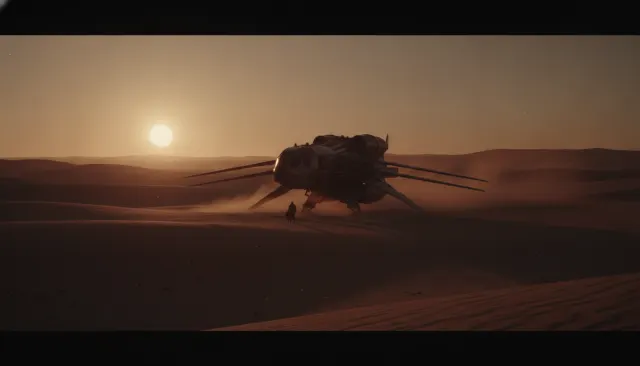 Cinematographer AcclaimedGreig Fraser Dune Monolithic
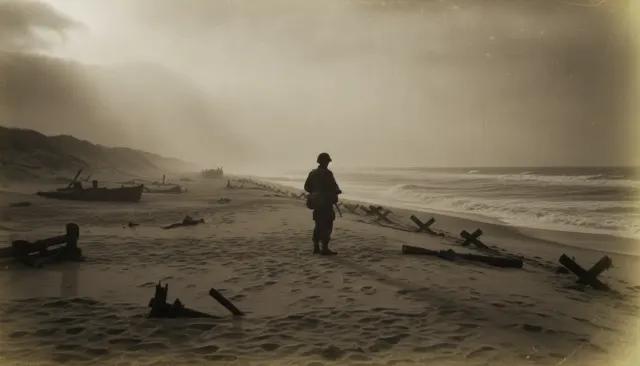 Cinematographer AcclaimedJanusz Kaminski Saving Private Ryan Desaturated
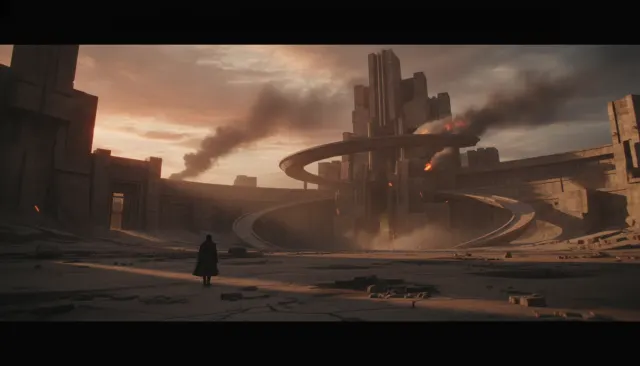 Director AestheticNolan IMAX Anamorphic
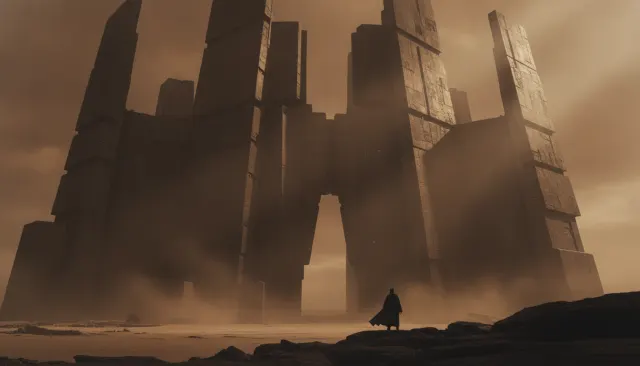 Director AestheticVilleneuve Denis Monumental
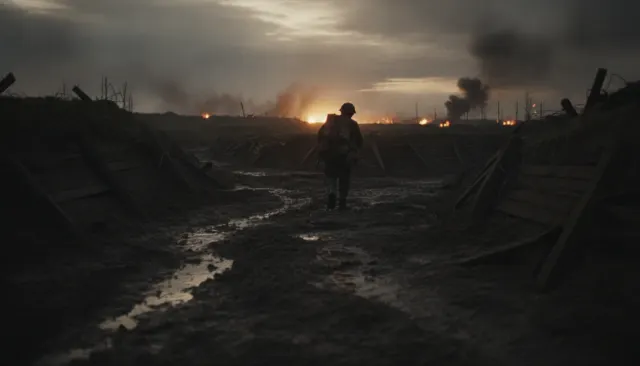 Cinema GenreWar 1917 Deakins
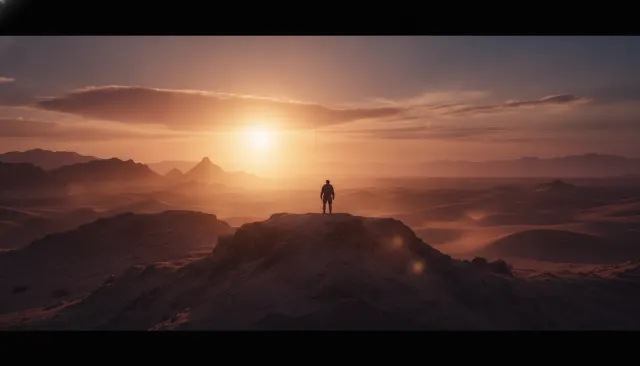 CinematographerDeakins Golden Hour
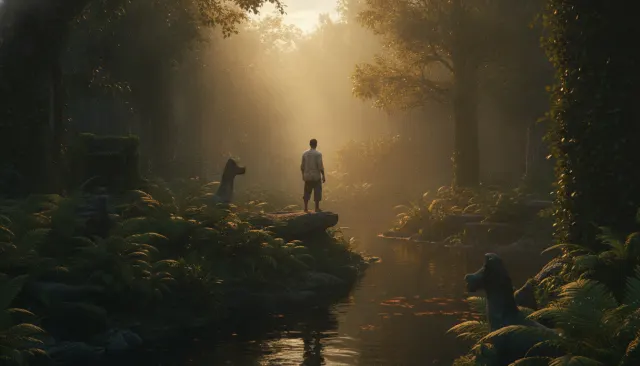 Director Aesthetic ModernApichatpong Weerasethakul Tropical Meditative