Saving Private Ryan
Janusz Kaminski / Steven Spielberg · 1998
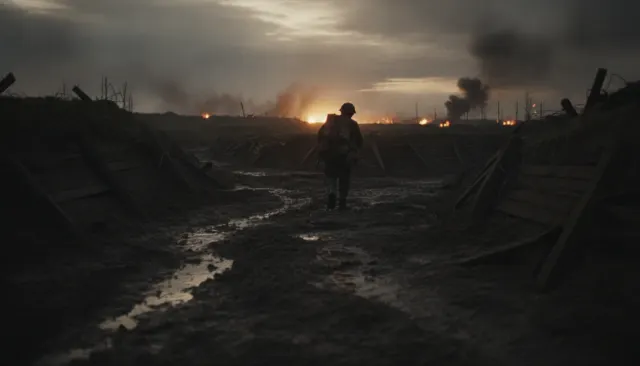
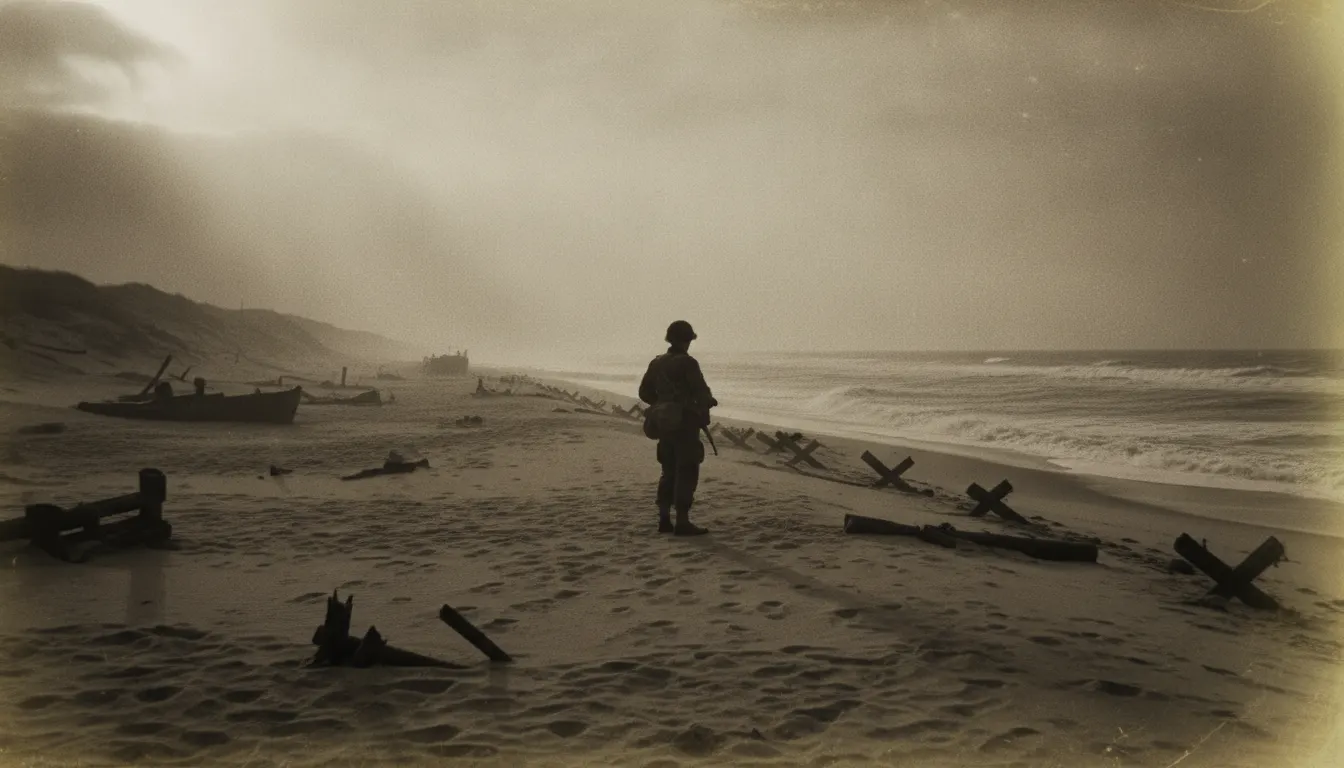
Second Academy Award - Omaha Beach 27-minute sequence, 45-degree shutter, bleach bypass, handheld chaos
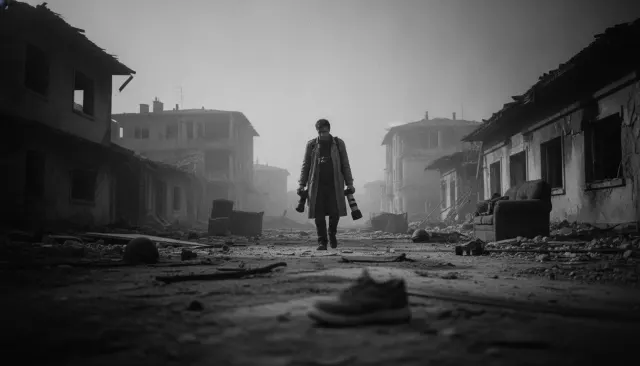
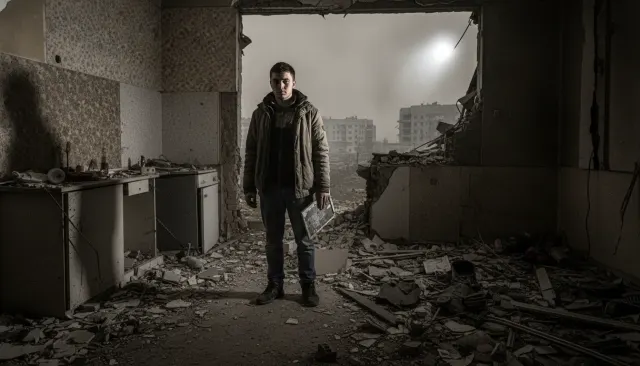
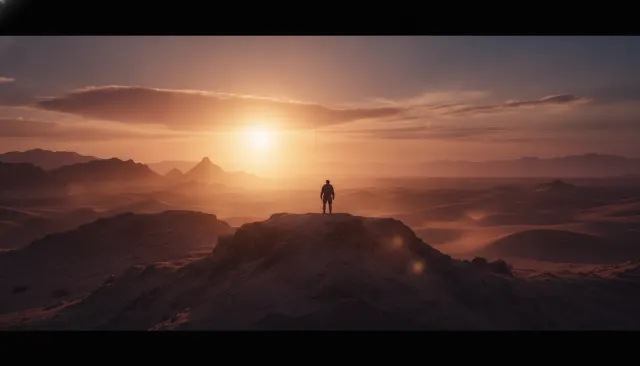
Janusz Kaminski war desaturation. Saving Private Ryan Omaha Beach bleach-bypass, shutter-altered handheld, 45-degree shutter chaos, sepia bleed.
The moves a human crew would use to get here. Cue applies them for you, and knowing their names is how you ask for a change.
Silver retention in the printing process increases contrast, reduces saturation, and gives the image a metallic three-dimensional texture.
Reduced shutter angle creates staccato frame-by-frame strobing in fast movement, simulating the visual chaos of combat adrenaline.
Cinematographer physically enters the frame environment with a shoulder-mounted camera, capturing blood splatter and physical chaos from within.
Bleach bypass pushes color toward sepia-olive palette - skin becomes gray-yellow, blood becomes dark brown, sky becomes white.
Blood, water, and dirt on the lens are preserved in the final cut as authenticity evidence rather than cleaned and reshot.
Extreme close-up inserts in shallow focus - a boot, a hand, a dog-tag - drop in and out of focus as the scene moves around them.
Janusz Kaminski is the Polish-American cinematographer who has collaborated with Steven Spielberg on every film since Schindler's List (1993) and who won back-to-back Academy Awards for Best Cinematography for that film and Saving Private Ryan (1998). His war photography for Saving Private Ryan - particularly the 27-minute Omaha Beach sequence - is the most technically audacious combat cinematography in Hollywood history and established a new visual grammar for war films that persists today.
Kaminski and Spielberg's first collaboration established the two techniques that would define their visual partnership: the selective bleach bypass process and the available-light philosophy. Schindler's List was shot by Kaminski on Kodak 5231 black-and-white film, with Spielberg demanding that no electrical lights be used in the concentration camp sequences - real candles and window light only. The ENR (silver-retention) process applied to the printing stage retained metallic silver in the image, increasing contrast, reducing saturation, and giving the black-and-white an almost three-dimensional texture. The brief color sequences - the girl in the red coat - achieve their emotional impact precisely because the surrounding monochrome is so absolute.
For Saving Private Ryan's 27-minute opening sequence, Kaminski made three specific technical choices that changed war filmmaking:
1. Shutter angle alteration: He changed the camera shutter from the standard 180-degree angle to 45 degrees (or even 90 degrees in some shots). This dramatically reduced the motion blur on each individual frame, creating a staccato, strobed quality in fast movement that mimicked the visual experience of extreme adrenaline and disorientation under gunfire.
2. Bleach bypass desaturation: The entire sequence was bleach-bypassed in processing, retaining silver and desaturating the color image toward a near-monochrome sepia-olive. The color still exists but is muted - skin reads as pale yellow-gray, blood as dark brown rather than bright red, sky as white rather than blue.
3. Handheld shoulder-rig chaos: Kaminski operated himself at many points during the sequence, physically running with soldiers through the surf and up the beach. Blood splatter appeared on the lens and was left in. The camera was operated in the midst of the action rather than from a detached observer position.
Kaminski continued this visual language in War Horse (2011), where bleach bypass created a golden-sepia WWI battlefield grammar, and Lincoln (2012), where available candlelight and gas-lamp-equivalent sources produced interior political scenes of documentary-weight solemnity. Munich (2005) applied the desaturated handheld grammar to 1970s thriller content, extending the war-cinema language into political assassination narrative.
Janusz Kaminski / Steven Spielberg · 1998
Second Academy Award - Omaha Beach 27-minute sequence, 45-degree shutter, bleach bypass, handheld chaos
Janusz Kaminski / Steven Spielberg · 1993
First Academy Award - candle-only concentration camp sequences, ENR process, girl-in-red selective color
Janusz Kaminski / Steven Spielberg · 2005
1970s desaturated handheld political thriller extending the war grammar into assassination narrative
Janusz Kaminski / Steven Spielberg · 2011
WWI golden-sepia bleach bypass battlefield and golden-hour English countryside cinematography
Janusz Kaminski / Steven Spielberg · 2012
Candle and gas-lamp practical interior scenes with documentary solemnity matching Schindler's methodology
Douglas Slocombe / Steven Spielberg · 1989
Pre-Kaminski Spielberg reference demonstrating the golden-adventure palette that Kaminski replaced with desaturation
Douglas Milsome / Stanley Kubrick · 1987
Vietnam war predecessor demonstrating the bleach-desaturated war grammar that Kaminski refined to its extreme
A Look is not a filter. It is a set of stored decisions the pipeline reads before it makes a single frame, so two videos in the same Look actually match.