Sicario
Denis Villeneuve · 2015
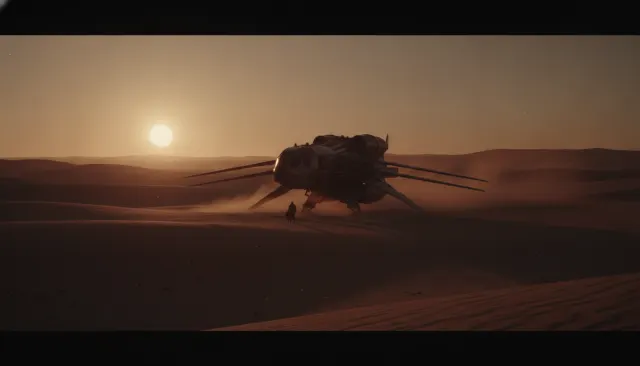
Roger Deakins; overhead drone abstractions and ochre desert palette establishing the monumental grammar in contemporary context
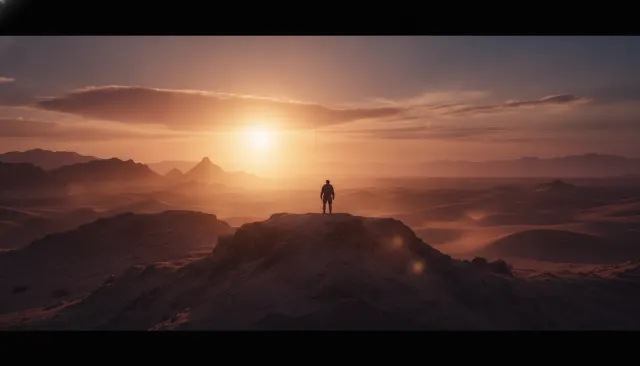
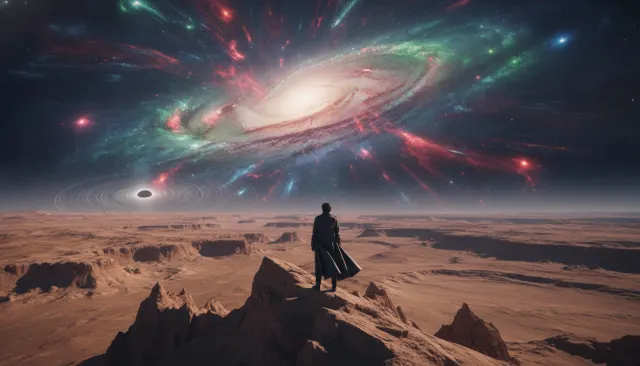
Denis Villeneuve monumental scale. Dune and Arrival monolithic geometry, ant-sized human against vast structure, ominous low brass.
The moves a human crew would use to get here. Cue applies them for you, and knowing their names is how you ask for a change.
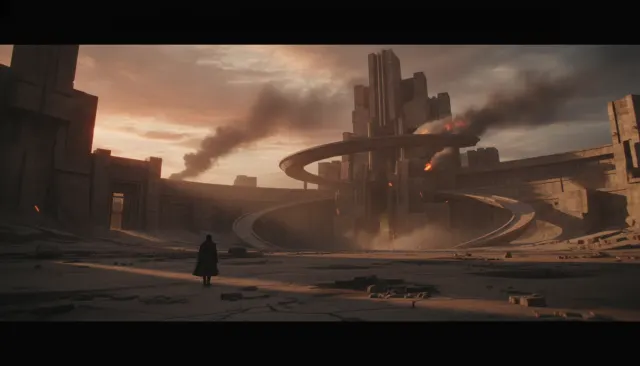
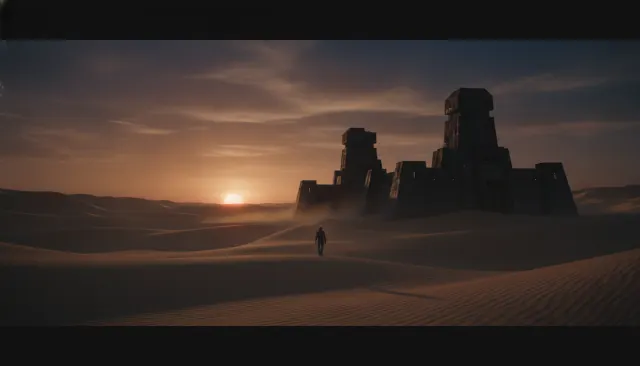
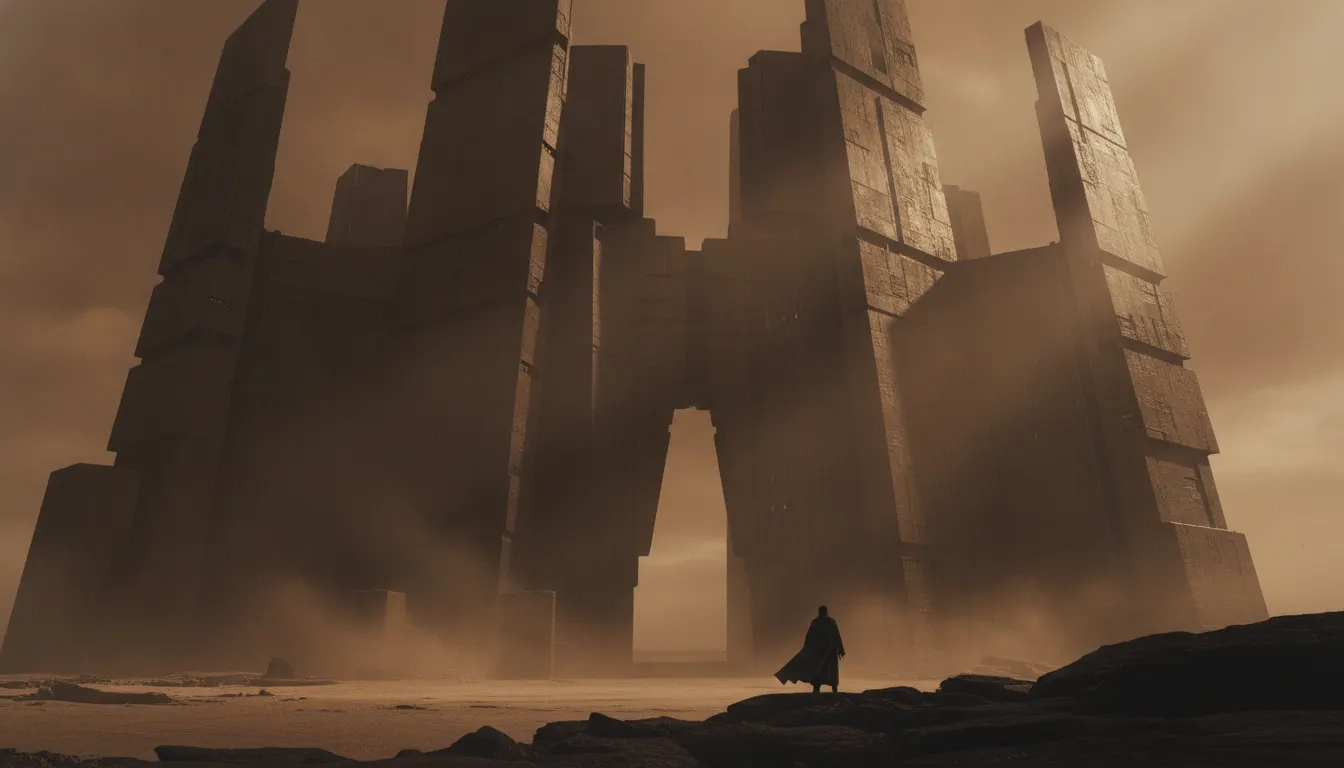
Subjects placed within compositions where structures, landscapes, or machines occupy the majority of the frame, making humans appear fragile and contingent.
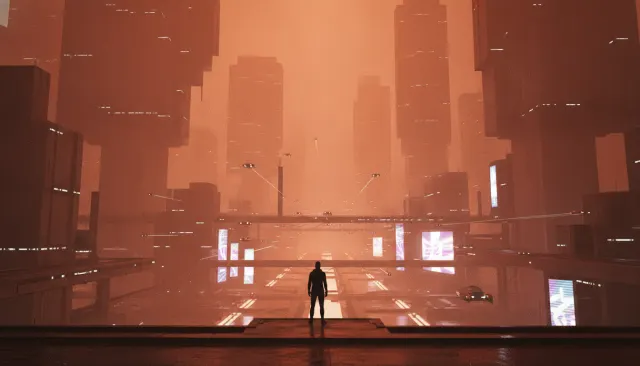
Desert dust, industrial smoke, or alien atmosphere used to create visual depth layers that emphasize distance between foreground figures and background scale.
Sudden cut to extreme overhead drone or helicopter perspective that reduces moving characters to insects within a geometric landscape abstraction.
Panavision anamorphic or IMAX formats that allow simultaneous sharp face detail and vast background depth within a single frame.
Structures and environments with smooth, featureless surfaces - black monoliths, sand plains, concrete - that resist human-scale texture and reading.
Hans Zimmer and Benjamin Wallfisch scores in dark sub-bass registers that sonically reinforce the visual grammar of overwhelming scale.
Denis Villeneuve has produced the most consistently monumental visual cinema of the 2010s and 2020s. Across Sicario (2015), Arrival (2016), Blade Runner 2049 (2017), Dune (2021), and Dune: Part Two (2024), he and his collaborating cinematographers - Roger Deakins, Bradford Young, and Greig Fraser - have developed a shared visual grammar built on the radical disproportion between human figures and the environments they navigate. People in Villeneuve films are small, and the world is enormous.
Villeneuve's visual strategy consistently presents human protagonists as fragile objects within architectural, geological, or extraterrestrial scales they cannot control. The hexagonal alien arrival vessels in Arrival dwarf the military installations at their base. The Sardaukar harvester in Dune is a machine the size of a city block processing an ocean of sand with a human crew serving as operating mechanism. In Sicario, the U.S.-Mexico border landscape reduces a convoy of tactical vehicles to insects crossing an open wound. The visual argument is always the same: what you think is the significant thing (the character, the mission) is dwarfed by the systems containing it.
Roger Deakins shot Sicario (2015) and Blade Runner 2049 (2017). Sicario's Juarez sequences - overhead drone shots that flatten vehicles and buildings into abstraction, golden-hour desert light, and a visual palette of ochre and copper and shadow - established the monumental Villeneuve grammar in contemporary action context. Blade Runner 2049 pushed further: the Protein Farm sequences in gray-brown haze, the Las Vegas nuclear ruins in amber dust, the Wallace Corporation headquarters as smooth black monolith. Deakins used anamorphic lenses (Panavision) with extreme depth of field variations to push foreground figures into sharp contrast with vast, soft backgrounds.
Greig Fraser won the Academy Award for Best Cinematography for Dune (2021). His approach retained Villeneuve's monumental scale grammar while introducing a distinctive orange-bleached Arrakis palette and large-format photography (Panavision Ultra Vista, shooting on IMAX) that allows extreme widescreen compositions to hold both human-scale face detail and epic landscape simultaneously. Dune: Part Two (2024) deepened the grammar with the Harkonnen sequences shot in black-and-white on infrared-simulating sensors, and the Fremen cave sequences in near-darkness.
A consistent atmospheric element across Villeneuve films is haze: desert dust, urban smog, alien atmosphere, industrial fog. This haze serves a compositional function - it creates depth layers that emphasize the distance between foreground subjects and background structures, making scale legible where a clear atmosphere would collapse distance. It also creates a visual metaphor for obscured understanding: characters moving through worlds they cannot fully see or comprehend.
Denis Villeneuve · 2015
Roger Deakins; overhead drone abstractions and ochre desert palette establishing the monumental grammar in contemporary context
Denis Villeneuve · 2016
Bradford Young; hexagonal alien vessels as overwhelming geometric presence against military installations
Denis Villeneuve · 2017
Deakins at his most monumental; amber dust ruins and black monolith architecture surrounding Harrison Ford and Ryan Gosling
Denis Villeneuve · 2021
Greig Fraser winning the ASC Award; IMAX Arrakis dunes and harvester machines dwarfing Paul Atreides
Denis Villeneuve · 2024
Fraser pushing further; infrared-simulated Harkonnen black-and-white and Sietch Tabr cave darkness
Denis Villeneuve · 2013
Roger Deakins; smaller scale but the same grammar of weather and environment overwhelming human moral clarity
Denis Villeneuve · 2013
Nicolas Bolduc; Toronto as oppressive yellow-haze urban monolith crushing Jake Gyllenhaal's protagonist
A Look is not a filter. It is a set of stored decisions the pipeline reads before it makes a single frame, so two videos in the same Look actually match.