Dune: Part Two
2024
dir. Denis Villeneuve, DP Greig Fraser, Weta FX / DNEG / Framestore
Dune Part Two Villeneuve monolithic VFX. Arrakis sand desert at scale, brutalist Harkonnen architecture, Greig Fraser cinematography.
The moves a human crew would use to get here. Cue applies them for you, and knowing their names is how you ask for a change.
every digital element has a physical reference point on set
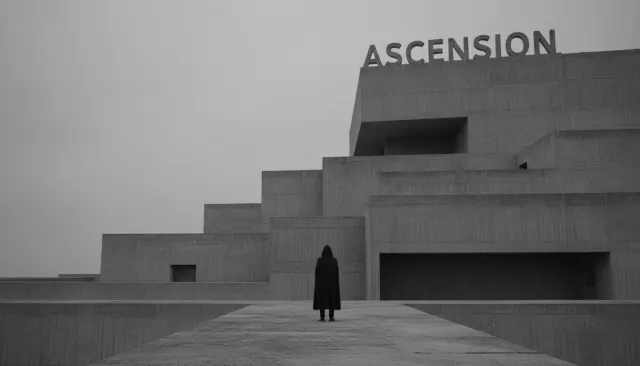
and-white capture for Giedi Prime sequences (ARRI modified camera, Greig Fraser) with monochromatic VFX pipeline
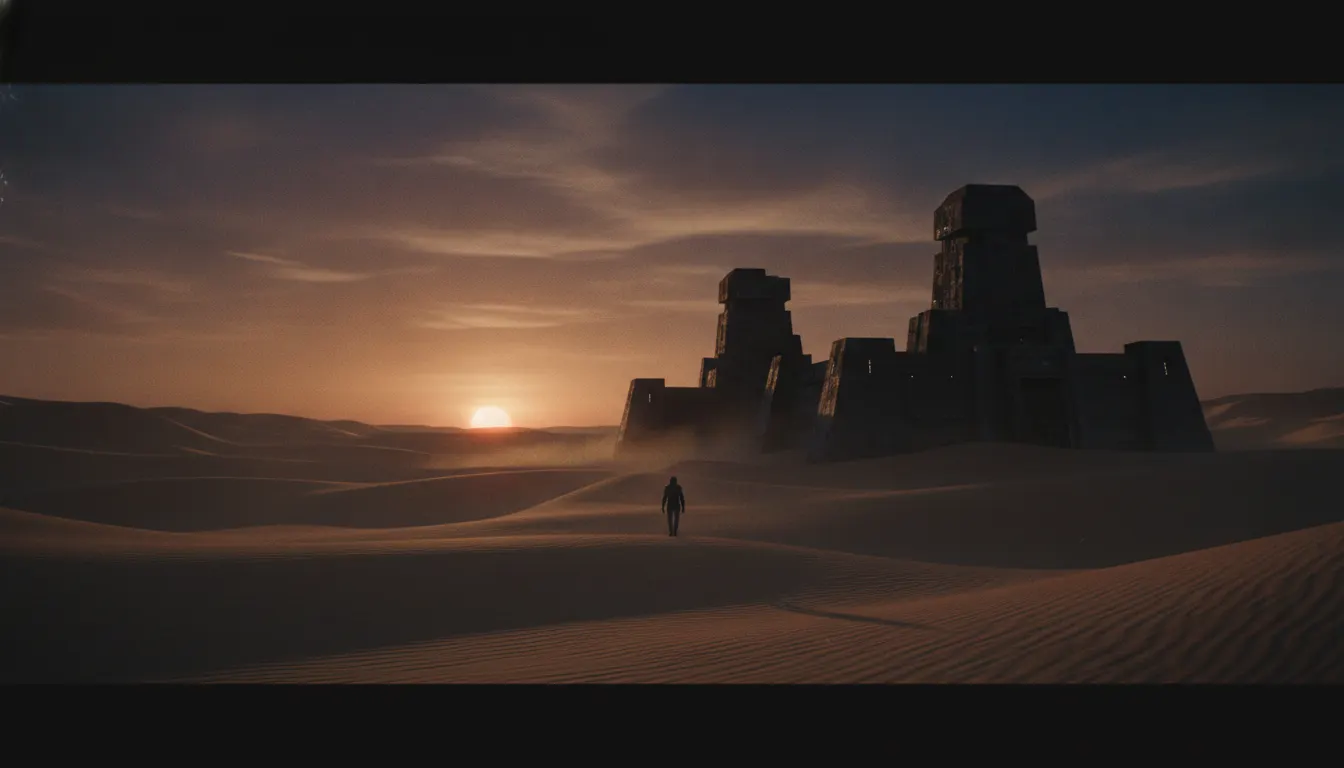
grey palette with amber spice-light color grading on Arrakis daylight sequences
characters as small as 3% of frame area against geological formations
pure black polished stone, zero surface decoration, maximum scale
multi-layer sand-haze atmospheric perspective that desaturates and warms background planes
Dune: Part Two (2024) directed by Denis Villeneuve, with cinematography by Greig Fraser and VFX produced primarily by Weta FX (Wellington), DNEG (London), and Framestore, represents the state of the art in prestige science fiction VFX filmmaking-a visual approach that prioritizes geological scale, material weight, and atmospheric precision over spectacle-for-spectacle's sake.
Villeneuve (Arrival, 2016; Blade Runner 2049, 2017) operates with a consistent VFX philosophy: CGI should feel like it was found, not created. His approach involves extensive practical photography (real desert locations in Jordan, Abu Dhabi, and Norway for Part Two), with VFX used to extend scale and add elements that practically exist but cannot be filmed at the required perspective. Lead VFX supervisor Paul Lambert (who worked with Villeneuve on Blade Runner 2049) enforces a rule that every CGI element must have a physical reference point on set-no pure digital environments.
The most distinctive VFX achievement in Dune: Part Two is the Giedi Prime sequence-the Harkonnen gladiatorial arena filmed in true black-and-white (not color-graded monochrome but actually shot in infrared by Greig Fraser with a specially modified ARRI camera, then graded to pure black-and-white). Weta FX and DNEG produced all the crowd CGI, arena architecture, and Harkonnen ornithopters for these sequences in pure monochromatic rendering-no color channels at all in the pipeline. This produces a distinctively harsh, graphic black-and-white that reads differently from color-graded monochrome.
Weta FX's sandworm simulations for Part Two expanded significantly on Part One. The sand physics system (developed on SideFX Houdini with custom Weta solvers) simulates millions of sand particles with fluid dynamics behavior-the 'sand wave' that precedes sandworm emergence requires accurate compression wave physics in a granular material. Character-to-sandworm scale comparison shots required compositing Timothée Chalamet against 400-meter-long creatures while maintaining photographic realism.
Arrakis in Part Two introduces new biome variants: the deep desert, the Fremen sietch interior cave systems, and the polar ice regions of the far south where the Bene Gesserit convene. Production designer Patrice Vermette and environment art director (Weta FX) developed shader libraries for the specific geological materials of each zone: iron-rich red sandstone formations, compressed spice blue mineral veins, caldera basalt formations.
2024
dir. Denis Villeneuve, DP Greig Fraser, Weta FX / DNEG / Framestore
2021
dir. Denis Villeneuve - established the visual grammar
2017
dir. Denis Villeneuve, DP Roger Deakins - precursor monolithic aesthetic
2016
dir. Denis Villeneuve - alien scale and minimalist VFX philosophy
2015
dir. George Miller - desert practical/VFX integration reference
A Look is not a filter. It is a set of stored decisions the pipeline reads before it makes a single frame, so two videos in the same Look actually match.