Alita: Battle Angel
2019
dir. Robert Rodriguez, prod. James Cameron, Weta Digital VFX
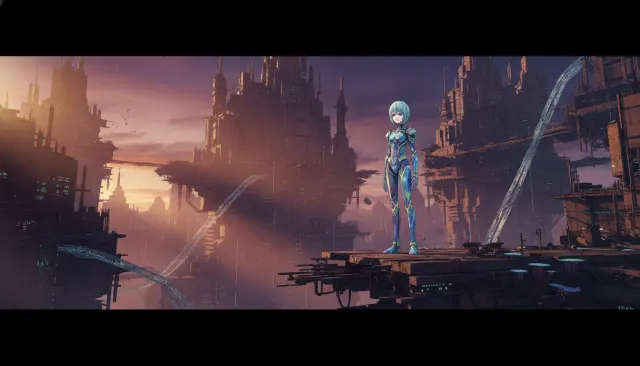
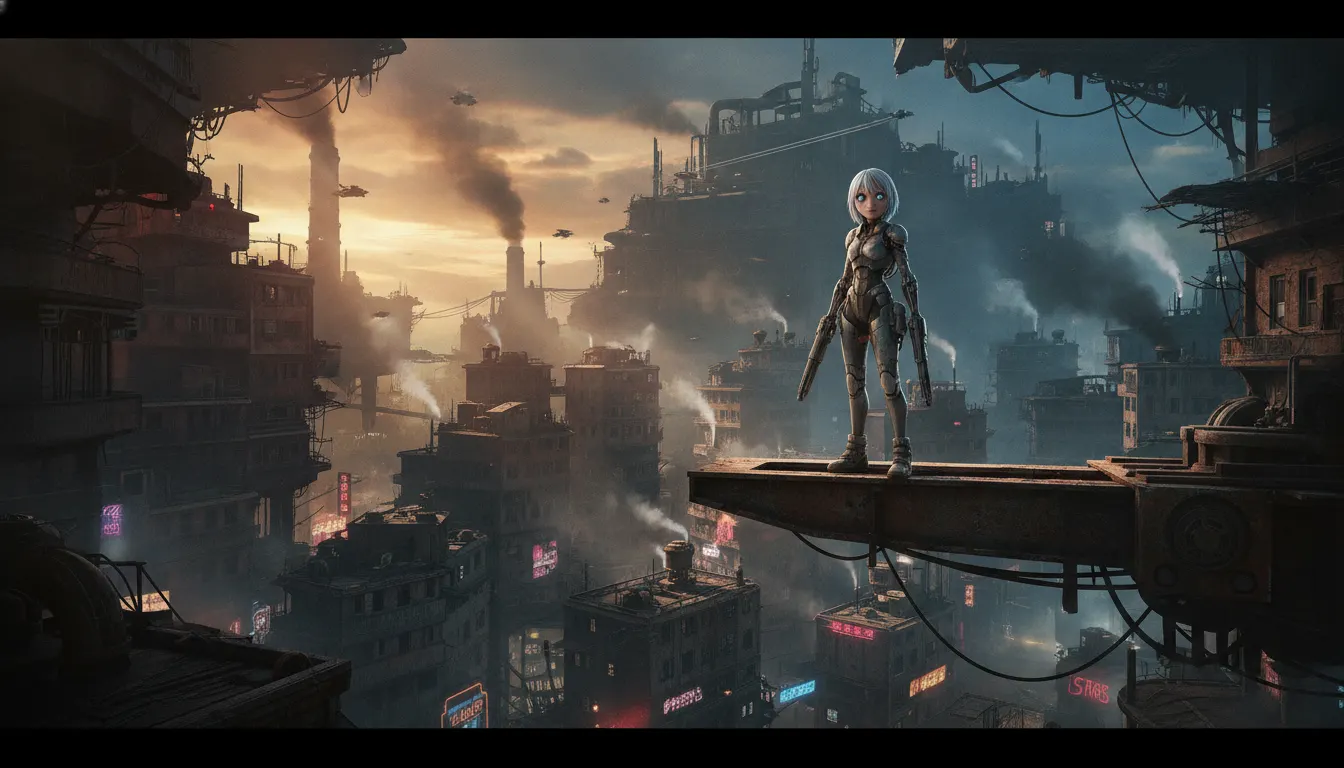
Alita Battle Angel uncanny-photoreal CG character. Rodriguez Cameron Iron-City world, exaggerated CG anime-eye protagonist photoreal cyborg world.
The moves a human crew would use to get here. Cue applies them for you, and knowing their names is how you ask for a change.
scaled manga eyes (1.5x human size) with photorealistic iris and sclera detail
mounted camera arrays (Weta's PERFORM system)
surface detail on CGI skin matching ARRI ALEXA sensor output
influenced framing and lens flare on digital capture to add optical warmth
Alita: Battle Angel (2019, directed by Robert Rodriguez, produced and co-written by James Cameron) represents one of the most deliberate and technically extreme deployments of the uncanny valley in mainstream cinema. Rather than avoiding the uncanny, the film weaponizes it as a narrative and visual metaphor: Alita is a cyborg, not fully human, and her design reflects that ontological ambiguity.
The central visual signature of Alita is her eyes-roughly 1.5x the size of a human eye, drawn directly from Yukito Kishiro's original 1990-1995 manga (Gunnm) and its 1993 OVA adaptation. The Weta Digital team (led by VFX supervisor Eric Saindon and animation supervisor Mike Cozens) built a face that is photorealistic in every surface detail-skin pores, moisture on the sclera, capillary detail in the iris-while maintaining the impossible proportions of a drawn character. This required entirely custom facial rigs and a proprietary performance-capture pipeline that retained Rosa Salazar's performance through layers of digital transformation without motion-retargeting artifacts.
Weta used a system they called 'PERFORM'-an advancement on the facial performance capture used in Rise of the Planet of the Apes (2011) and Dawn of the Planet of the Apes (2014). Rosa Salazar wore a helmet-mounted camera array during every take. The captured data drove a rig that had thousands of individual facial muscle controls. Unlike traditional facial mocap that maps dots to predefined blendshapes, PERFORM maintained micro-expression continuity, making Salazar's emotional performance legible at extreme close-up through a face that is geometrically inhuman.
The setting-Iron City, a stratified dystopian megacity below the floating sky-city Zalem-blends Brazilian street photography reference, 1980s-90s anime production design, and practical set extensions. The film's 3D photography (shot in anamorphic-influenced framing despite being native digital) and warm, slightly graded palette contrast the cool metallic tones of cyborg bodies against organic human warmth.
2019
dir. Robert Rodriguez, prod. James Cameron, Weta Digital VFX
Yukito Kishiro, Shueisha
dir. Hiroshi Fukutomi, Madhouse
2009
James Cameron, Weta Digital - predecessor performance-capture pipeline
2011
Weta Digital PERFORM ancestry
A Look is not a filter. It is a set of stored decisions the pipeline reads before it makes a single frame, so two videos in the same Look actually match.