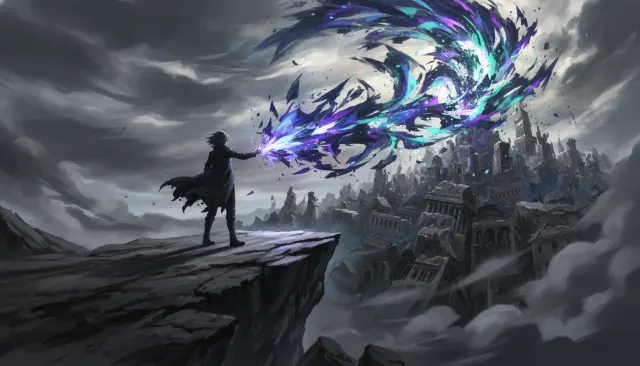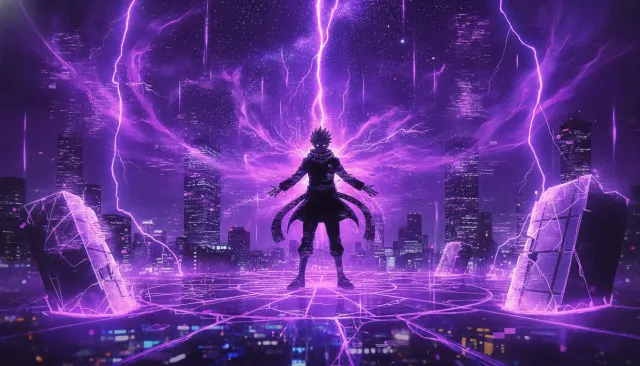
Demon Slayer: Kimetsu no Yaiba (2019, 2020+)
Ufotable, dir. Haruo Sotozaki
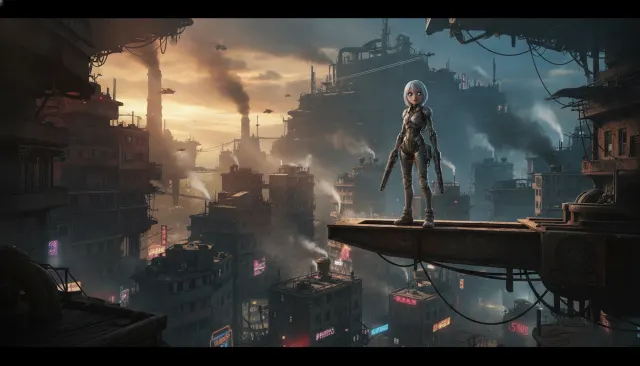
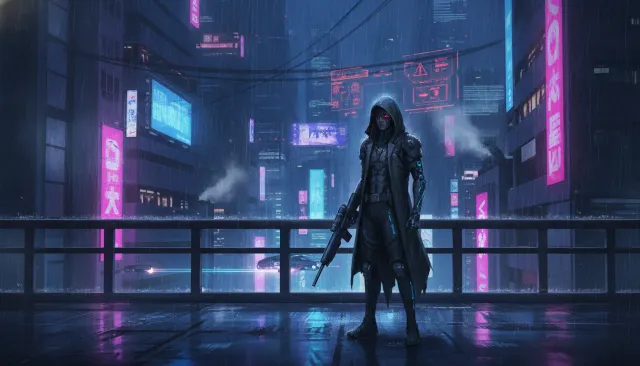
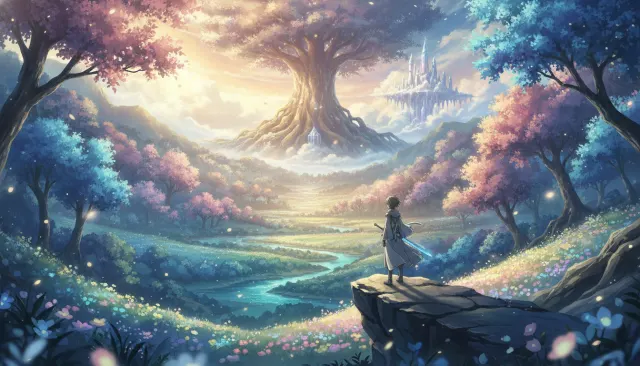
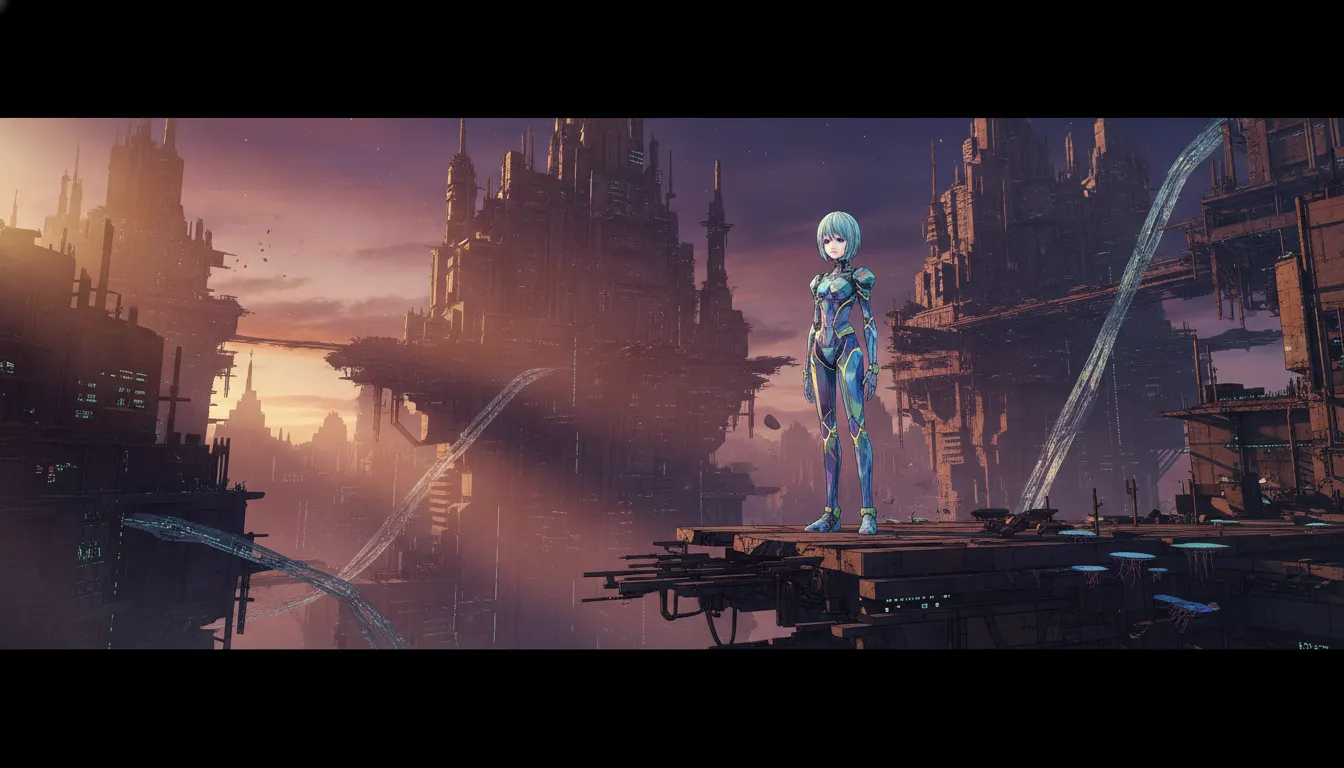
Modern anime 3D-with-2D-cel-shading. Land of the Lustrous, BLAME, expressive anime face on 3D rigs, sci-fi or fantasy palette.
The moves a human crew would use to get here. Cue applies them for you, and knowing their names is how you ask for a change.
edge shading bands replicating cel animation flatness on 3D geometry
line outlines rendered procedurally (post-process edge detection or geometry offset)
painted texture maps (Ufotable style)
drawn flip-book sprites for fire, water, and energy effects
process layers over 3D motion
rate modulation: 24fps base with 8-12fps smears on peak impact frames
The anime 3D hybrid look is one of the defining animation developments of the 2010s and 2020s, representing the convergence of traditional hand-drawn anime aesthetics with 3D CGI infrastructure. Rather than adopting Western CGI conventions (volumetric lighting, photorealistic shaders), Japanese studios developed a distinct approach that uses 3D geometry as an underlying skeleton while preserving cel-shaded flatness, strong outlines, and hand-drawn motion principles. The result is a visual language that borrows the camera freedom of CGI while maintaining the graphic, emotionally-coded appeal of cel animation.
Ufotable (Fate/Zero, 2011; Demon Slayer: Kimetsu no Yaiba, 2019; Fate/stay night: Unlimited Blade Works, 2014-2015) pioneered a hybrid pipeline where 3D geometry handles environmental scale and camera movement - particularly dynamic camera orbits and depth-of-field transitions impossible in pure 2D - while character animation uses 2D drawings composited on top. Their signature is saturated volumetric light shafts (popularly called 'god rays'), particle systems with hand-drawn texture maps, and water/fire effects that blend procedural simulation with hand-keyed secondary animation. Demon Slayer (2019, directed by Haruo Sotozaki) brought this approach to global mainstream awareness, with the Mugen Train theatrical film (2020) becoming Japan's highest-grossing film of all time.
Studio Orange (Land of the Lustrous, 2017; Beastars, 2019; Trigun Stampede, 2023) pursues a different path: fully CG characters and environments, but rendered with custom toon shaders that replicate cel animation flatness, including deliberate avoidance of specular highlights except on specific design elements. Director Kyohei Ishiguro's Land of the Lustrous used Orange's pipeline to create gemstone characters whose crystalline surfaces could only exist in 3D while maintaining an anime-flat reading. The studio's approach proves that full-CG production can adopt anime conventions at the material and motion level rather than just the surface aesthetic.
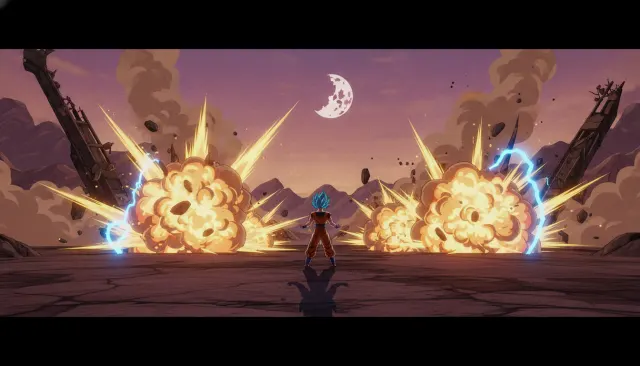
Toei Animation's theatrical films - One Piece Film: Red (2022, dir. Goro Taniguchi) and Dragon Ball Super: Broly (2018, dir. Tatsuya Nagamine) - blend hand-drawn character animation with CGI crowd work, environmental extensions, and energy-effect compositing that intensifies action sequences beyond what traditional animation permits. This hybrid approach, rather than full conversion to 3D, represents the majority position among Japanese major studios: 2D character primacy with 3D supporting infrastructure.
Beyond individual studios, the 2020s have seen tools like Blender's Grease Pencil and Epic's Unreal Engine anime shaders democratize the hybrid approach. Game developers working in the anime-adjacent space (Genshin Impact, HoYoverse, 2020) deploy fully real-time anime 3D rendering at mobile scale, bringing the look to hundreds of millions of players.
Ufotable, dir. Haruo Sotozaki
2011
Ufotable, dir. Ei Aoki
2017
Studio Orange, dir. Kyohei Ishiguro
Studio Orange, dir. Shinpei Watanabe
2018
Toei, dir. Tatsuya Nagamine
2022
Toei, dir. Goro Taniguchi
2023
Studio Orange, dir. Kenji Mutou
A Look is not a filter. It is a set of stored decisions the pipeline reads before it makes a single frame, so two videos in the same Look actually match.