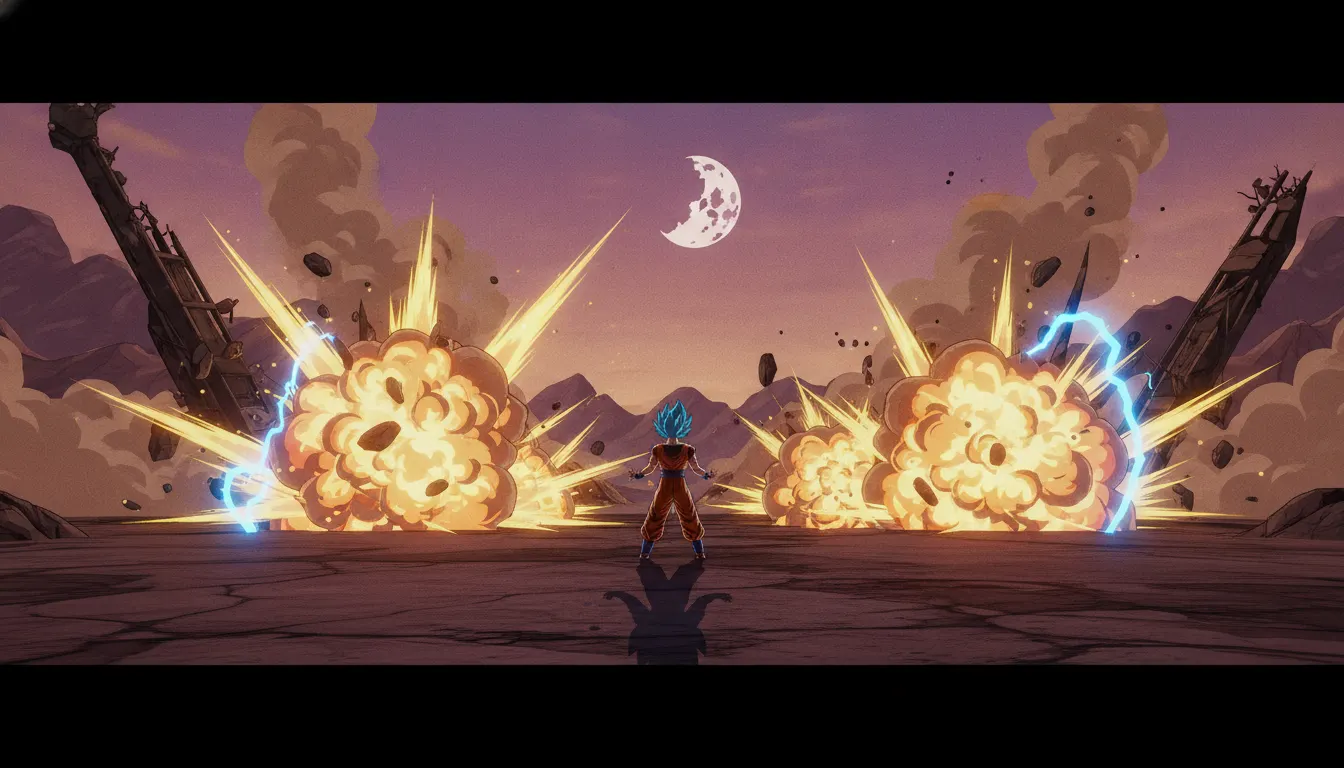
Dragon Ball FighterZ
2018
Arc System Works / Bandai Namco, art dir. Junya Motomura
Dragon Ball FighterZ Arc System Works cel-shaded. Anime-faithful 3D as if hand-drawn, ki-energy explosion effects, dynamic fighter framing.
The moves a human crew would use to get here. Cue applies them for you, and knowing their names is how you ask for a change.
threshold toon ramp shader (no gradient shading - one hard shadow boundary per light)
painted specular highlight maps on hair and glossy surfaces as flat, stroke-like bright patches
inflation (inverse hull) outline rendering with normal-map-driven line weight variation
drawn texture sprites in particle systems (not procedural glow)
shift during transformations with corresponding skin tone warm-up
space blur and chromatic aberration on high-energy impact frames mimicking animation camera shake
matched color palettes sourced from Toei's official model sheets rather than invented from reference
Dragon Ball FighterZ (2018), developed by Arc System Works (Guilty Gear series creators) and published by Bandai Namco, is widely credited as the technical breakthrough that demonstrated 3D game rendering could be perceptually indistinguishable from 2D hand-drawn anime. Art director Junya Motomura and his team developed a custom rendering pipeline on Unreal Engine 4 that reproduced the specific visual properties of Toei Animation's Dragon Ball Z (1989–1996, directed by Daisuke Nishio) and Dragon Ball Super (2015–2018).
Arc System Works had been developing anime-accurate cel-shading since Guilty Gear Xrd -SIGN- (2014), whose development team published a GDC 2015 talk ('Guilty Gear Xrd's Art Style: The X Factor Between 2D and 3D') that became one of the most-cited technical documents in game art history. The philosophy is to identify exactly which visual rules animators apply when drawing Dragon Ball characters by hand-where hard shadow edges fall on Goku's body in a given lighting angle, how specular highlights on hair appear as separate drawn strokes rather than smooth gradients, what line weight variation appears on outline edges-and then encode those rules as shader parameters rather than hand-drawing each frame.
The pipeline uses a multi-pass rendering approach. The base lit pass applies a toon ramp with a single hard shadow threshold-no soft gradients anywhere. A separate pass renders hand-painted specular highlight maps for hair and surface gloss areas as flat, drawn-looking bright patches. Outlines use a geometry-inflation technique (inverse hull) with screen-space normal-map sampling to create line weight variation that replicates confident brush strokes. Particle and energy effects (Ki blasts, Super Saiyan auras) use hand-drawn texture sprites in particle systems rather than procedural glow, matching the look of Toei's effects animation.
The decision to match Toei's specific style (rather than inventing a new anime aesthetic) was deliberate-Dragon Ball's fanbase has 30+ years of visual memory, and any deviation from established character color and shading rules would be immediately perceptible. This source-fidelity constraint made the technical problem harder and the achievement more meaningful.
2018
Arc System Works / Bandai Namco, art dir. Junya Motomura
2014
Arc System Works - technical predecessor, GDC 2015 talk
Toei Animation, dir. Daisuke Nishio - visual source material
Toei Animation - primary visual reference for FighterZ color palette
2021
Arc System Works - evolved Arc anime rendering pipeline
A Look is not a filter. It is a set of stored decisions the pipeline reads before it makes a single frame, so two videos in the same Look actually match.
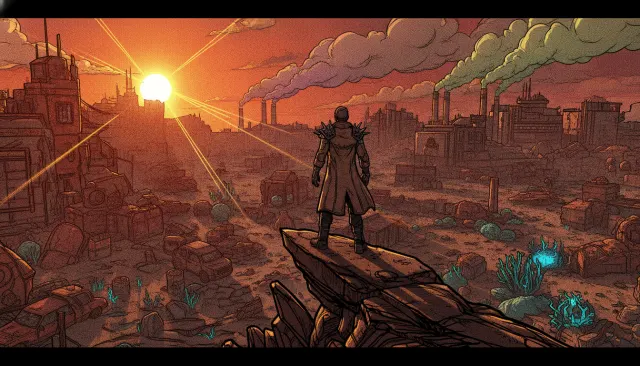 Cel Shaded 3DBorderlands Cel Shaded 3D
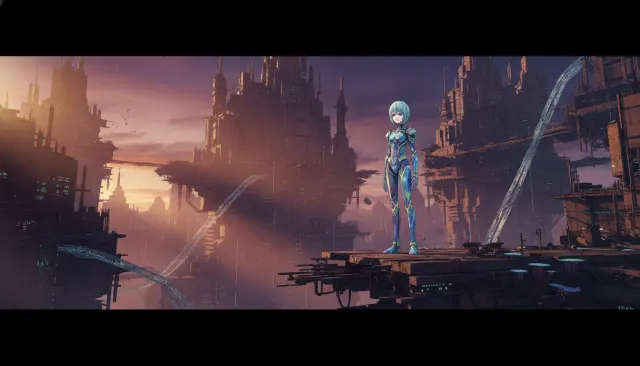 Indie 3DAnime 3D Hybrid Modern
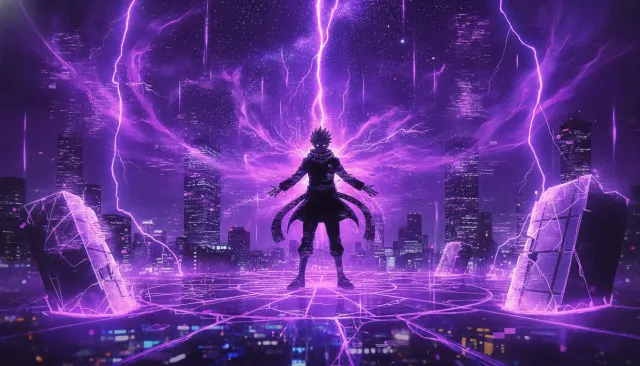 Era Classic Anime Expanded2020s Jujutsu Kaisen Cursed Energy
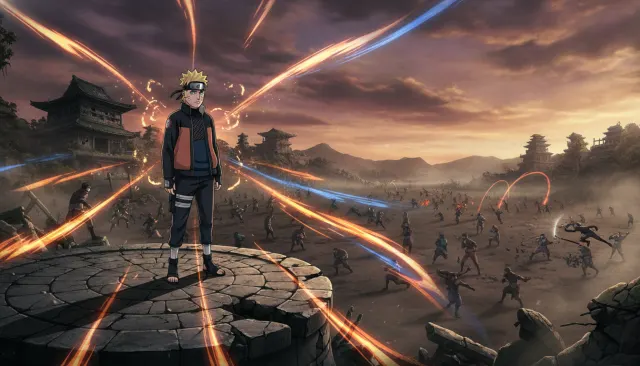 Era Classic Anime Expanded2000s Naruto Shippuden Modern Shonen
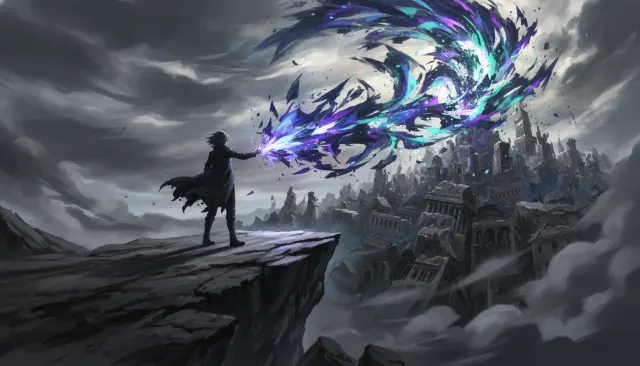 Studio Aesthetic ExpandedBones Studio Mob Psycho Action
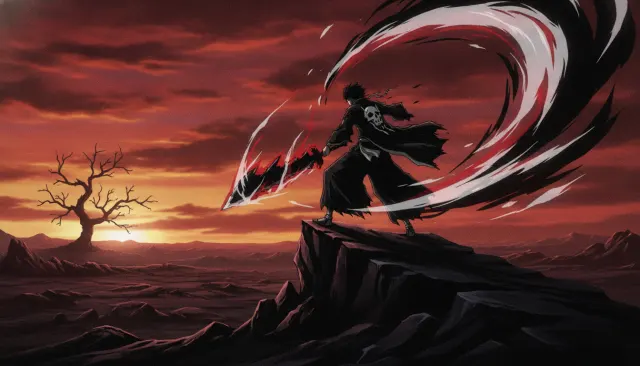 Era Classic Anime Expanded90s Bleach Shinigami Aesthetic