Alexander Mordvintsev Deep Dream original visualizations (June 2015)
first public images from Google
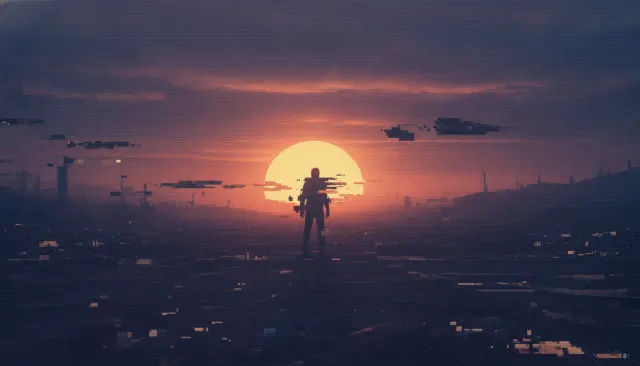
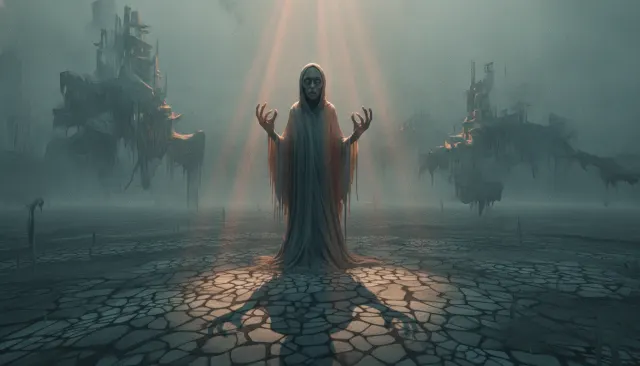
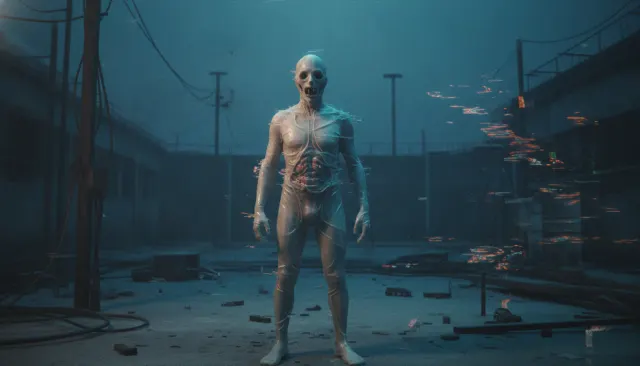
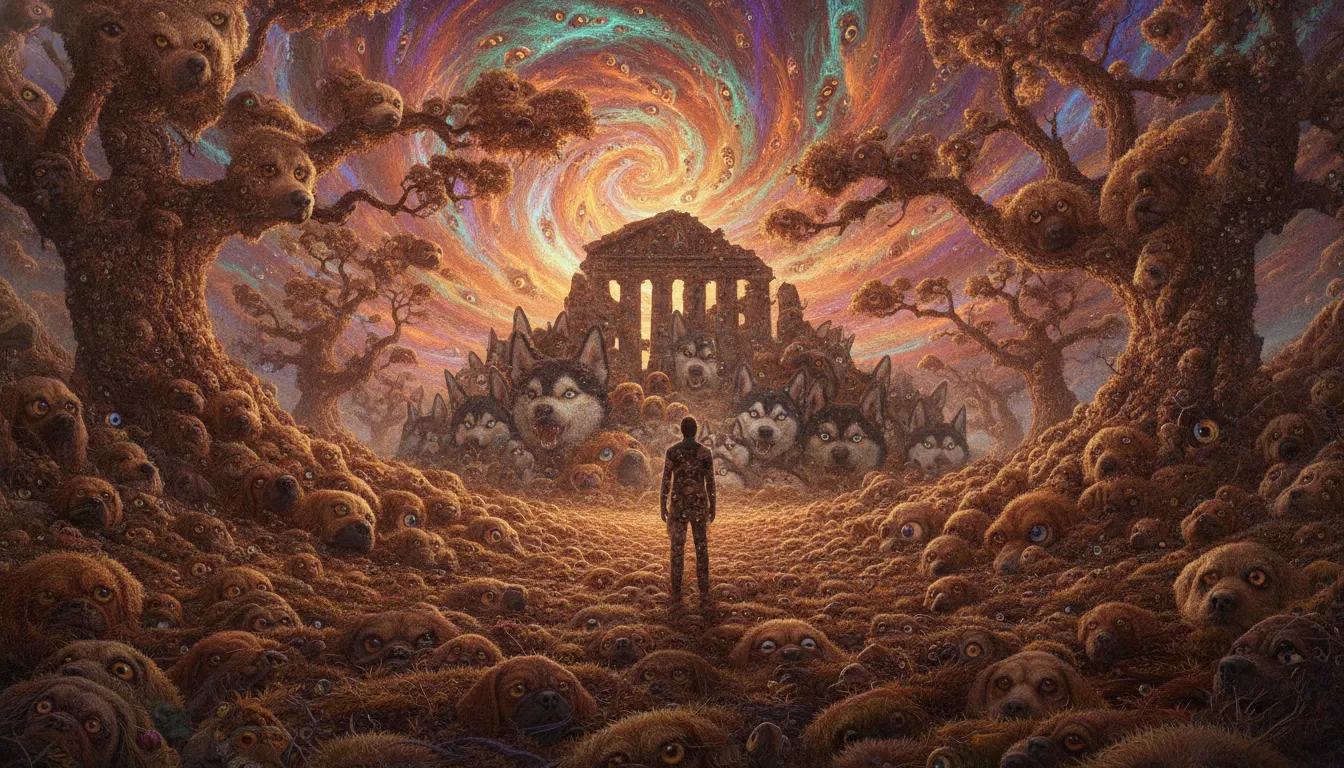
Google Deep Dream 2015 aesthetic. Inception-v3 over-amplified, dog eyes and fur sprouting from every surface, swirling psychedelic feature-soup.
The moves a human crew would use to get here. Cue applies them for you, and knowing their names is how you ask for a change.
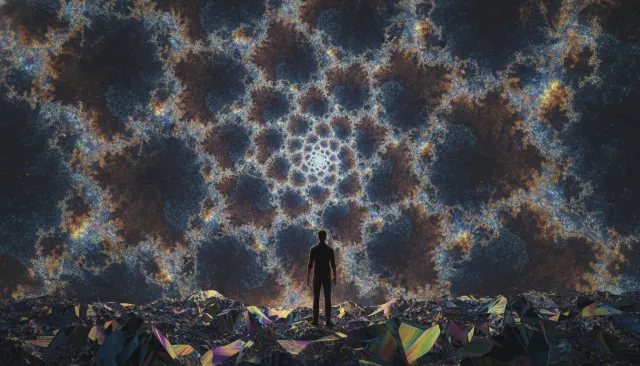
running the process at multiple image resolutions creates recursive self-similar fractal depth
resolution output - tile boundaries can be blended or used as compositional elements
lower layers produce edge/texture patterns; higher layers produce object hallucinations
small step sizes and frame-to-frame seed continuity prevent excessive flickering
high dream strength produces psychedelic hue shifts; low strength retains original palette with texture overlay
the technique amplifies motion cues, creating pulsing vortex effects on moving footage
Google Deep Dream emerged from a visualization technique developed by Alexander Mordvintsev, a Google engineer, in June-July 2015. Mordvintsev used the process of gradient ascent applied to a trained convolutional neural network (specifically GoogLeNet / InceptionNet, trained on ImageNet) to amplify the features that activated specific neurons in the network. Instead of using the network to classify images, he ran images 'backward' through the network, iteratively modifying the input to maximize the activation of chosen layers.
ImageNet contains disproportionate representation of dogs, animals, and eyes - the training dataset shaped what the network 'saw.' When gradient ascent amplified intermediate convolutional layers (particularly the inception_4c and inception_4d layers of GoogLeNet), the network hallucinated the patterns it most strongly associated with those activation spaces: fur textures, dog faces, and eyes - the most distinctive mid-level features in its training data. Eyes proliferate because eye-detection is one of the most robust learned features across the hierarchy; fur appears because it's a high-frequency texture with distinctive directional statistics. The characteristic 'dogslug' composite creatures result from the network blending concept activations across spatial regions.
Google released the Deep Dream code to GitHub and published a blog post titled 'Inceptionism: Going Deeper into Neural Networks' on 17 June 2015. The images went viral within days; the Google Cultural Institute held a Deep Dream art auction in San Francisco in February 2016. Artists including Scott Draves (who had been producing related work with his Electric Sheep distributed fractal screensaver since 1999) and the broader creative coding community immediately applied the technique to video, producing pulsing, recursively hallucinating footage that became a signature of AI-generated art's public debut.
GoogLeNet (also called Inception v1, 2014) was designed by Christian Szegedy and colleagues at Google for the ImageNet Large Scale Visual Recognition Challenge. Its architecture uses 'inception modules' - parallel convolutional filters of different sizes whose outputs are concatenated - allowing the network to simultaneously detect features at multiple spatial scales. This multi-scale detection is exactly why Deep Dream generates self-similar patterns at multiple scales: each layer detects patterns relevant to its receptive field, and amplification at multiple layers simultaneously creates the recursive depth. The 27-layer architecture (22 layers with trainable weights) was trained on 1.2 million ImageNet images across 1000 categories, approximately 120 of which are dog breeds - explaining the extreme dog-face prevalence in hallucinations.
The Deep Dream look features: recursive self-similarity (zooming in reveals the same patterns at finer scales); a characteristic warm, painterly desaturation combined with psychedelic color shifts; dog faces and eyes appearing in clouds, landscapes, and architectural textures; and a spiral or vortex tendency as the gradient ascent pushes features toward higher-activation configurations. The effect has a consistent hallucinatory quality that inspired widespread association with psychedelic and entheogenic visual experience. Contemporary artists continue using Deep Dream and successor GAN-based hallucination techniques; CLIP-guided diffusion (2021) created a related but distinct aesthetic based on CLIP's semantic associations rather than CNN class activations.
first public images from Google
public origin event
art world moment
precursor distributed neural aesthetic
popular platform, millions of images processed
2015
early fine art Deep Dream photography
cross-training aesthetic experiment
2017
neural perception video work building from Deep Dream lineage
A Look is not a filter. It is a set of stored decisions the pipeline reads before it makes a single frame, so two videos in the same Look actually match.