Stability AI Stable Diffusion 1.4 public release (22 August 2022)
origin event for the aesthetic
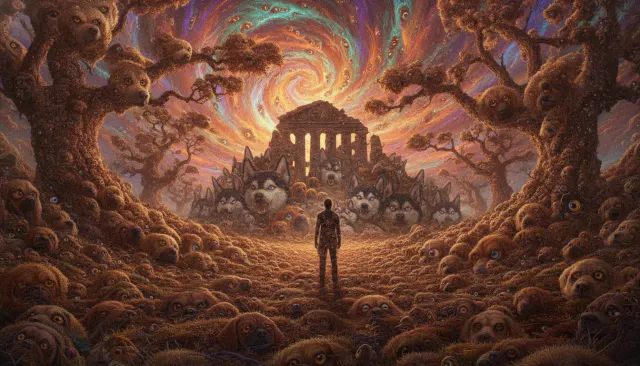
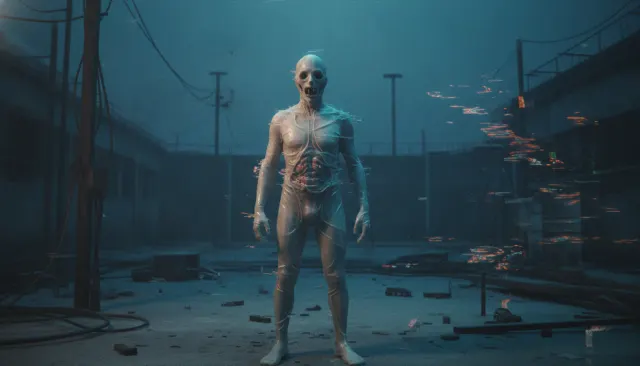
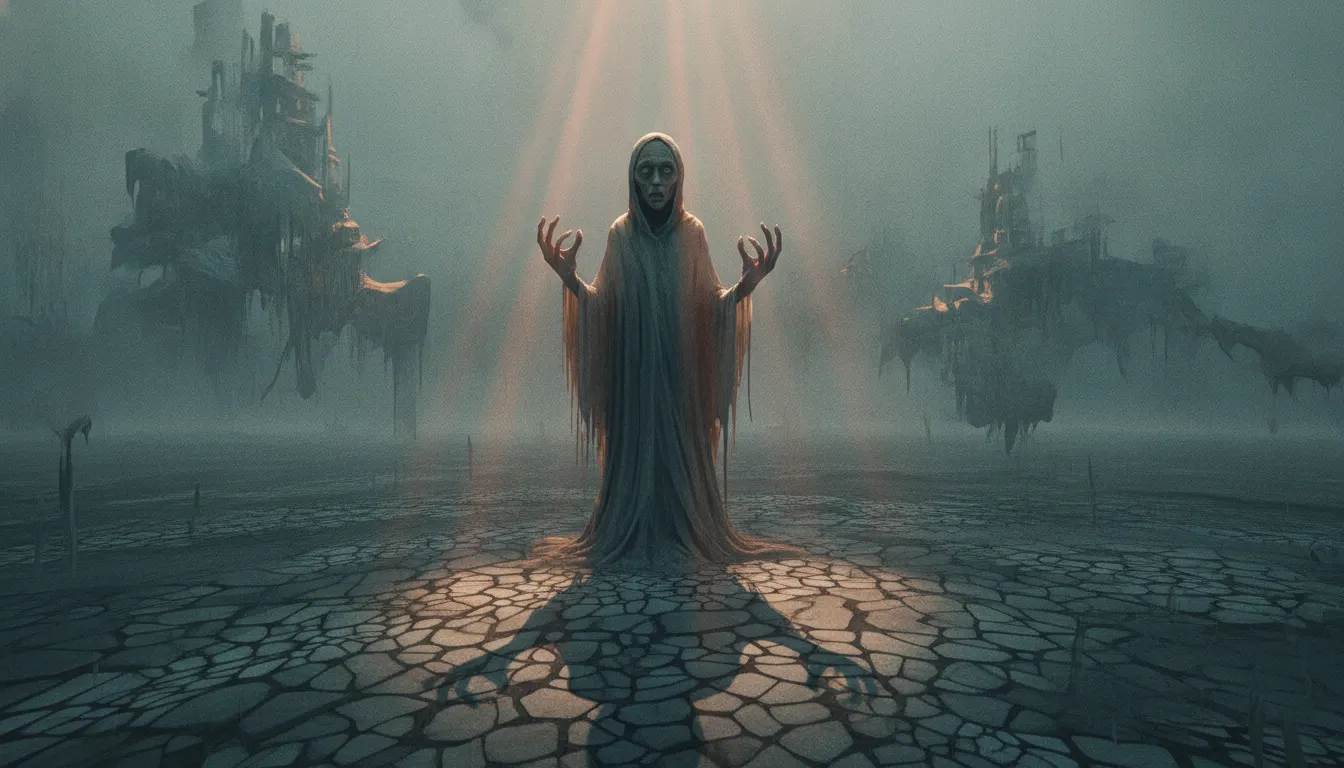
Stable Diffusion 1.4 era 2022 aesthetic. Uncanny faces, six-finger hands, melted background, characteristic SD 1.x compositional weirdness.
The moves a human crew would use to get here. Cue applies them for you, and knowing their names is how you ask for a change.
6-8 digit hands as a period-specific AI signature
crowd scenes with statistically averaged, not individuated, background faces
subject edges showing slightly different sharpness/blur than surrounding environment
warm, slightly over-sharpened medium stock-photo normality
architectural and environmental elements that follow visual plausibility but violate physical possibility
0.6 denoise strength, partially converting them to SD aesthetic
Stability AI publicly released Stable Diffusion 1.4 on 22 August 2022, making a powerful latent diffusion model freely downloadable for the first time. Within weeks, millions of images were being generated globally using interfaces including AUTOMATIC1111's web UI, DreamStudio, and Invoke AI. The release marked a sharp qualitative and quantitative shift in public AI image generation, following Midjourney's closed beta (March 2022) and OpenAI's DALL-E 2 (April 2022), but distinguished by being fully open-source and locally runnable.
SD 1.x generations have a specific set of failure modes that have become aesthetically recognizable. Hands and fingers: the model, trained on LAION-5B (a ~5.85 billion image-caption dataset scraped from Common Crawl by LAION e.V.), learned that hands typically appear in frame but had insufficient ground-truth data to learn the precise topological consistency of five-fingered hands - leading to the canonical 'too many fingers' failure, with 6-8 digit hands appearing in approximately 15-20% of portrait generations at 512x512. Faces at distance: secondary figures in crowd or environmental scenes show composite, averaged features - not uncanny valley in the Mori sense, but statistically blurred into averaged facial geometry. Teeth and eyes: similar insufficient training resolution at these high-frequency regions produces melted or multiplied teeth, slightly rotated or asymmetric eyes.
Beyond specific failure modes, SD 1.x has a characteristic visual temperature derived from its training corpus: stock photography normality slightly shifted, a warm medium sharpness with occasional sharp-soft inconsistencies at boundaries, a tendency toward idealized middle-distance compositions. The 768x768 and 512x512 generation resolutions create characteristic aspect ratio and composition constraints. The CLIP text encoder (trained by OpenAI, 2021) shapes how prompts translate to latent space, creating specific vocabulary-response patterns that practitioners learned to exploit.
The Stable Diffusion 1.x community rapidly developed a shared vocabulary of prompt engineering - specific token combinations that reliably shifted the model toward desired aesthetic outcomes. '(photorealistic:1.4), masterpiece, best quality' became standard positive prompt boilerplate; 'bad anatomy, extra fingers, mutated hands, missing limb, floating limbs' became standard negative prompt boilerplate specifically targeting the hand artifacts. The Civitai platform (launched October 2022) became the distribution point for community-trained LoRA (Low-Rank Adaptation) fine-tuning models, ControlNet pose-conditioning models (November 2022, Lvmin Zhang), and custom checkpoints. This ecosystem produced a recognizable 'Civitai aesthetic' - hyper-detailed, slightly oversaturated, often anime-influenced - that is distinct from both the raw SD 1.4 output and from later flagship models.
The uncanny artifacts of early SD have been adopted as intentional aesthetic material by artists including Holly Herndon and Mat Dryhurst, Trevor Paglen, and the broader AI art community documented at spaces like Playform.io and the AI Art Gallery. The imperfection signals 'AI made this' as a legible contemporary art statement. Subsequent SD versions (2.0, 2.1, XL, and SD3) progressively improved hand and face generation, making the SD 1.x artifacts historically specific to the August-December 2022 window - a brief technological moment with its own distinctive visual signature already being treated as a period aesthetic.
origin event for the aesthetic
2022
the interface that democratized SD generation
critical engagement with the aesthetic
2019
contextualizing the LAION/ImageNet training data politics
adjacent aesthetic, contemporaneous with early SD
comparison baseline for SD uncanny aesthetic
mass-market SD deployment and aesthetic dissemination
institutional context for AI image generation aesthetics
A Look is not a filter. It is a set of stored decisions the pipeline reads before it makes a single frame, so two videos in the same Look actually match.