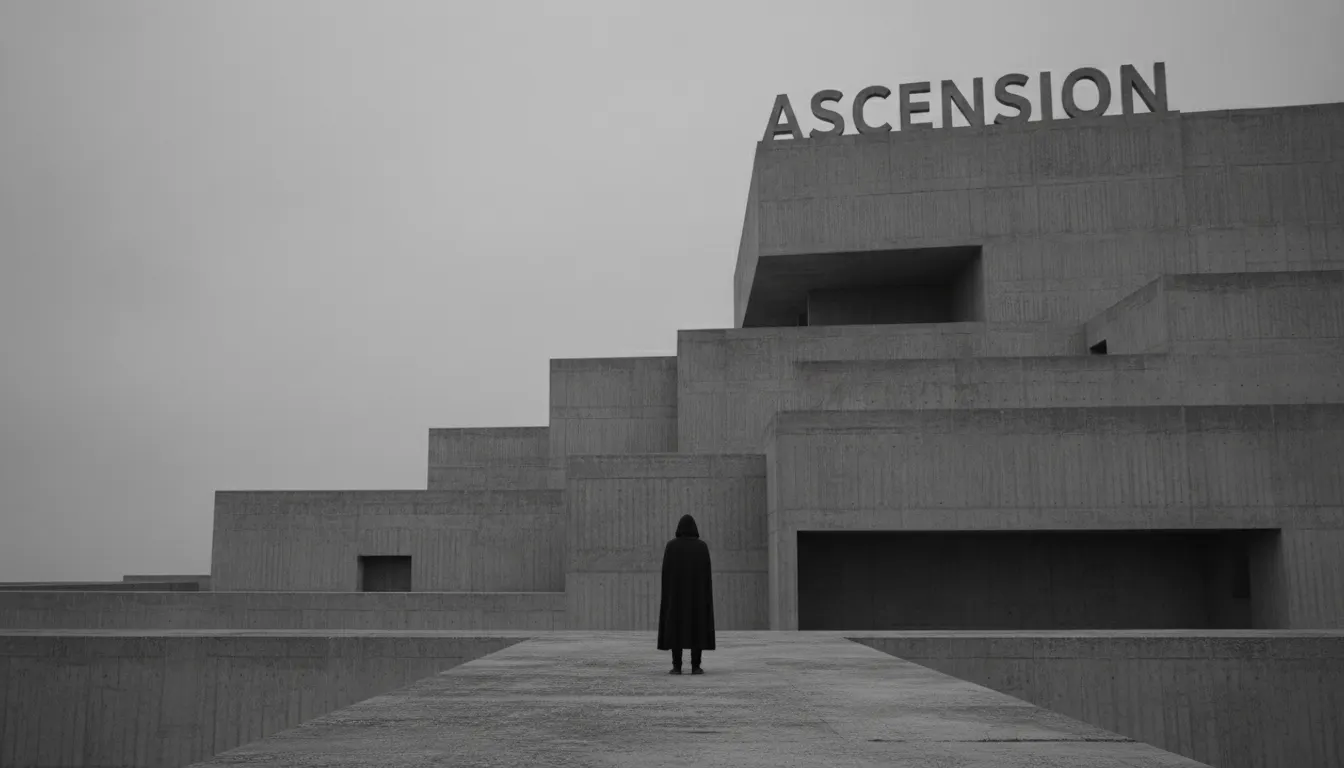
Unité d'Habitation
1952
Le Corbusier, Marseille
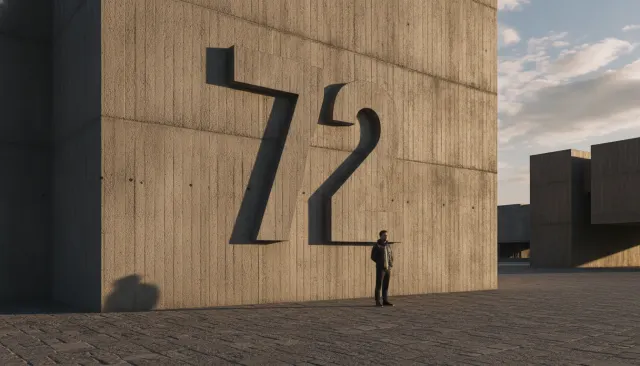
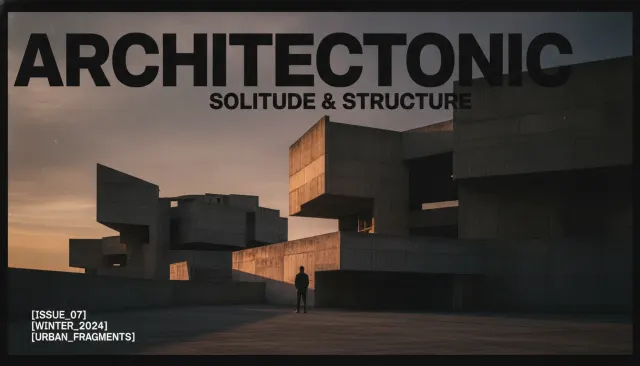
Flat lighting, hard concrete shadows, Helvetica caps, architectural austerity.
The moves a human crew would use to get here. Cue applies them for you, and knowing their names is how you ask for a change.
form concrete grain texture used as background or compositional element
contrast monochrome photography emphasizing surface texture
angle upward shooting to exaggerate mass and verticality
white, and raw umber as the core palette
serif typography at architectural scale
Brutalist concrete as a visual aesthetic begins in the material itself: béton brut, raw concrete, the construction substance that Le Corbusier elevated from utilitarian fill to architectural statement. At the Unité d'Habitation in Marseille (1952), Le Corbusier specified board-formed concrete cast with visible plank impressions, left unpainted and unclad. The surface bore the evidence of its making - a philosophy of material honesty that would define an era of public architecture.
The visual catalog of brutalist concrete is populated by buildings that have become objects of intense photographic attention. In Britain: Ernő Goldfinger's Trellick Tower in North Kensington (1972) and Balfron Tower in Poplar (1967), with their service towers connected by bridges at every third floor; Owen Luder's Trinity Square car park in Gateshead (1967, demolished 2010), made famous by the film Get Carter (1971); the Barbican estate in the City of London by Chamberlin, Powell and Bon (completed 1982).
In the Soviet Union, the scale became monumental: the Georgian Motorists' Association building in Tbilisi by George Chakhava (1975), the Buzludzha Monument in Bulgaria (1981), and countless brutalist housing blocks across Warsaw, Moscow, and the Baltic states. These buildings combined Le Corbusier's material language with the ideological weight of socialist realism, creating concrete structures that were simultaneously utilitarian and heroic.
Brutalist concrete photography has developed recognizable conventions: low shooting angles that emphasize the mass and verticality of structures, high-contrast black and white that renders the texture of aggregate and formwork, the geometry of walkways, undercrofts, and repetitive window patterns that create rhythm across facades, and the interplay of shadow and surface that changes throughout the day.
Photographers like Simon Phipps, whose book Brutal London (2016) cataloged the capital's remaining brutalist structures, and Peter Chadwick (This Brutal World, 2016) established contemporary documentation standards. Instagram accounts like Brutal Architecture and Soviet Architecture amassed hundreds of thousands of followers, rehabilitating the aesthetic from post-1980s decline.
In graphic design and video, the brutalist concrete aesthetic translates to: gray and off-white color palettes, concrete-grain textures as backgrounds or overlays, bold sans-serif typography that echoes the direct utility of architectural signage, and photography that finds geometric abstraction in structural form.
1952
Le Corbusier, Marseille
1972
Ernő Goldfinger, London
Chamberlin, Powell and Bon, London (1969-1982)
1975
George Chakhava, Tbilisi
1981
Georgi Stoilov, Bulgaria
2016
photography book, Simon Phipps
2016
photography book, Peter Chadwick
Owen Luder (1967/1971)
A Look is not a filter. It is a set of stored decisions the pipeline reads before it makes a single frame, so two videos in the same Look actually match.