Planet Earth
BBC NHU / Alastair Fothergill · 2006
First HD natural history mega-series; defined contemporary wildlife cinematography
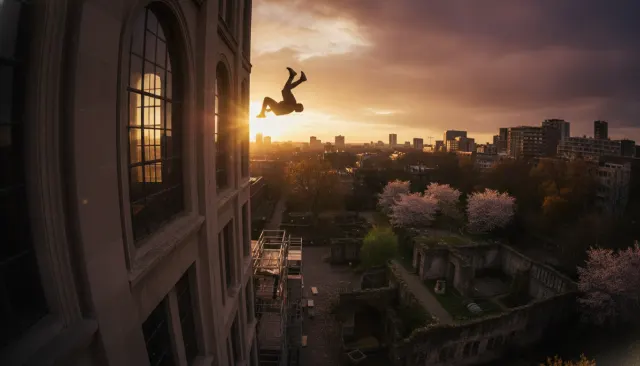
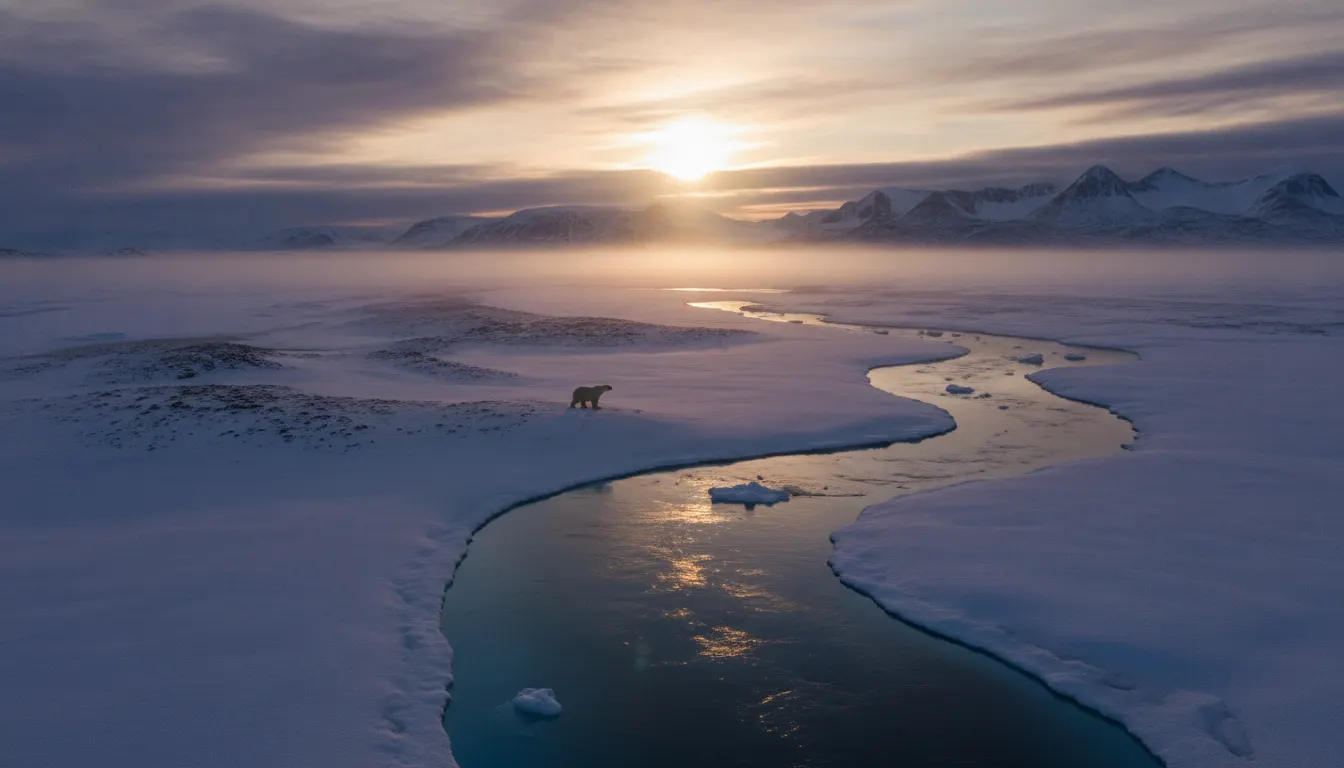
BBC Natural History Unit Planet Earth aesthetic. Attenborough-narrated 4K wildlife, long-lens patience, drone reveals, magic-hour vistas.
The moves a human crew would use to get here. Cue applies them for you, and knowing their names is how you ask for a change.
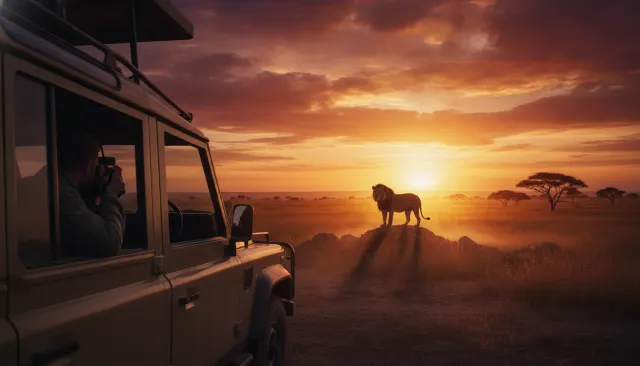
600-1200mm telephoto focal lengths shot from distance to capture natural behavior without disruption.
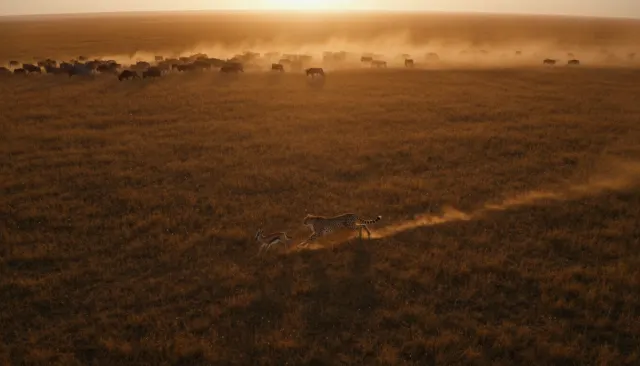
Helicopter-mounted gyroscopically-stabilized camera systems capturing smooth wide aerials at long focal lengths.
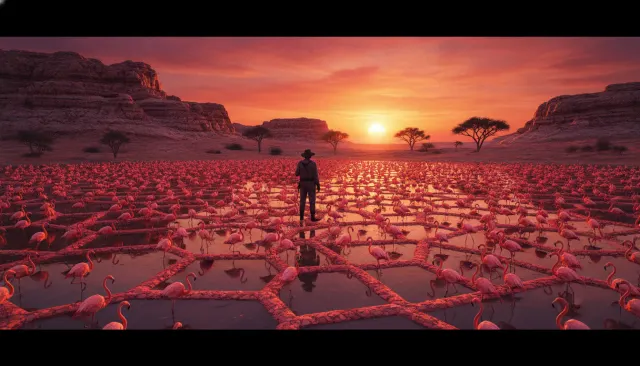
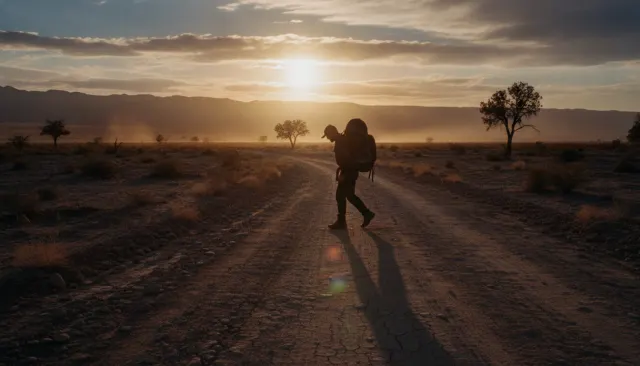
Weeks of deployment to capture golden-hour or blue-hour light intersecting with specific animal behavior.
High-speed cameras (1000fps+) capturing insect flight, predation, and water interaction invisible at normal frame rates.
Days- or weeks-long time-lapse sequences revealing plant growth, weather patterns, and animal migration as visual narrative.
Red-spectrum illumination allows deep-sea organisms to be filmed without triggering light-sensitivity escape responses.
The BBC Natural History Unit in Bristol is the world's preeminent producer of wildlife documentary, and its visual grammar - established across five decades and refined to technical perfection in the 2006 series Planet Earth - defines what 'wildlife documentary cinematography' means globally.
The BBC Natural History Unit was formed in 1957. Its early output used 16mm film and required enormous patience: cameraman Alan Root's footage of East African wildlife in the 1960s established the long-lens, wait-for-the-behavior patience ethic that defines the unit's approach. David Attenborough's collaboration with the unit began formally with Life on Earth (1979), a 13-part series that set the model for big-budget, planet-spanning natural history television.
The Blue Planet (2001, executive producer Alastair Fothergill) was the first series to deploy purpose-built underwater camera housings at scale, capturing deep-sea bioluminescence and behavior that had never been filmed. The series established the unit's commitment to technological innovation as a creative strategy: whatever equipment exists at the frontier of imaging capability will be deployed to record what was previously invisible.
Planet Earth (2006) was the first major natural history series shot in high definition. The series used Cineflex gyroscopically-stabilized helicopter camera systems to achieve smooth aerial footage at focal lengths previously impossible from moving aircraft. The opening sequence of a snow leopard hunting on a mountain cliff face - tracked by a stabilized telephoto from a helicopter - announced a new era of wildlife cinematography.
Magic-hour timing is the unit's consistent creative discipline. Camera operators deploy on location for weeks to capture the specific golden-hour or blue-hour light that transforms landscape scenes. The Serengeti migration sequences in Planet Earth represent thousands of operator hours waiting for the right light to intersect with the right animal behavior.
Blue Planet II (2017) deployed 4K cameras and extended mission underwater vehicles to capture new deep-sea behavior. Planet Earth III (2023) added AI-assisted behavior prediction to improve the probability of capturing rare events, and extended its coverage to urban wildlife as a structural argument about the integration of nature and human civilization.
The unit's technical vocabulary includes: long-focal-length telephoto patience (often 600-1200mm), Cineflex aerial stabilization, phantom high-speed for insect and predation sequences, time-lapse for growth and weather patterns, and red-light deep-sea illumination. Sound design uses a combination of recorded ambient sound and Foley-enhanced creature sounds to create an immersive audio field that matches the visual scale.
BBC NHU / Alastair Fothergill · 2006
First HD natural history mega-series; defined contemporary wildlife cinematography
BBC NHU / Alastair Fothergill · 2001
Foundational deep-sea cinematography; BAFTA-winning underwater visual language
BBC NHU / James Honeyborne · 2017
4K deep-sea expansion; most-watched factual TV in UK 2017
BBC NHU / Alastair Fothergill · 2011
Polar cinematography; definitive ice-world visual grammar
BBC NHU / Tom Hugh-Jones · 2016
Drone and 4K upgrade; Iguana-snake chase became the decade's viral wildlife moment
BBC NHU / Mike Gunton · 2023
Urban wildlife integration and AI-assisted behavior capture
BBC NHU / David Attenborough · 1979
Foundational Attenborough series; established the 13-part evolution model
A Look is not a filter. It is a set of stored decisions the pipeline reads before it makes a single frame, so two videos in the same Look actually match.