WILDLIFE NATURE · CONTEMPORARY · INTERNATIONAL
Annie Griffiths Wildlife Color
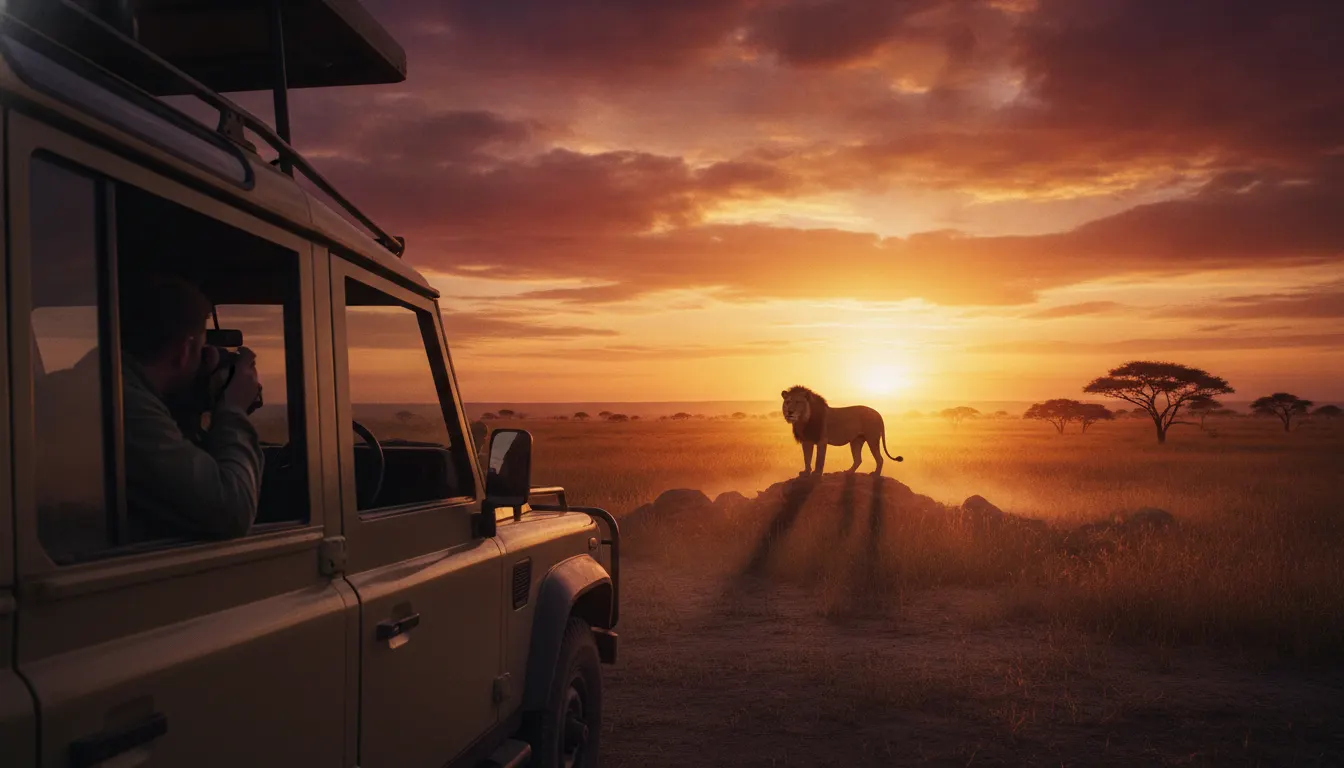
Annie Griffiths National Geographic wildlife. Magic-hour lion silhouette, jeep-eye-level Serengeti, color-saturated witness, NatGeo storytelling.
wildlifenatgeomagic-hoursafari
LUT natgeo-magic-hour-wildlife
WHEN TO USE
- Wildlife, nature, or environmental documentary content requiring warm, emotionally accessible color
- Travel content that prioritizes human connection with landscape over technical spectacle
- Educational content about conservation, ecosystems, or environmental issues
- Brand content for outdoor recreation, environmental nonprofits, or eco-tourism operators
- National Geographic-style editorial content with a values-aligned documentary tradition
- Content where animal subjects are portrayed with dignity and behavioral naturalism
WHEN NOT TO USE
- Wildlife content requiring clinical distance or purely scientific documentation
- High-drama action wildlife photography where peak moment capture is the primary goal
- Content requiring studio-quality controlled lighting
- Sports or adventure photography where the warm, contemplative quality creates tonal mismatch
SIGNATURE TECHNIQUES
How the look is made.
The moves a human crew would use to get here. Cue applies them for you, and knowing their names is how you ask for a change.
- 01Side or backlit golden hour light on wildlife subjects, particularly in savanna or desert environments
- 02Kodachrome 64 / Fujichrome Velvia film palette
warm, saturated, with clean shadow detail
- 03Medium telephoto (200
400mm) providing subject proximity without behavioral disruption
- 04Horizontal framing that places animals within their environmental context rather than isolated
- 05Available light in challenging conditions
dawn, dusk, underwater, forest interiors
- 06Eye
level camera angle matching animal eye height rather than shooting from above
- 07Patience
based access: images suggesting relationship and familiarity with subjects
- 08Color composition that places saturated subject against complementary background tones
HISTORY & CONTEXT
Where it comes from.
Annie Griffiths Wildlife and Travel Color Photography
Annie Griffiths (b. 1953, Minneapolis) became one of the first female photographers to work regularly for National Geographic when she joined the magazine's roster in 1978 at age 25. Over more than four decades she has produced documentary photography across 150 countries, with particular depth in wildlife, travel portraiture, and environmental stories. She co-founded the nonprofit Ripple Effect Images in 2008, which documents women's development programs in the developing world.
Visual Philosophy and Approach
Griffiths' photography sits within the National Geographic tradition of technically excellent, emotionally warm color documentary work. She has spoken extensively about the distinction between technically correct photography and emotionally resonant photography - her aim is always the latter. Her animal and wildlife work in particular is characterized by a quality of access that suggests patience and relationship rather than the mechanical efficiency of telephoto wildlife photography.
Color and Light Characteristics
The Griffiths color signature draws on the full range of field conditions: the golden warm side light of African savanna late afternoon, the soft blue-gray of overcast woodland environments, the intense cyan-green of tropical water systems. Unlike the post-processed supersaturation of much contemporary wildlife photography, Griffiths' color is film-based in origin - predominantly Kodachrome 64 and Fujichrome Velvia in her pre-digital career - with a warmth and tonal range characteristic of reversal film rather than digital capture.
Her willingness to work in available light in low-light conditions (dark forests, dawn/dusk environments, interior village scenes) produces images with more atmospheric mood than the crisp high-contrast telephoto shots that define the contemporary wildlife photography marketplace.
Key Assignments and Publications
Griffiths has produced over 30 major National Geographic features. Notable assignments include the Galilee region (Jordan Valley and Sea of Galilee, multiple visits), the American Southwest's canyon lands and desert ecosystems, Australia's Great Barrier Reef, and extensive work in Central America and the Amazon Basin. Her book A Camera, Two Kids, and a Camel (National Geographic Books, 2008) draws on two decades of field notebooks and images, recounting family travel to 30 countries for the magazine.
Her environmental advocacy work documents climate change impacts on coral ecosystems and water systems with the same compositional care she brings to wildlife portraiture.
NOTABLE WORKS
Where you have seen it.
Annie Griffiths, 'A Camera, Two Kids, and a Camel' (National Geographic Books, 2008)
Annie Griffiths, Great Barrier Reef documentation for National Geographic, 1990s-2000s
Annie Griffiths, Amazon Basin and Central American rainforest series
Annie Griffiths, American Southwest canyon and desert landscape series
Ripple Effect Images documentation series (2008-present)
Annie Griffiths, National Geographic 125th Anniversary retrospective inclusion
2013
THE RECIPE
The exact knobs
the renderer turns.
A Look is not a filter. It is a set of stored decisions the pipeline reads before it makes a single frame, so two videos in the same Look actually match.
SettingValue
GradeColour LUT applied to every frame
natgeo-magic-hour-wildlifeTransitionHow one shot becomes the next
dissolve cuts · 460ms · ease-in-outKen BurnsCamera move applied to stills
Slow push · 0.025 · rule-of-thirdsTypographyDisplay / body / mono pairing
Source Serif Pro · Lora · JetBrains MonoMusic moodWhat the bed under the voice sounds like
african-percussion · orchestral-naturePrompt suffixAppended to every shot prompt in this Look
Annie Griffiths National Geographic wildlife, magic hour lion silhouette, Serengeti jeep eye level, color saturated witnessPALETTE
Primary
#C8893E
Secondary
#5C4030
Accent
#3A4A2A
Text/Light
#1F1408
Text/Dark
#F5E0C8
BG 900
#1A1008
BG 800
#2A1810
RELATED LOOKS
Next to it on the shelf.
Your first cut
is on us.
+ New videoFree plan · no card · 1080p export