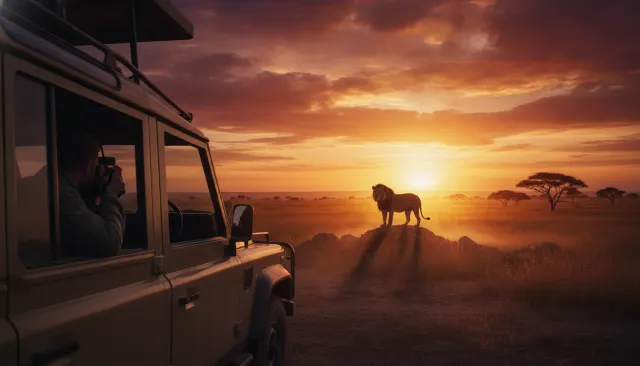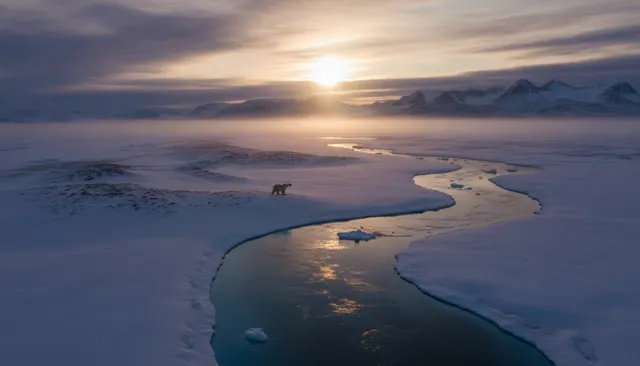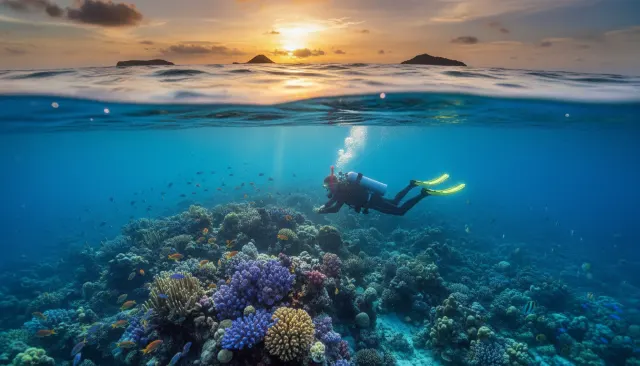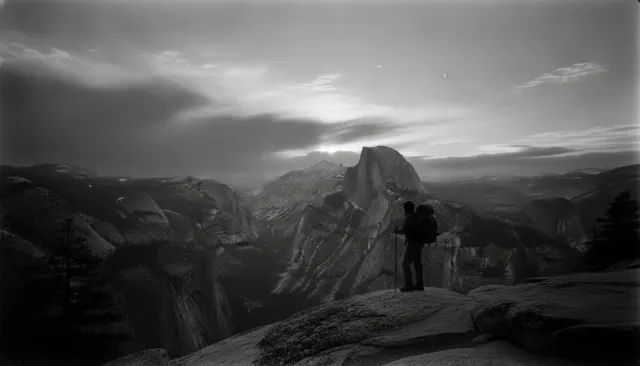
Art Wolfe, 'Migrations' (Beyond Words, 1994)
controversial animal composites
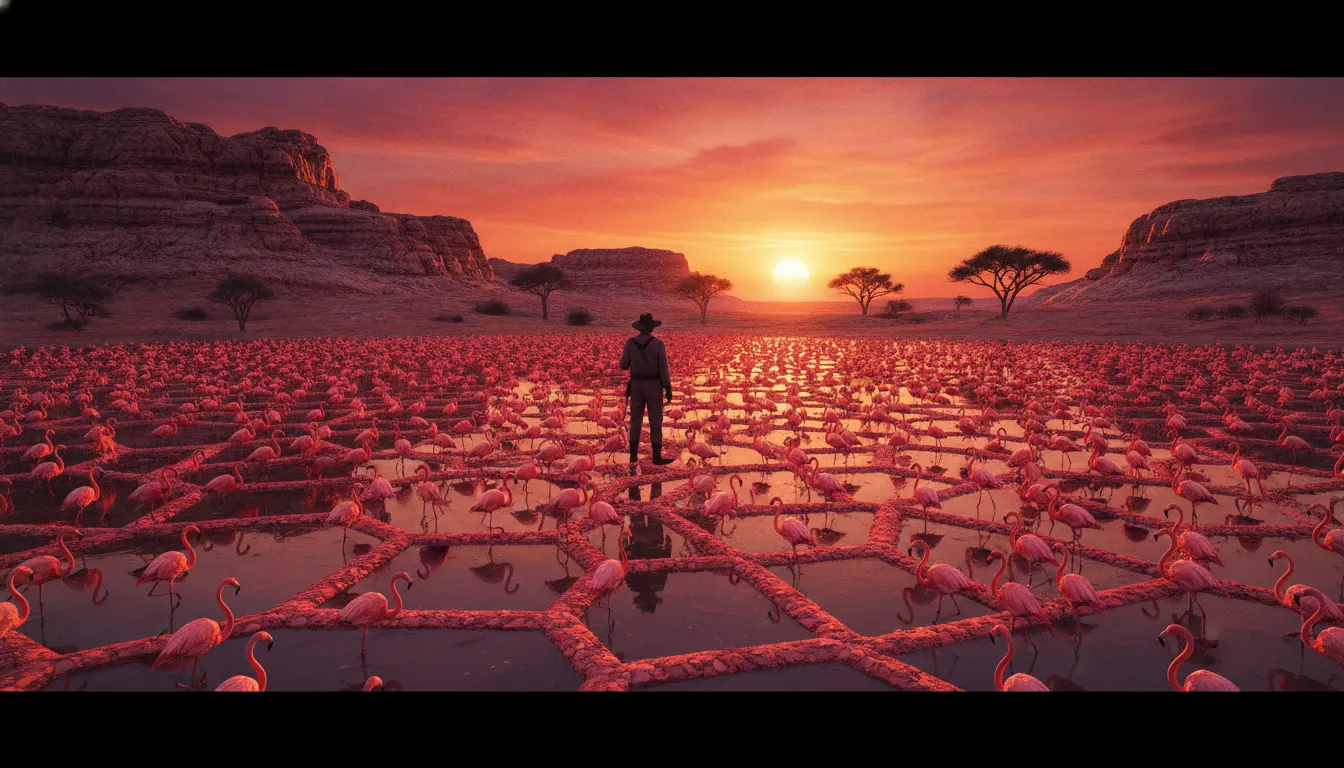
Art Wolfe color-saturated wildlife. Hyper-real flamingo flock, geometric pattern animals, postcard-perfect international expedition.
The moves a human crew would use to get here. Cue applies them for you, and knowing their names is how you ask for a change.
processing) for extreme color saturation
800mm) compressing background and isolating subjects from habitat
overhead perspective for pattern and abstraction compositions
seeking repeating geometric or fractal structures in natural subjects
processing vibrance and saturation boost to Velvia-equivalent output in digital workflow
of-thirds rather than centered documentation
Art Wolfe (b. 1951, Seattle) has produced wildlife and nature photography across over 100 countries since the late 1970s, becoming one of the most published photographers in the history of the genre with over 100 books and a reported 500,000 images in his archive. He studied at the University of Washington in Seattle and was initially trained as a painter - a background that fundamentally shapes his compositional approach, particularly his identification of abstract pattern, form, and color relationships in natural subjects.
Wolfe's most recognized work comes from his Fujifilm Velvia era (approximately 1990-2005). Velvia ISO 50 reversal film delivered exceptional shadow-to-highlight sharpness, super-saturated greens and reds, and a color rendering so intense that the film became controversial - critics argued it misrepresented natural environments. Wolfe's Velvia images of rainforest canopies, African wildlife in late-afternoon light, and Antarctic ice are documents of a particular film stock as much as they are documents of natural subjects.
The transition to digital (Canon 1Ds, later Nikon D800, D810) maintained his saturation preference through post-processing, though the characteristic Velvia grain structure and specific color response disappeared.
Wolfe's most conceptually distinctive work is his 'Patterns in Nature' series - images that identify abstract geometric, fractal, or repeating pattern structures in natural subjects: a flock of flamingos compressing into a field of pink and black chevrons, the interlocking geometry of turtle shells, the radial symmetry of coral polyps, herd animals shot from directly above collapsing into decorative surface pattern. This work is closer to design and abstraction than to conventional wildlife documentary photography.
His 1993 book Migrations created controversy when it was revealed that some images were digitally composited to increase the density of animal subjects. Wolfe defended the practice as artistic rather than documentary, but the disclosure prompted significant debate about manipulation ethics in nature photography.
Wolfe's television series Travels to the Edge (PBS, 2007-2009) introduced his methodology to a broader audience. His work has been used extensively by the Nature Conservancy, WWF, and conservation organizations for campaign imagery, establishing a direct link between his aesthetic and environmental advocacy.
controversial animal composites
1995
animal camouflage and concealment series
2000
large-format wildlife monograph
2001
2003
2013
A Look is not a filter. It is a set of stored decisions the pipeline reads before it makes a single frame, so two videos in the same Look actually match.