Planet Earth
BBC NHU / Alastair Fothergill / David Attenborough (narrator) · 2006
Cineflex aerial cinematography at scale; HD natural history landmark
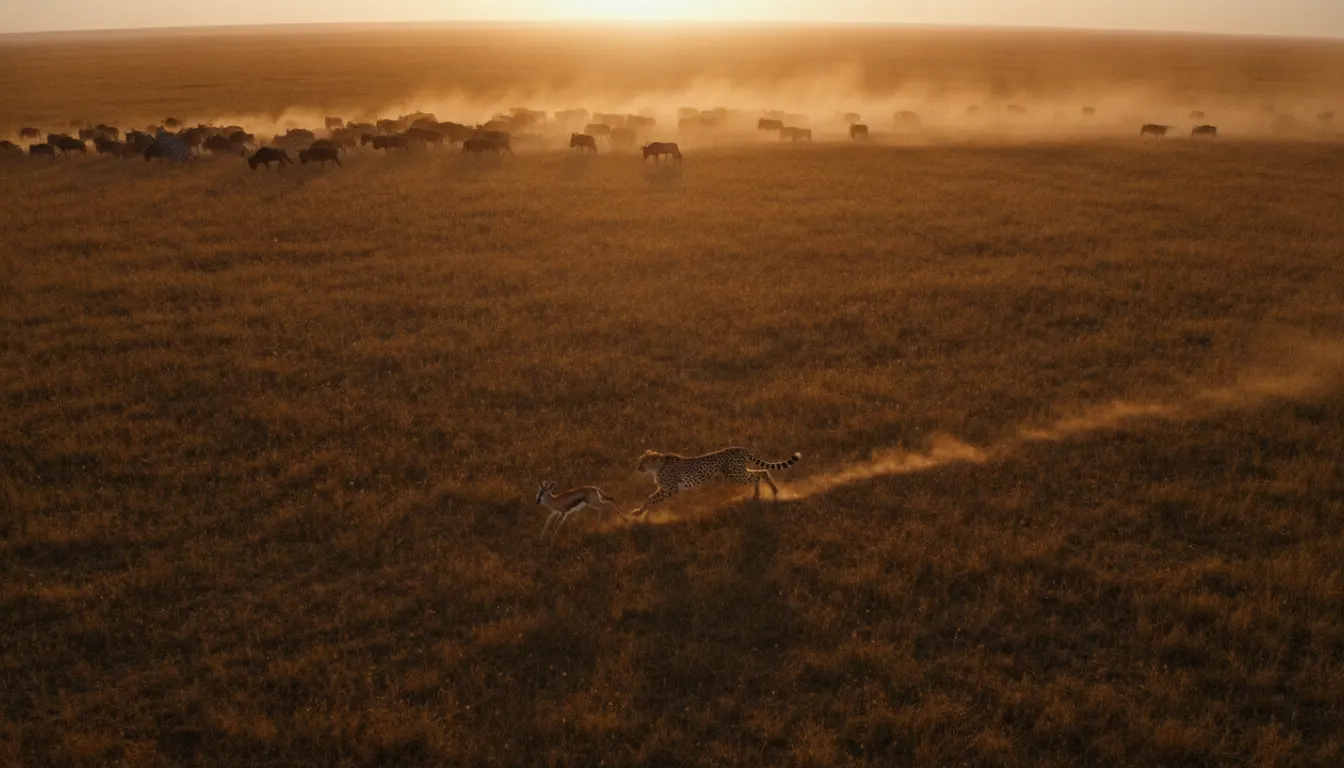
BBC Planet Earth aerial spectacle. Helicopter Cineflex stabilized wide, golden Serengeti herd, slow-motion predator chase, Attenborough hushed VO.
The moves a human crew would use to get here. Cue applies them for you, and knowing their names is how you ask for a change.
400-600mm telephoto lens on gyroscopically-stabilized helicopter mount capturing wildlife at altitude without blur.
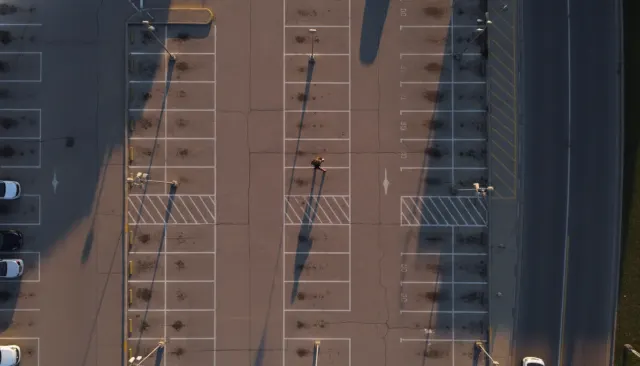
Camera descending from high altitude toward subjects, revealing ecosystem scale before narrowing to individual behavior.
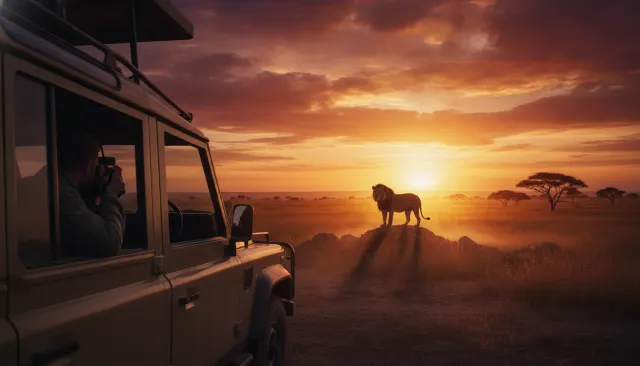
Magic-hour side-backlit aerial shot of large animal aggregation, creating graphic silhouettes against warm sky.
Drone flying close to terrain surface at high speed, tracking animal movement through complex ground-level environments.
Sustained aerial observation waiting for the precise behavioral event - predation, crossing, birth - that justifies the approach.
Attenborough voiceover providing behavioral and ecological context that the visual cannot carry alone, creating information-imagery compound.
The aerial cinematography tradition within BBC Natural History Unit productions represents the most sustained program of landscape-scale wildlife documentation in television history. Its signature is the Cineflex gyroscopically-stabilized helicopter shot: a smooth, hushed approach from altitude that reveals animal populations, migration patterns, and ecosystem scale with a visual authority that no ground-level camera can match.
The Cineflex system - a gyroscopically-stabilized camera mount attached to the underside of a helicopter - was adopted by BBC NHU productions in the mid-2000s. The system allows telephoto lenses of 400-600mm to be used from a moving helicopter at altitudes of 100-500 meters without vibration-induced blur. The result is footage that appears to be shot from a stable ground position but captures the overview perspective of an aerial platform.
Planet Earth (2006) deployed Cineflex-equipped helicopters across all seven continents to capture migration sequences, predator-prey dynamics at landscape scale, and the geographic context of ecosystems - the relationship between a river delta, the savanna it feeds, and the ocean at its terminus - that ground-level documentary cameras cannot express.
Attenborough's narration operates in a specific relationship to the aerial imagery: while the wide shots establish scale and context, Attenborough's voiceover provides the narrative framework - the identification of species, the behavioral explanation, the stakes. His hushed, gravity-modulated delivery was developed across Life on Earth (1979), The Living Planet (1984), and Planet Earth into a register that became inseparable from the visual grammar of natural history television.
The audio-visual relationship reaches its formal peak in the migration sequences of Planet Earth: aerial wide shots of Serengeti wildebeest crossing the Mara River, with Attenborough's commentary providing the behavioral and ecological exposition that the visual cannot carry alone. The combination of visual scale and informed narration produces what BBC NHU producer Alastair Fothergill calls the 'revelation' format - the moment when information and imagery intersect to produce genuine astonishment.
Planet Earth II (2016) introduced consumer and professional drone platforms alongside helicopter Cineflex systems, enabling approaches that helicopters cannot make - close-terrain following, low-altitude high-speed passes above wildlife, and access to terrain environments (cliff faces, dense forest canopy) where helicopter proximity is impossible or dangerous. The iguana-snake sequence from Planet Earth II - a marine iguana hatchling pursued by racer snakes across exposed rock - used a combination of ground-level cameras and low-altitude drone to create a chase sequence that became the most viral natural history clip of the decade.
The aerial-wildlife grammar developed by BBC NHU is now the default visual language for environmental documentary, conservation advocacy, and planetary-scale news coverage. Aerial sequence conventions - the reveal of scale from altitude, the golden-hour herd silhouette, the river-delta overhead - are immediately legible to global audiences.
BBC NHU / Alastair Fothergill / David Attenborough (narrator) · 2006
Cineflex aerial cinematography at scale; HD natural history landmark
BBC NHU / Tom Hugh-Jones / David Attenborough (narrator) · 2016
Drone integration; iguana-snake chase; most viral wildlife sequence of the decade
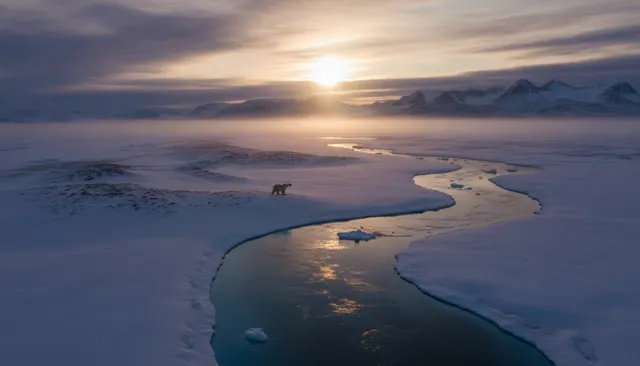
BBC NHU / Alastair Fothergill / David Attenborough (narrator) · 2011
Polar aerial cinematography at ice-cap scale
BBC NHU / James Honeyborne / David Attenborough (narrator) · 2017
Aerial ocean perspectives and surface-break cinematography
Netflix / Silverback Films / David Attenborough (narrator) · 2019
Streaming-native Attenborough; 4K aerial with climate-change editorial framing
BBC NHU / Huw Cordey / David Attenborough (narrator) · 2021
Elemental forces framing with integrated aerial perspectives
BBC NHU / Mike Gunton / David Attenborough (narrator) · 2023
AI-assisted behavior prediction; urban wildlife integration
A Look is not a filter. It is a set of stored decisions the pipeline reads before it makes a single frame, so two videos in the same Look actually match.