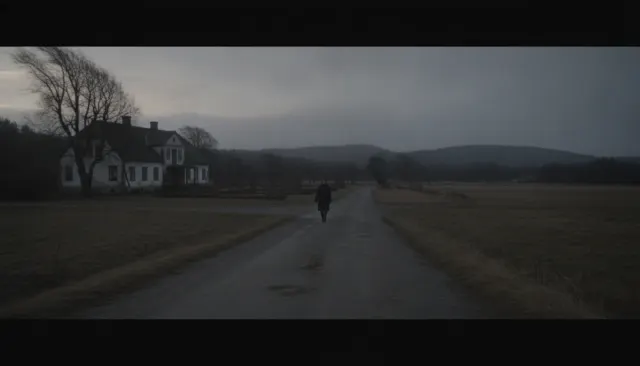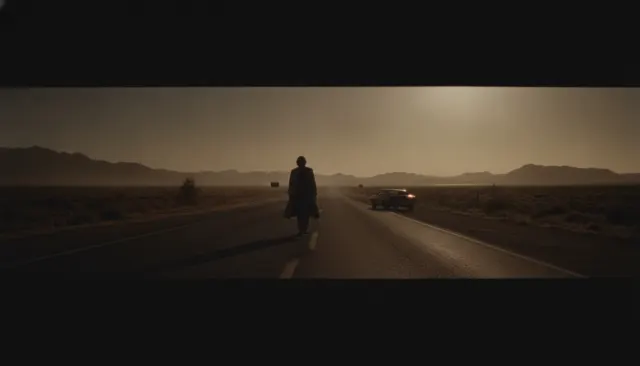
Days of Heaven
Terrence Malick / Nestor Almendros · 1978
Academy Award-winning cinematography shot almost entirely in magic hour, establishing the wheat-field-and-golden-light grammar
Terrence Malick magic-hour spirituality. Wheat-field whispers, Tree of Life cosmic drift, Lubezki natural-only sun, contemplative voiceover.
The moves a human crew would use to get here. Cue applies them for you, and knowing their names is how you ask for a change.
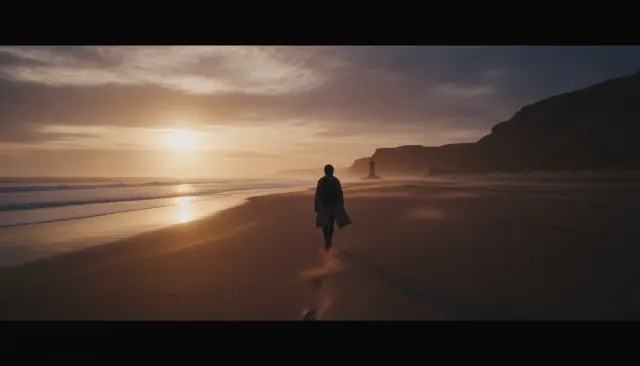
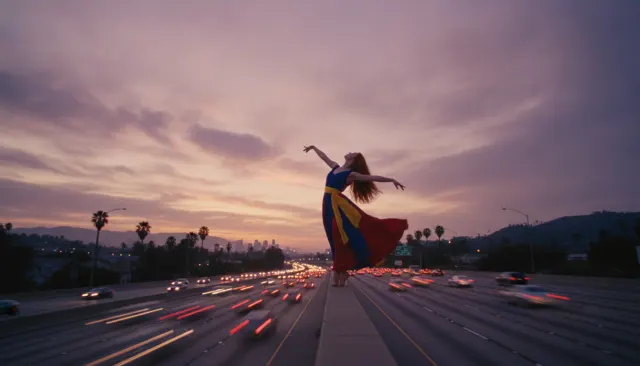
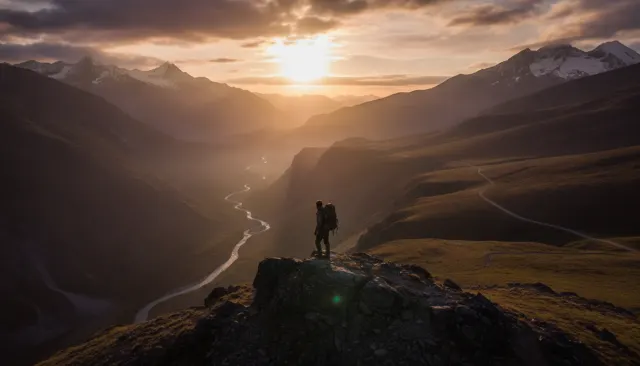
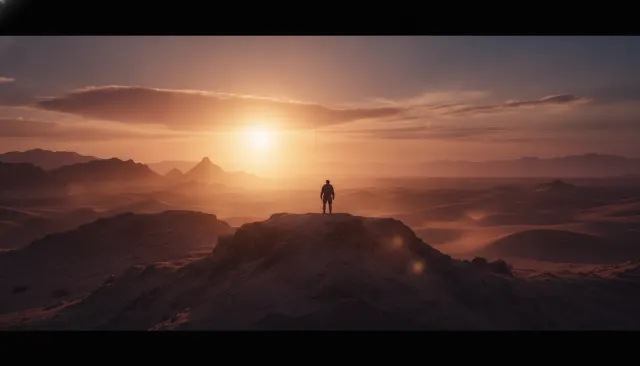
All outdoor photography shot in the narrow window of golden light at dawn and dusk, typically 20-40 minutes each day.
Camera positioned below subject pointing upward, against backlit sky or tree canopy, rendering figures as luminous silhouettes.
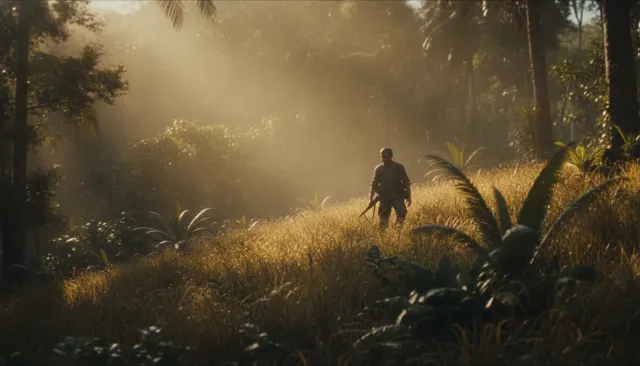
Lenses in the 14-21mm range on Steadicam or handheld, moving through grass, wheat, or forest at walking pace.
Voiceover delivered in a whispered, fragmentary, non-declarative mode addressing abstract recipients - God, nature, the past.
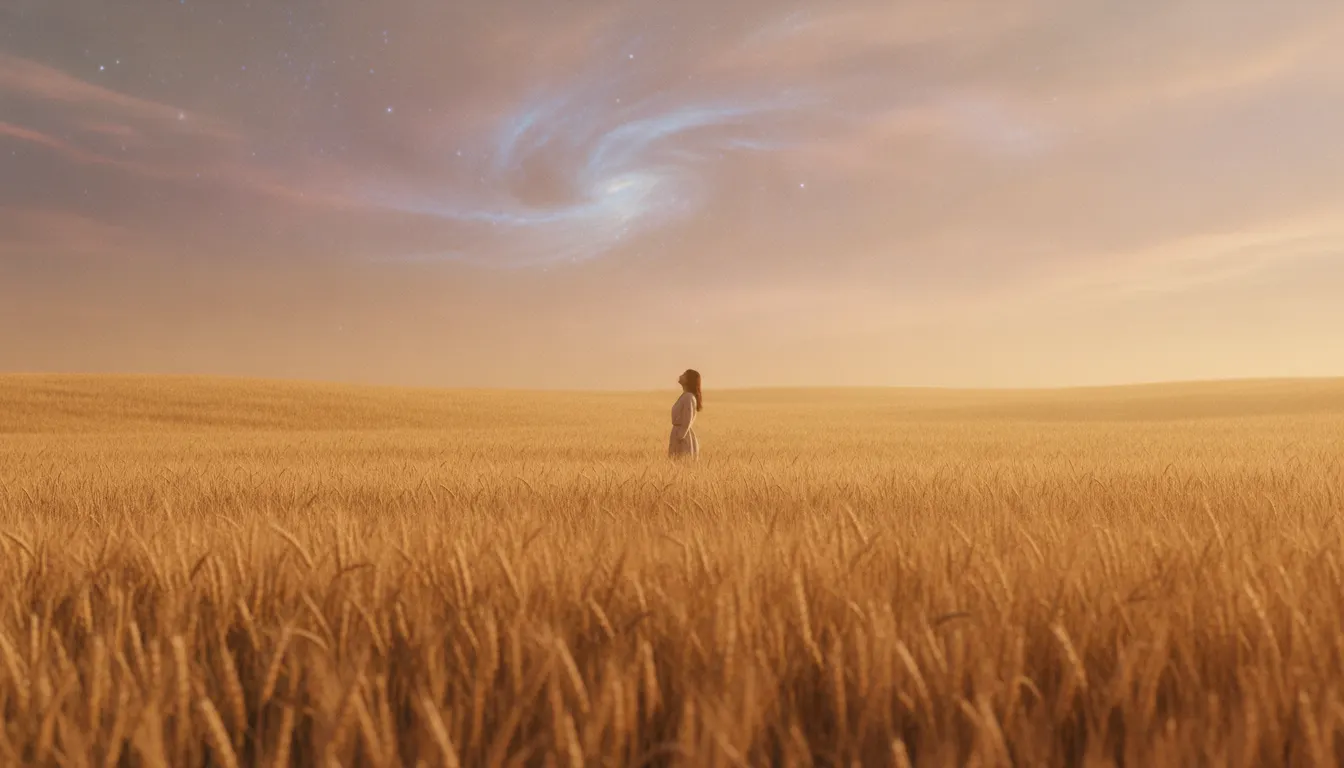
Camera moves through tall grass or wheat fields, using the plant material as a semi-transparent visual medium through which the world appears.
Radical ellipses in chronology suggesting that narrative logic is less important than the accumulation of sensory experience.
Cutaways to geological, astronomical, or biological images that place the human drama in a context of vast inhuman time.
Terrence Malick is the most reclusive major filmmaker in American cinema and, paradoxically, one of its most imitated. His visual style - natural light only, ultrawide lenses, characters who drift through landscapes while interior monologue plays on the soundtrack - has been deployed in brand films, music videos, and independent cinema since The Tree of Life (2011) won the Palme d'Or at Cannes and introduced his approach to a broad international audience.
Malick's cinematographic language was established in Badlands (1973) and Days of Heaven (1978), which won cinematographer Nestor Almendros the Academy Award. Days of Heaven is filmed almost entirely in magic hour, with Almendros and second unit cinematographer Haskell Wexler capturing the narrow window of golden light at dawn and dusk over wheat fields in Alberta. The film looks unlike anything produced before it: every frame is a painting, warm and transient, and the camera never stops moving through the wheat.
From The Thin Red Line (1998) through his late career work with cinematographers Emmanuel Lubezki and Jorg Widmer, Malick developed this grammar into a complete methodology. The camera operates at f/1.4 or wider on ultrawide lenses, floating through space at human height or below, often pointing upward into tree canopies or sky. Characters are frequently shot from below, against backlit sky, so they appear as silhouettes against the light.
Malick's films consistently reach beyond the personal toward the cosmological. The Tree of Life (2011) interrupts a 1950s Texas family drama with a twenty-minute sequence depicting the formation of the universe, the emergence of life, and the age of dinosaurs. This structural choice - the human story embedded in geological time - is the most direct expression of Malick's spiritual philosophy, which is influenced by Martin Heidegger and the Jesuit theologian Teilhard de Chardin.
The voiceover in Malick films is not narration in the conventional sense. Characters address God, the universe, or their own interior selves in language that is simultaneously poetic and inarticulate - whispered fragments that refuse the economy of conventional dialogue. This mode of interior address, combined with the drifting camera and the magic-hour light, creates what critics describe as a cinema of presence rather than narrative.
Malick's visual grammar has been widely adopted in commercial filmmaking, particularly for outdoor, athletic, and lifestyle brands. Patagonia's brand films, Nike's nature-adjacent campaigns, and dozens of tourism and adventure brand videos deploy the same elements: backlit silhouettes against sky, ultrawide drift through tall grass, magic-hour warmth, whispered voiceover about authenticity and the wild. The aesthetic has become a visual shorthand for a particular kind of earnest environmental and personal idealism.
Terrence Malick / Nestor Almendros · 1978
Academy Award-winning cinematography shot almost entirely in magic hour, establishing the wheat-field-and-golden-light grammar
Terrence Malick / John Toll · 1998
WWII film that subordinated combat narrative to a philosophical meditation on nature, mortality, and the absurdity of war
Terrence Malick / Emmanuel Lubezki · 2005
Malick and Lubezki's first collaboration, applying the natural light and drift grammar to the Pocahontas story
Terrence Malick / Emmanuel Lubezki · 2011
Palme d'Or winner that embedded a 1950s Texas family drama in a cosmological meditation on the formation of the universe
Terrence Malick / Emmanuel Lubezki · 2012
Continuation of the non-narrative drift approach applied to a contemporary European romance
Alejandro G. Inarritu / Emmanuel Lubezki · 2015
Lubezki applying the Malick natural-light grammar to a revenge narrative, demonstrating the aesthetic's versatility
A Look is not a filter. It is a set of stored decisions the pipeline reads before it makes a single frame, so two videos in the same Look actually match.