The Thin Red Line
Terrence Malick · 1998
John Toll cinematography; WWII Pacific as spiritual meditation on beauty and violence
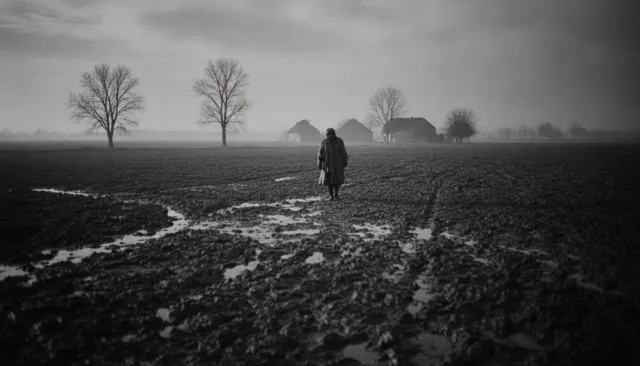
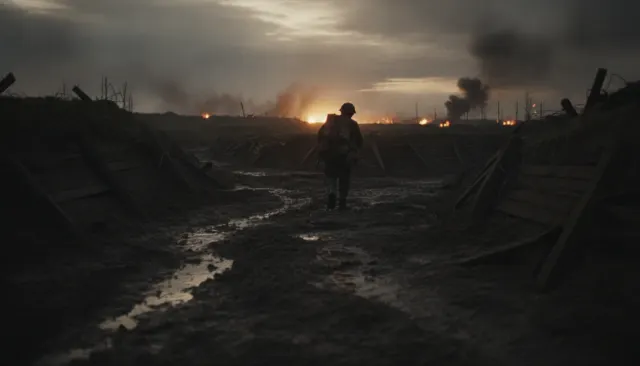
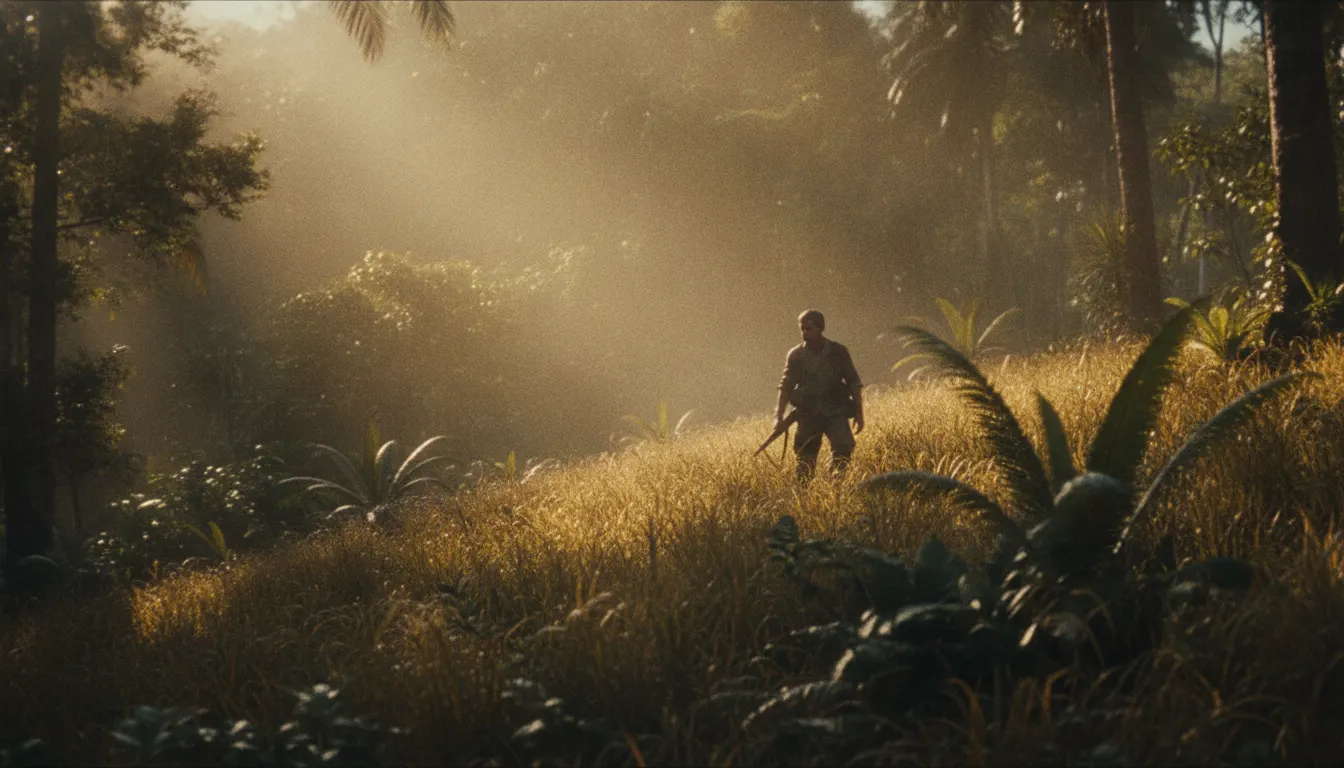
Terrence Malick Thin Red Line war-prayer. John Toll Pacific jungle hill, whispered voiceover, sun through grass, soldiers as fragile creatures.
The moves a human crew would use to get here. Cue applies them for you, and knowing their names is how you ask for a change.
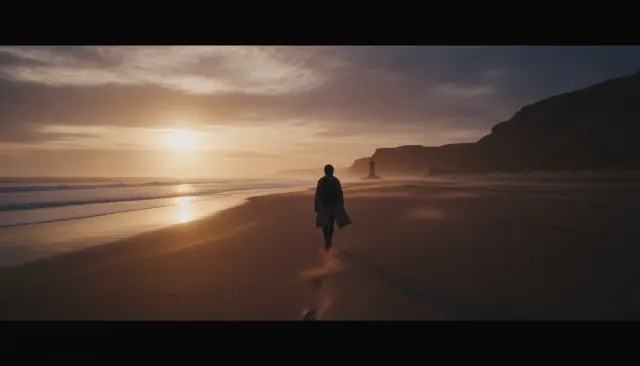
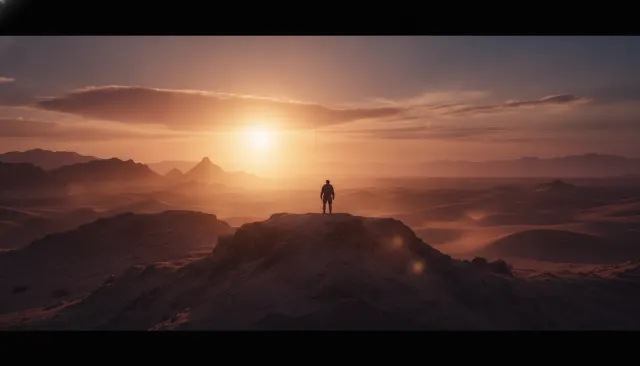
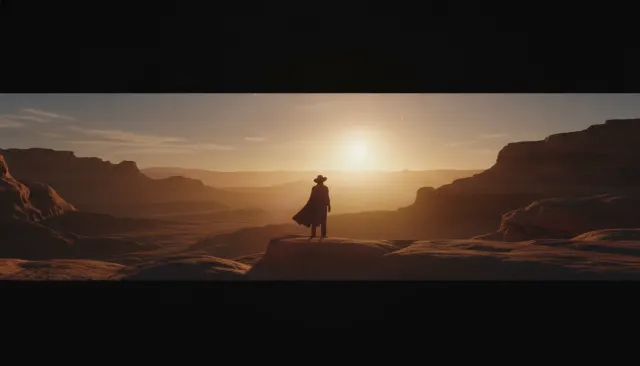
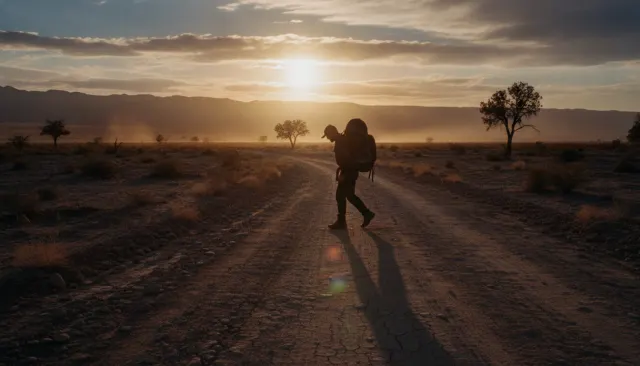
Subjects filmed against bright sky or sun, faces held in shadow, emphasizing silhouette and light-edge over facial clarity.
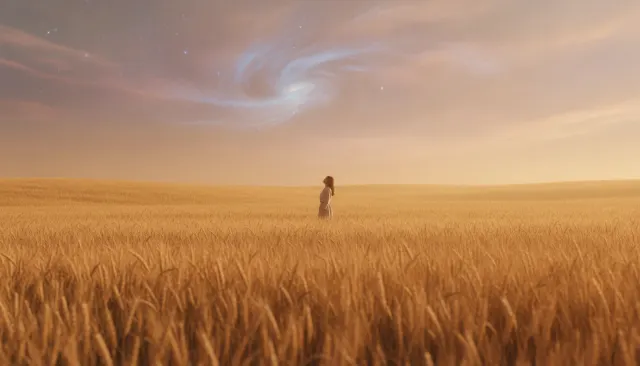
Camera placed at ground level or below, framing figures against tall grass and sky, making humans appear fragile within nature.
Handheld or Steadicam moves that drift away from the subject toward incongruous natural beauty - birds, leaves, light shafts.
First-person, fragmentary narration that floats free of the visible speaker, creating a collective interior consciousness.
21-35mm lenses held close to subjects, creating spatial compression between near faces and distant landscapes.
Editing pattern that interrupts combat or drama with sustained shots of indifferent natural beauty - insects, flowers, water.
The cinematic language Terrence Malick developed across The Thin Red Line (1998) and later The Tree of Life (2011) and The New World (2005) represents one of cinema's most distinctive visual philosophies: the camera as a wandering consciousness seeking beauty and transcendence within violence, memory, and loss. This is not documentary realism but lyric cinema - images governed by feeling rather than narrative function.
The Thin Red Line was shot by John Toll (Braveheart, 1995; Almost Famous, 2000) on Guadalcanal and Queensland, Australia. Toll's strategy was to shoot primarily at magic hour and to push the camera into extreme low angles that place tall grass, leaves, and sky in constant relationship with human figures. The Guadalcanal jungle light - diffuse, golden, heavy with humidity - creates a quality of softness that contradicts the film's combat content. Soldiers emerge from and disappear into grass; the camera lingers on indigenous birds and flowers indifferent to the battle.
Malick's cinematography (continued by Emmanuel Lubezki on later films) follows several persistent principles. The camera is almost never locked off; it drifts, tilts toward light sources, and pivots away from action toward incongruous beauty. Backlight is the dominant lighting relationship - subjects are filmed against bright sky, their faces often in shadow. Wide-angle lenses (21mm to 35mm) create spatial disorientation, placing near and far in uneasy proximity. Whispered voiceover fragments (often from multiple soldiers, not matching the person visible on screen) create a consciousness that floats free of individual identity.
The look asks a theological question visually: how can a world this beautiful be the site of this violence? The camera's tendency to drift toward light - through grass, through jungle canopy, toward a sun breaking through clouds - mimics the gesture of prayer or contemplation. The film's editing (by Billy Weber, Leslie Jones, and Saar Klein across seven months) places combat directly against these transcendent cutaways, refusing to let either register dominate. This visual rhythm is the look's most distinctive property.
Náday Lubezki on The New World (2005) and The Tree of Life (2011) extended the grammar: even lower angles, longer grass, more aggressive use of natural light, and fish-eye distortion. Tree of Life added home-movie super-8 texture and long passages of nature photography disconnected from narrative. The look became a recognizable mode - imitated widely in prestige drama, nature-adjacent advertising, and lyric documentary.
The Malick spiritual look functions as cinema's grammar for depicting wonder, loss, childhood memory, or the coexistence of beauty and suffering. It is not appropriate for punchy narrative storytelling but invaluable for meditative, emotional, or philosophical content.
Terrence Malick · 1998
John Toll cinematography; WWII Pacific as spiritual meditation on beauty and violence
Terrence Malick · 2005
Emmanuel Lubezki extending the grammar to Pocahontas - gold light through Virginia forests
Terrence Malick · 2011
Lubezki at widest and lowest; childhood memory and cosmological imagery intercut
Terrence Malick · 1978
Nestor Almendros; the magic-hour grammar established for all subsequent Malick work
Terrence Malick · 1973
The earliest instance of Malick's lyric voiceover and drifting observational camera
Terrence Malick · 2012
Lubezki pushing the look to pure impressionism - Oklahoma fields, Paris architecture
Terrence Malick · 2015
Los Angeles and Las Vegas filtered through the Malick spiritual grammar
A Look is not a filter. It is a set of stored decisions the pipeline reads before it makes a single frame, so two videos in the same Look actually match.