La La Land
Linus Sandgren / Damien Chazelle · 2016
Academy Award-winning cinematography that revived the anamorphic studio musical aesthetic with a contemporary Los Angeles palette
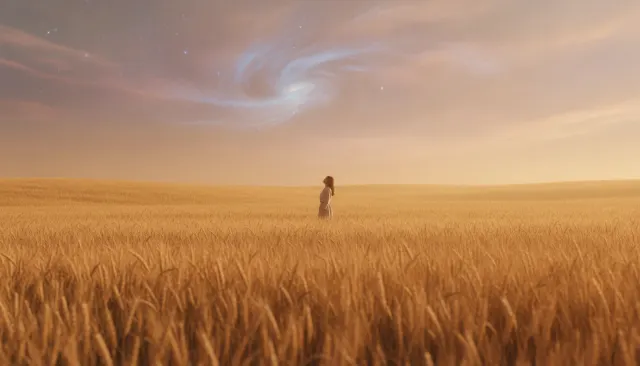
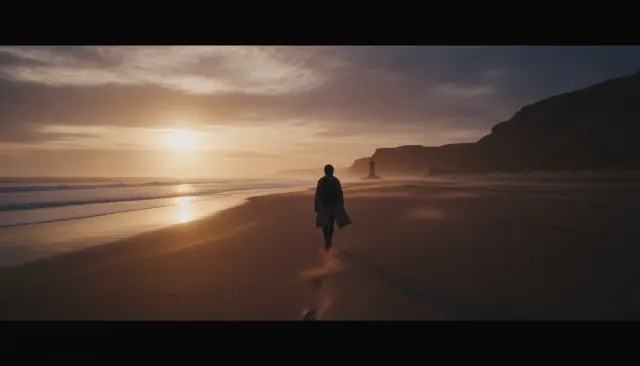
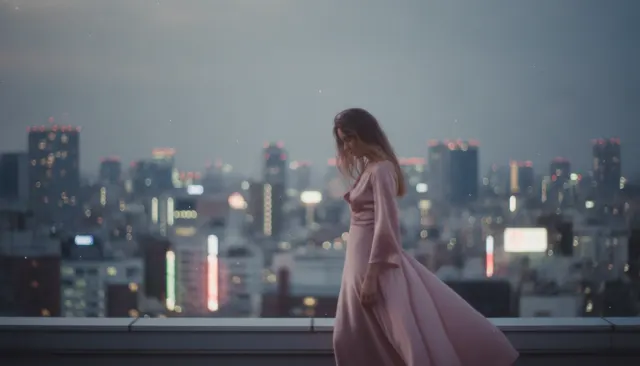
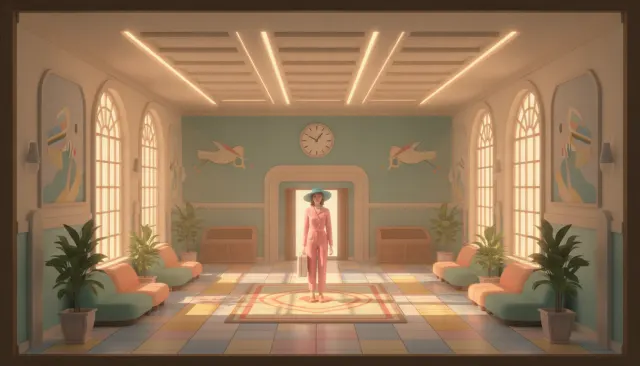
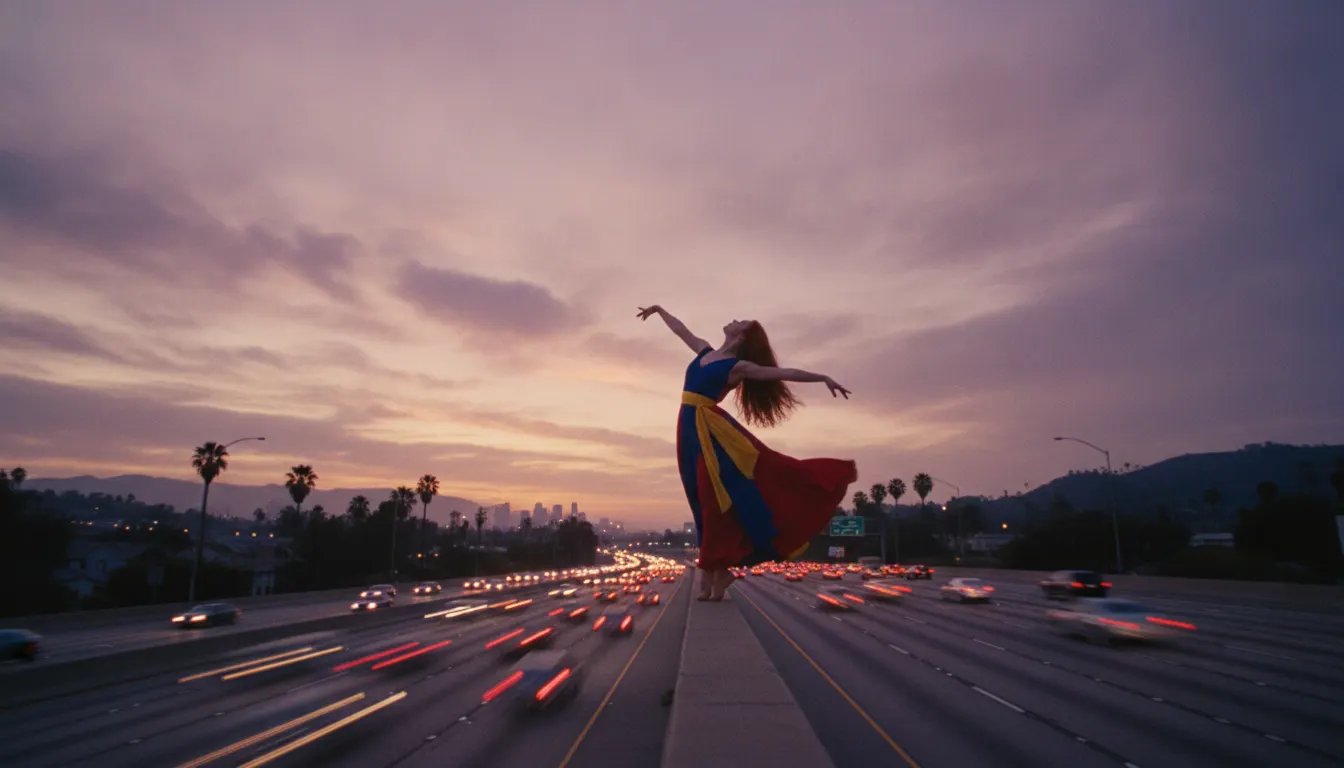
Linus Sandgren La La Land musical pastel. CinemaScope LA freeway dance, magic-hour purple sky, primary-color dress against neutral wall.
The moves a human crew would use to get here. Cue applies them for you, and knowing their names is how you ask for a change.
2.39:1 aspect ratio with horizontal lens flares that give the film its wide, theatrical spatial quality and reference the classic musical format.
Dressing subjects in bold primary colors against neutral grey-white environments, making figures pop as colored shapes in an essentially neutral world.
Scheduling outdoor shooting in the narrow window when the LA sky turns purple-pink, using the transient light as the film's emotional signature.
Film grain structure from anamorphic 35mm that adds organic texture without the digital sharpness of contemporary cinematography.
Shadow values pushed toward warm amber-brown rather than neutral or cool, maintaining the golden, romantic palette even in low light.
Camera positioning that maximizes the full 2.39:1 frame for choreography, using the anamorphic format's width the way MGM musicals used studio soundstages.
Swedish cinematographer Linus Sandgren's work on Damien Chazelle's La La Land (2016) produced one of the most visually distinctive studio musicals in decades, winning Sandgren the Academy Award for Best Cinematography. The film's visual palette - oversaturated primary colors against neutral environments, magic-hour purple skies, and the wide-screen CinemaScope format - created an aesthetic immediately recognizable as a contemporary homage to the golden age musical.
Sandgren and Chazelle shot La La Land on 35mm anamorphic, a choice that gave the film its characteristic horizontal flare patterns and the slightly soft, organic quality that distinguishes it from the digital sharpness of contemporary studio films. They used CinemaScope's 2.39:1 aspect ratio - the same ratio as the MGM musicals they were referencing - to give the dance sequences the wide-open space they required.
The color strategy was deliberate contrast: figures wearing bold primary colors - Emma Stone's yellow dress, her red dress, her blue-green final dress - are placed against the neutral grey-white of Los Angeles buildings, freeways, and sidewalks. The effect makes the characters pop as if they were colored figures in a black-and-white world, directly referencing the hand-tinted quality of early color cinematography.
Sandgren's La La Land is essentially a film about magic hour. The Griffith Observatory sequence, the freeway dance, and the ending montage are all shot in the purple-and-pink late-afternoon light that Los Angeles produces in abundance. Sandgren and Chazelle scheduled their outdoor shooting around this window, sometimes waiting days for the right sky. The purple-pink sunset sky became the film's emotional register: romantic, transient, warm.
Sandgren continued his collaboration with Chazelle on First Man (2018), where he applied a contrasting approach - tight, handheld documentary realism for the biographical sequences and large-format IMAX for the Moon landing. For Babylon (2022), Sandgren deployed a maximalist, overexposed golden palette that deliberately pushed Portra-like film aesthetics into excess.
His work outside Chazelle includes Joy (2015) and American Hustle (2013) for David O. Russell, where he demonstrated range across period aesthetics. Sandgren represents a generation of cinematographers who combine deep film craft knowledge with digital post-production literacy, allowing them to achieve precise emulation of historical stocks while maintaining the productivity of digital workflows.
Linus Sandgren / Damien Chazelle · 2016
Academy Award-winning cinematography that revived the anamorphic studio musical aesthetic with a contemporary Los Angeles palette
Linus Sandgren / Damien Chazelle · 2018
Documentary realism for biographical sequences contrasted with large-format IMAX for the Moon landing, demonstrating Sandgren's range
Linus Sandgren / Damien Chazelle · 2022
Maximalist golden palette pushing film emulation aesthetics into excess as a statement about Hollywood's self-mythologizing
Linus Sandgren / David O. Russell · 2013
1970s period film using warm, saturated color to evoke the decade's visual identity
Linus Sandgren / David O. Russell · 2015
Transitions between period registers using color temperature shifts to signal narrative time movement
George Richmond · 2019
Musical biopic in the La La Land tradition, using theatrical color and musical staging to similar pastel-primary effect
A Look is not a filter. It is a set of stored decisions the pipeline reads before it makes a single frame, so two videos in the same Look actually match.