Lost in Translation
Sofia Coppola / Lance Acord · 2003
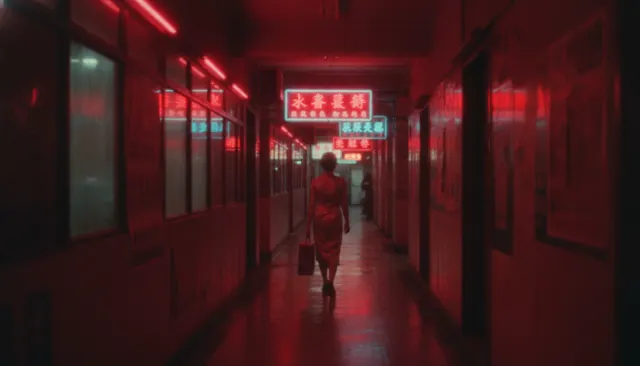
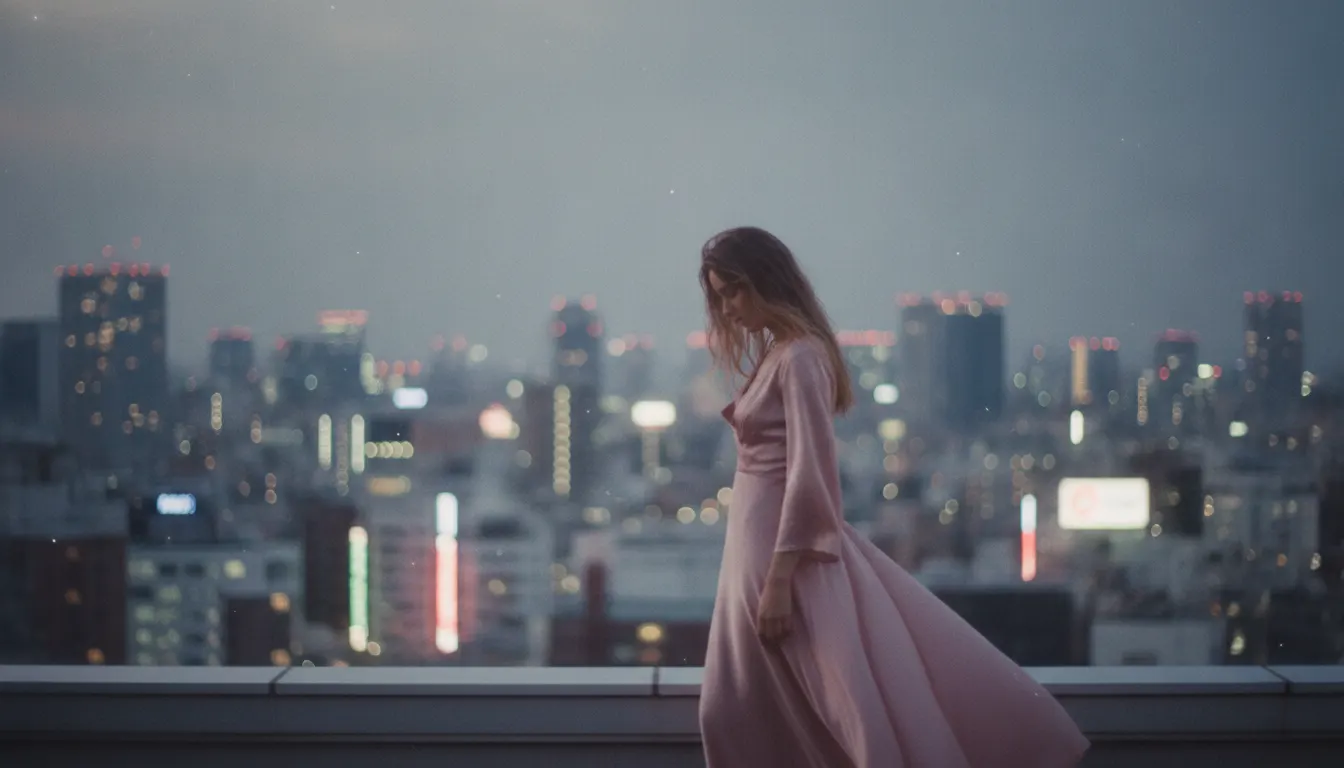
Tokyo hotel isolation; defining contemporary luxury melancholy
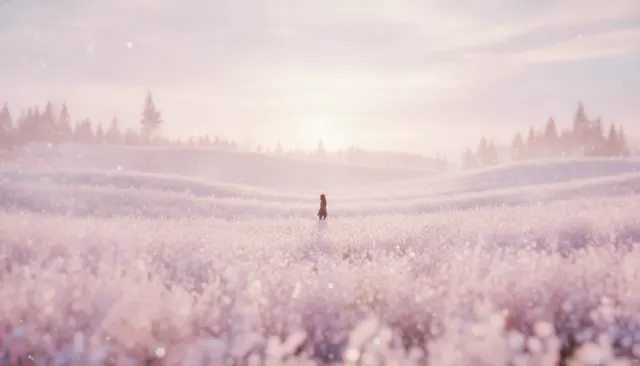
Sofia Coppola pastel ennui. Lost in Translation Tokyo neon haze, Virgin Suicides 70s suburb, Marie Antoinette macaron palette, dreamy slow drift.
The moves a human crew would use to get here. Cue applies them for you, and knowing their names is how you ask for a change.
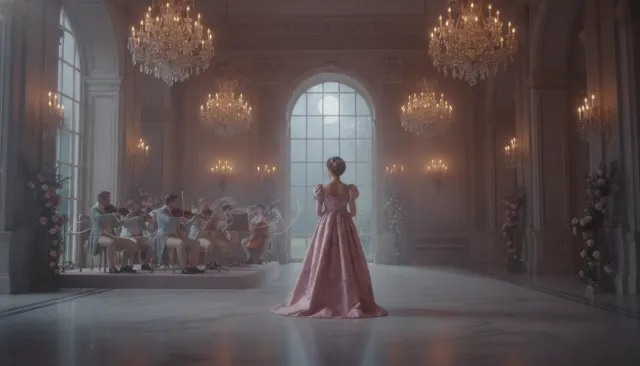
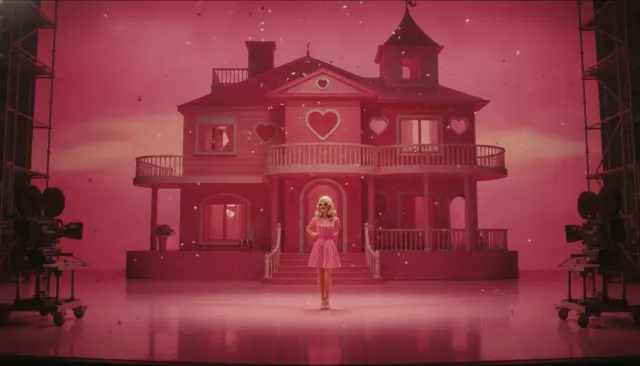
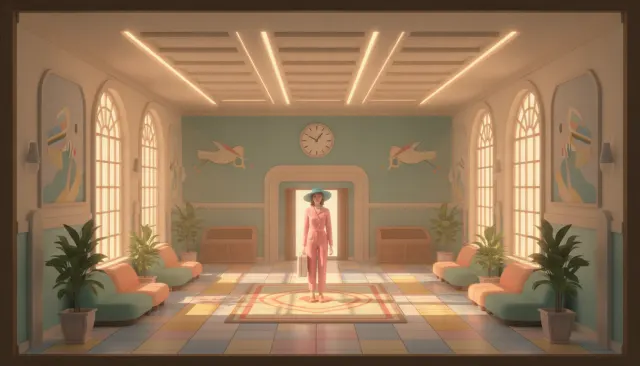
Pale pinks, champagnes, and soft lavenders built into costume and production design, not post-production.
Subtle lens diffusion and slightly overexposed highlights give images a dreamlike, memory-inflected quality.
Widescreen frames that emphasise the size of confined spaces, making opulent environments feel like beautiful prisons.
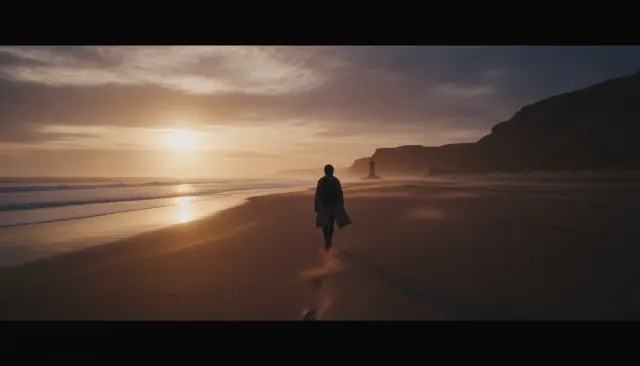
The stretched anamorphic frame makes solitary figures appear small and adrift within their environments.
Modern pop, shoegaze, or new wave music over period or conventional imagery creates emotional friction.
Scenes are allowed to breathe beyond narrative necessity; silence and stillness carry emotional weight.
Sofia Coppola has developed one of cinema's most immediately recognisable personal aesthetics - a visual language built on pastel diffusion, unhurried pacing, the spatial grammar of luxury enclosure, and a specific emotional register that might be described as gorgeous melancholy: beauty observed under the sign of ennui, entrapment, or longing. Her collaborations with cinematographers Lance Acord (Lost in Translation, 2003; Marie Antoinette, 2006) and Philippe Le Sourd (The Bling Ring, 2013; The Beguiled, 2017) have produced a consistent body of work that is instantly attributable.
Lost in Translation (2003) established the core grammar: the emptiness of a luxury hotel as a psychological space, faces in windows, neon light from below, the specific colour temperature of Tokyo night mixed with the warm diffusion of Sofitel hotel corridors. Acord used available light extensively, keeping the image at a natural colour temperature that registers as simultaneously warm and lonely. The anamorphic widescreen format stretches the spaces of social isolation; characters are small in compositions that emphasise their environmental enclosure.
Marie Antoinette (2006) applied the same emotional logic to 18th-century Versailles, using saturated pastel costume and confectionery-bright period sets alongside a contemporary music soundtrack that makes the anachronism the argument. The film demonstrates that the Coppola aesthetic is not period-specific but emotional: the opulence is always also a cage.
The Virgin Suicides (1999) introduced the hazy, slightly overexposed aesthetic that Coppola returns to across her career: soft lens diffusion, blown highlights, and the dreamlike quality that memory gives to images. Edward Lachman's photography established this as the foundational look.
Priscilla (2023), photographed by Philippe Le Sourd, extends the pastel grammar into the 1960s domestic confinement of Priscilla Presley's relationship with Elvis, using the Graceland interiors as a direct analogue for the Versailles of Marie Antoinette.
Coppola's palette preferences - pale pink, champagne, soft lavender, dusty gold - are deployed through costume design, production design, and grading equally. The pacing is deliberately slow: scenes breathe, silence is not filled, and the emotional life of characters is communicated through composition and location rather than dialogue. Pop music - Shoegaze, new wave, contemporary indie - creates emotional friction against the period or social context, a technique that has influenced a generation of directors.
The Coppola aesthetic has been immensely influential on fashion photography, music video direction (particularly in the post-2010 era of lavish director-driven videos), and on the 'cottagecore' and 'quiet luxury' aesthetics that dominated social media from 2019 onward.
Sofia Coppola / Lance Acord · 2003
Tokyo hotel isolation; defining contemporary luxury melancholy
Sofia Coppola / Lance Acord · 2006
Pastel Versailles with New Wave soundtrack; anachronistic emotional logic
Sofia Coppola / Edward Lachman · 1999
Originating hazy overexposure grammar; memory-inflected suburban melancholy
Sofia Coppola / Philippe Le Sourd · 2017
Civil War era; forest diffusion and enclosure as psychological thriller
Sofia Coppola / Philippe Le Sourd · 2020
New York urban palette with warmth; more open but same compositional grammar
Sofia Coppola / Philippe Le Sourd · 2023
Graceland as Versailles; 1960s domestic confinement in pastel and gold
A Look is not a filter. It is a set of stored decisions the pipeline reads before it makes a single frame, so two videos in the same Look actually match.