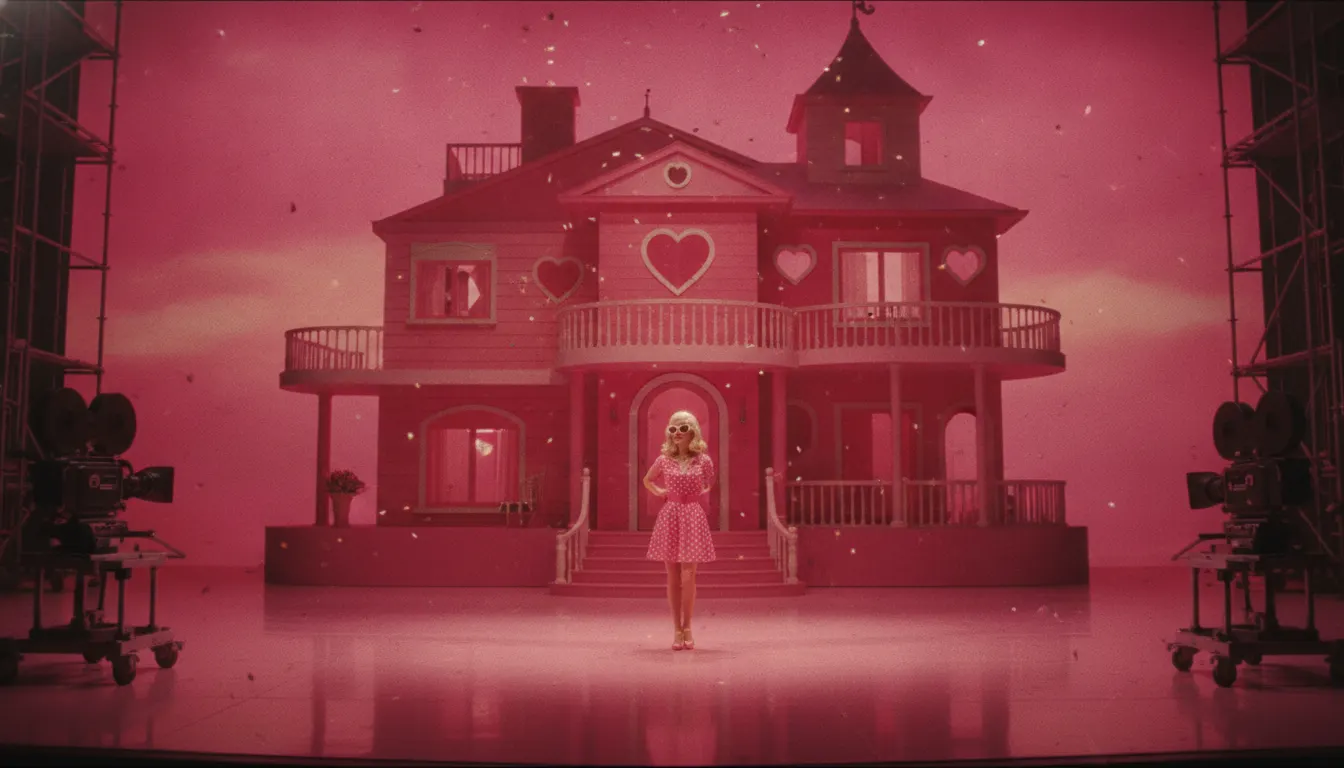
Barbie
Greta Gerwig / Rodrigo Prieto · 2023
The defining text - global record for female-directed film, all-pink maximalist Dreamhouse set design
Greta Gerwig Barbie maximalist pink. Rodrigo Prieto Technicolor-musical pastiche, painted-backdrop Dreamhouse, plastic-bright soundstage utopia.
The moves a human crew would use to get here. Cue applies them for you, and knowing their names is how you ask for a change.
Entire set lit with pink-gelled instruments so the light source itself is the brand color, eliminating neutral shadows.
Dreamhouse sets built without back walls and roads painted on lot floors - visible construction as ideological argument.
Saturation pushed to 1950s Hollywood musical levels across all color channels simultaneously, refusing naturalistic palette.
Multiple soft sources eliminate hard shadows entirely, creating a luminous womb-like environment where darkness is absent.
Camera placed on central axis of symmetrical set with characters posed at equal distances from center, a graphic-design frame.
Large-format anamorphic glass creates gentle highlight bloom around practical sources, distinguishing Barbieland from digital-sharp real world.
Greta Gerwig's Barbie (2023) is the most commercially successful original-concept film ever directed by a woman ($1.44 billion worldwide) and one of the most intentionally artificial looking films of the decade. In collaboration with cinematographer Rodrigo Prieto and production designer Sarah Greenwood, Gerwig made a film that refuses naturalism at every level: the color, the light, the architecture, and the performance grammar are all permanently elevated to a state of cheerful unreality.
Prieto - whose previous work includes Brokeback Mountain (2005), Silence (2016), Wolf of Wall Street (2013), and Baraka (1992) - made a counterintuitive choice for Barbie: he shot on film, specifically ARRI 65mm with anamorphic lenses on the studio scenes and a combination of formats on the real-world sequences. The film stock gives the Dreamhouse sequences a luminous, slightly soft quality that distinguishes them from the digital sharpness of the real world - a visual grammar for the boundary between the two dimensions.
The film's art department famously used so much hot pink paint and set dressing that Warner Bros.' purchase of pink paint caused a global shortage of Rosco's signature fluorescent pink during production. The color strategy is a deliberate Technicolor pastiche: the saturated primaries of Hollywood musicals from the 1950s (An American in Paris, Singin' in the Rain, Gentlemen Prefer Blondes) applied to a contemporary feminist comedy. Every frame of the Dreamhouse is a high-key primary color composition in which pink functions as the light source, the wall color, the wardrobe, and the skin filter simultaneously.
Sarah Greenwood's production design built 21 separate Dreamhouse sets at Leavesden Studios in the UK. The sets are deliberately theatrical rather than architectural: the pools are too blue to be real water; the houses have no back walls; the roads are painted onto the lot floor. The artificial transparency - you can see the seams - is ideological. Barbie is a film about how fiction constructs femininity, and the visible construction is the argument.
Gerwig's previous films - Lady Bird (2017, DP Sam Levy) and Little Women (2019, DP Yorick Le Saux) - established her as a director with deep interest in the visual language of memory and nostalgia. Both films used soft natural light and warm amber grades. Barbie inverts this: the nostalgia is not amber and organic but hot pink and manufactured. The emotional sincerity of Lady Bird is redirected into the deliberate fakery of the Dreamhouse.
Greta Gerwig / Rodrigo Prieto · 2023
The defining text - global record for female-directed film, all-pink maximalist Dreamhouse set design
Howard Hawks / Harry Wild · 1953
Marilyn Monroe primary-color musical that Barbie directly homages in the 'I'm Just Ken' sequence staging
Stanley Donen / Harold Rosson · 1952
Technicolor primary saturation and theatrical artificiality that establishes the palette tradition
Greta Gerwig / Sam Levy · 2017
Gerwig debut feature - warm naturalistic nostalgic light that Barbie directly inverts
Greta Gerwig / Yorick Le Saux · 2019
Gerwig memory-amber palette preceding and contextualizing Barbie's manufactured pink inversion
Vincente Minnelli / Alfred Gilks · 1951
Technicolor painted-set ballet sequence at the peak of the primary-color musical tradition
Robert Luketic / Anthony B. Richmond · 2001
Pre-Barbie pink-primary comedy aesthetic demonstrating the long feminist-pink comedic lineage
A Look is not a filter. It is a set of stored decisions the pipeline reads before it makes a single frame, so two videos in the same Look actually match.
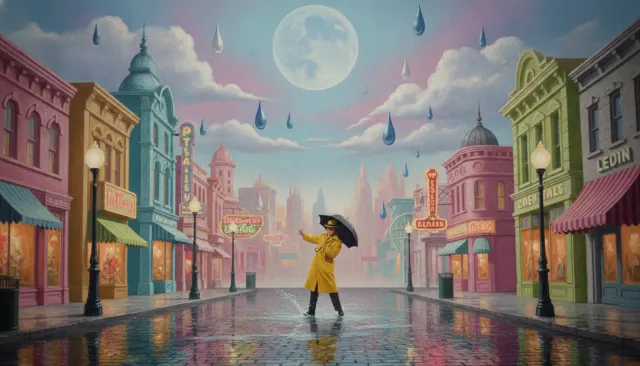 Cinema EraTechnicolor 1950s Musical
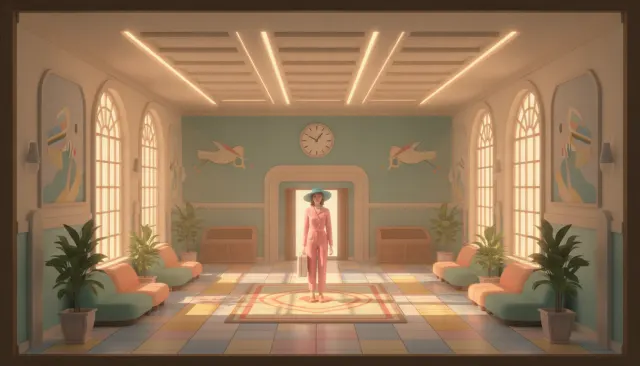 Pastel Symmetric CinemaWes Anderson
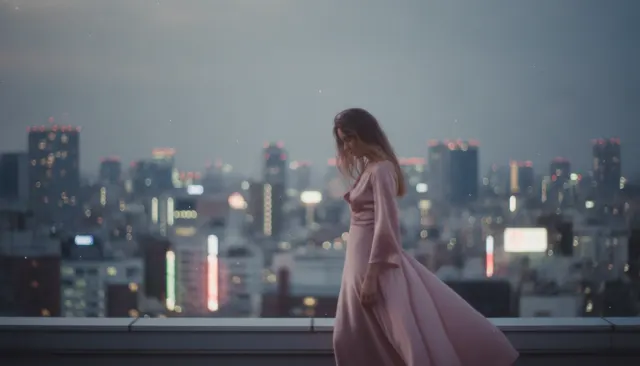 Director Aesthetic ModernSofia Coppola Pastel Melancholy
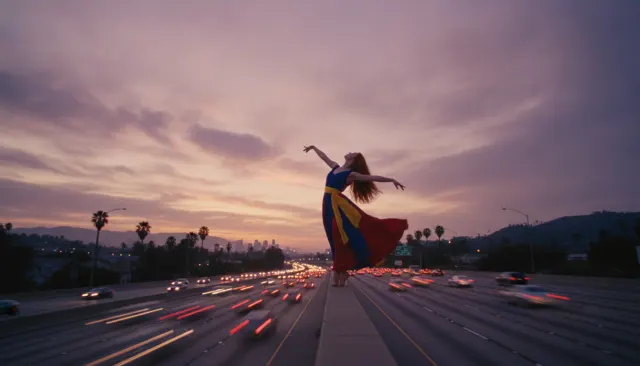 Cinematographer AcclaimedLinus Sandgren La La Land Pastel
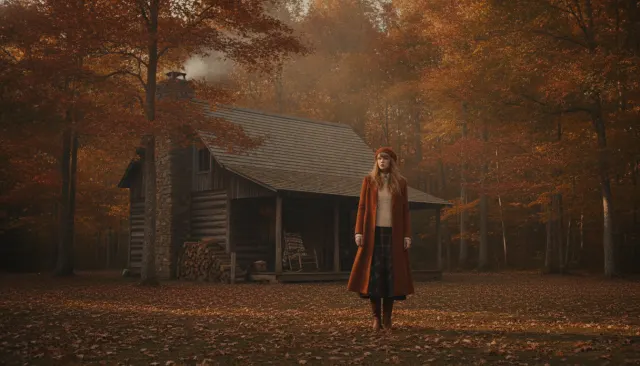 Genre PopTaylor Swift Cinematic Narrative MV
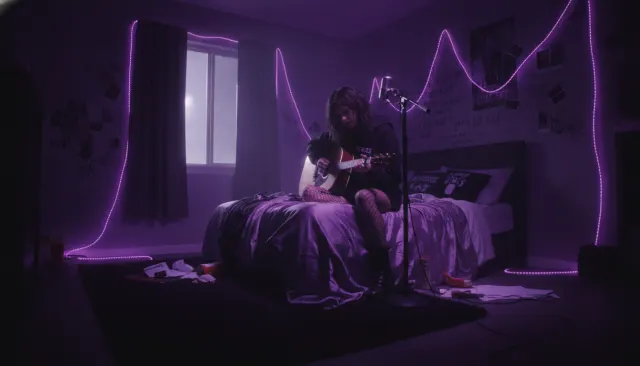 Mv Genre Pop ExtendedOlivia Rodrigo Petty Bedroom Pop
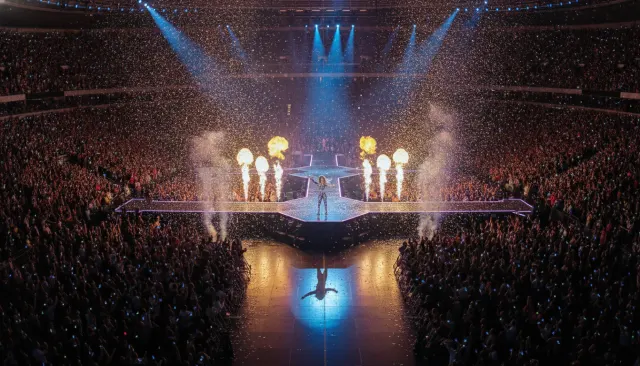 Genre PopPop Glossy Stadium MV