Singin' in the Rain
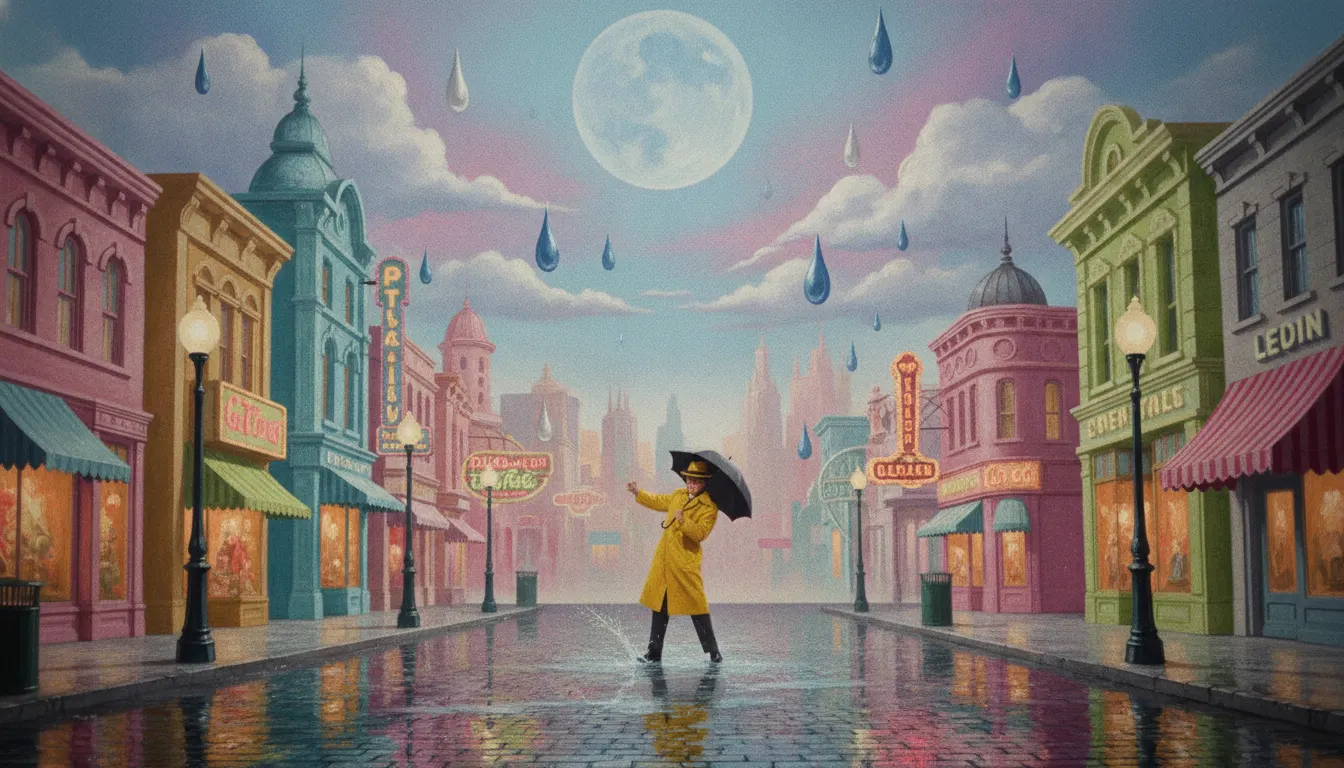
Stanley Donen & Gene Kelly · 1952
The definitive Technicolor musical; cobalt suits, candy backdrops, Harold Rosson cinematography
Three-strip Technicolor saturation. Singin in the Rain candy palette, MGM soundstage gloss, dance-number staging.
The moves a human crew would use to get here. Cue applies them for you, and knowing their names is how you ask for a change.
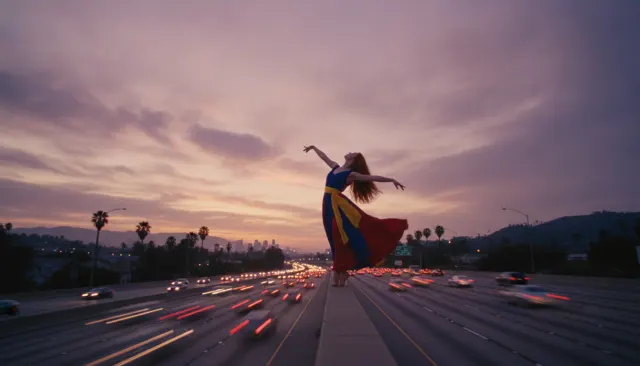
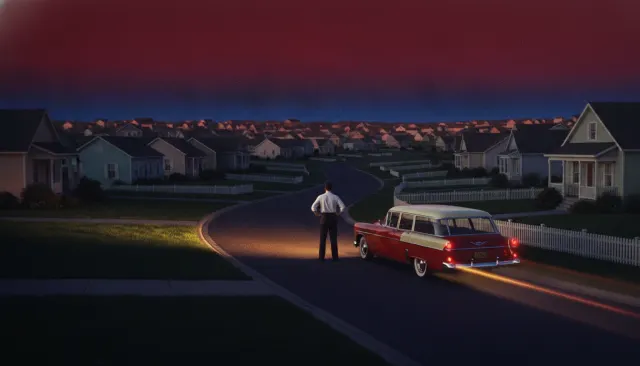
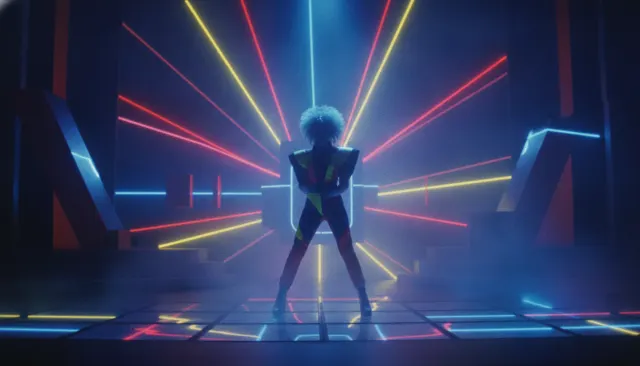
Colors pushed to near-maximum purity with a characteristic warmth bias in skin tones and jewel-density in reds and blues.
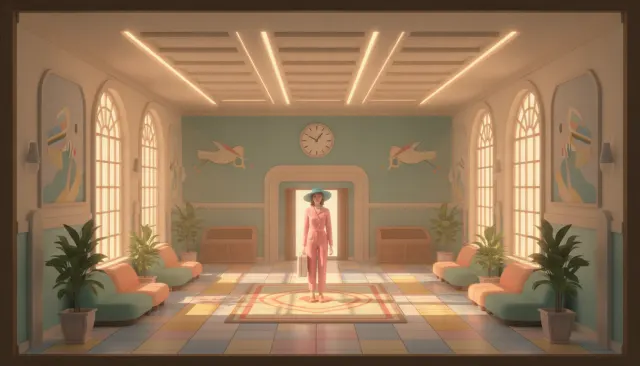
Costumes and backgrounds are designed in deliberate complementary pairs - teal sets with red costuming, warm amber skin against cool blue sky.
Broad, shadowless illumination prevents color muddying and maintains palette fidelity across the frame.
Medium and long shots that capture full-body choreography against bold background planes, letting the color field read clearly.
Post-production lift of saturation across all channels, with specific warmth pushed into highlights and midtones to emulate dye-transfer characteristics.
Characters placed in formal, symmetrical arrangements that emphasize the artificial, performative quality of the image.
The Technicolor musical look of the 1950s represents Hollywood's most exuberant period of color filmmaking. Three-strip Technicolor, the dye-transfer process that dominated from the late 1930s through the mid-1950s, produced hues of extraordinary purity and saturation that no subsequent film process has fully replicated. Combined with the MGM, RKO, and 20th Century Fox soundstage aesthetic, the era established a visual grammar of performative joy that remains instantly recognizable.
Three-strip Technicolor used a beam-splitter prism to expose three separate black-and-white negatives simultaneously, each filtered for red, green, or blue light. The resulting dye-transfer prints delivered colors with a characteristic density and richness. Flesh tones skewed warm amber, blues tended toward turquoise, and reds achieved a deep, almost lacquer-like quality. When MGM's Cedric Gibbons designed sets specifically for Technicolor's palette, the resulting images felt heightened beyond nature - candy-box confections of color that audiences in gray postwar America found irresistible.
The look relies on high-key studio lighting designed to prevent color mudding. Cinematographers like George Folsey (Anchors Aweigh, 1945), Harry Stradling Sr. (Easter Parade, 1948), and Robert Planck (An American in Paris, 1951) used broad, soft sources to preserve Technicolor's palette consistency. Sets were built in deliberate complementary contrast: red costumes against teal backgrounds, golden skin tones against cerulean blue skies. The visual strategy was not naturalism but theatrical spectacle.
Singin' in the Rain (1952), directed by Stanley Donen and Gene Kelly and shot by Harold Rosson, stands as the defining example. Its candy-palette studio backlot, Gene Kelly's cobalt suit against yellow rain slickers, and the pastel Broadway sequence in "Broadway Melody" push Technicolor to its most expressive extreme. An American in Paris (1951) pushed the musical toward fine-art abstraction with its 17-minute ballet sequence drawing from Toulouse-Lautrec and Dufy. The Band Wagon (1953) and Funny Face (1957), both shot by Ray June, brought fashion-forward color sense to the genre.
The look defines itself through candy saturation, where no color feels fully naturalistic but every color feels fully intentional. Costume and set design are conceived together as a color field, not as separate departments. Dance staging favors medium and wide frames that let the full body register against bold background planes. Light sources are seldom motivated realistically - a key light exists because it looks beautiful, not because a lamp exists.
Filmmakers and video creators invoke this look when they want to signal uninhibited joy, nostalgic spectacle, or performative artifice. Baz Luhrmann's Moulin Rouge! (2001) and Damien Chazelle's La La Land (2016) both consciously reference the era. For product or brand work, the Technicolor musical palette communicates warmth, positivity, and theatrical confidence.
Stanley Donen & Gene Kelly · 1952
The definitive Technicolor musical; cobalt suits, candy backdrops, Harold Rosson cinematography
Vincente Minnelli · 1951
17-minute Impressionist ballet sequence; Technicolor as fine-art color field
Vincente Minnelli · 1953
Fred Astaire showcasing fashion-forward color sense across a full-saturation palette
Stanley Donen · 1957
Audrey Hepburn and Paris couture in Technicolor at its most fashion-editorial
Charles Walters · 1948
Harry Stradling Sr. cinematography; warm amber tones and pastel Spring palette
Baz Luhrmann · 2001
Modern homage consciously referencing 1950s Technicolor excess and theatrical artifice
Damien Chazelle · 2016
Linus Sandgren recreating pastel Technicolor grammar for contemporary musical nostalgia
A Look is not a filter. It is a set of stored decisions the pipeline reads before it makes a single frame, so two videos in the same Look actually match.