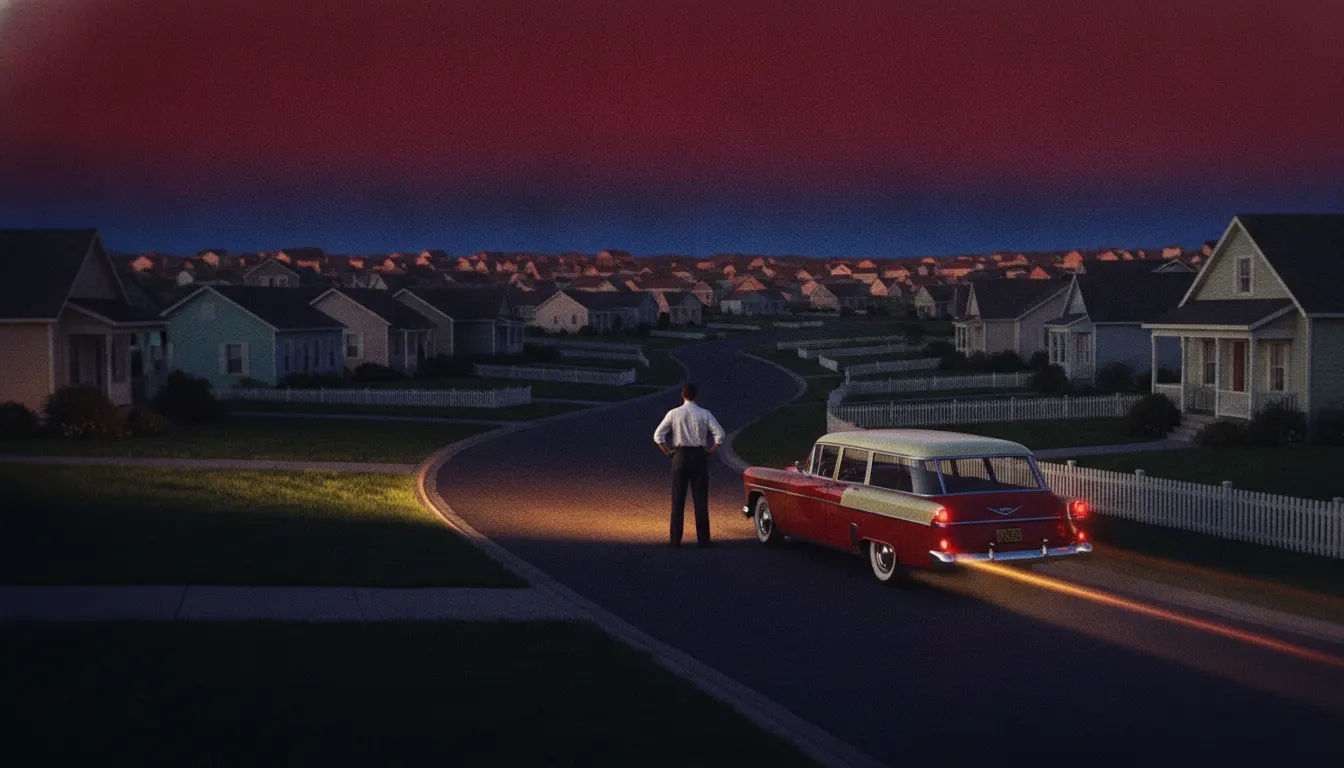
PHOTOGRAPHIC ERA · 1950S · USA
Kodachrome 1950s Saturated
Postwar Kodachrome slide film. National Geographic saturation, ruby reds, deep blues, optimistic American suburb, station wagon road trip.
kodachromesaturatedpostwaroptimistic
LUT kodachrome-25-saturated
WHEN TO USE
- Period-accurate 1950s-1970s visual reconstruction for any medium
- Travel photography evoking the warmth of memory and the past
- Portrait photography requiring warm, timeless skin tones and color richness
- Landscape photography where saturated primaries matter: red rock, blue sky, green forest
- Heritage brand content or campaigns referencing American mid-century culture
- Any project seeking the specific emotional register of warm nostalgic color
WHEN NOT TO USE
- Contemporary or futuristic aesthetics where the period warmth creates anachronism
- Cool-palette moodboards or Scandinavian-influenced minimalism
- Black-and-white or monochrome projects
- Clinical or technical photography requiring neutral color reproduction
SIGNATURE TECHNIQUES
How the look is made.
The moves a human crew would use to get here. Cue applies them for you, and knowing their names is how you ask for a change.
- 01Warm orange
red color shift, particularly in skin tones and warm surfaces
- 02Exceptional blue depth
sky and shadow blues retain saturation
- 03Fine grain
almost invisible at normal reproduction sizes
- 04High color saturation with primary color separation (red, green, blue distinctly separated)
- 05Slight warm cast in highlights (Kodachrome 64 and 25 variants)
- 06Transparency viewing creates richer apparent saturation than reflective prints
- 07Daylight balanced (5500K)
artificial light sources go warm orange without correction
HISTORY & CONTEXT
Where it comes from.
Kodachrome: The 1950s Saturated Palette
Kodachrome was not just a film stock; it was for seventy-four years the standard against which all color photography was measured. Introduced by Eastman Kodak in 1935 as the first commercially successful color film (16mm first, 35mm from 1936), it outlasted every competitor before being discontinued in 2009 when Kodak halted manufacture. The last roll was processed at Dwayne's Photo in Parsons, Kansas, on January 18, 2011.
The Technical Foundation
Kodachrome was a reversal film (slide film), not a negative film. Exposed frames became positive transparencies rather than negatives, which meant they were viewed by transmitted light - projected onto a screen or examined on a light table. This transmission viewing produced colors of extraordinary richness; the dyes in Kodachrome absorbed light rather than reflecting it, achieving densities impossible in a reflective print.
The film used three separate layers of silver halide emulsion sensitized to red, green, and blue, with the color coupler dyes added during a complex development process (the K-14 process). This complexity meant that only Kodak could develop Kodachrome; it could not be processed by independent labs or home darkroom workers. This was both a commercial advantage for Kodak and a practical constraint for photographers.
Kodachrome's grain structure was exceptionally fine - microscopic compared to contemporary negative films - making it the preferred film for reproduction in large-format publications. The color palette was distinctive: warm, slightly shifted toward orange and yellow, with exceptional reds and with a characteristic separation between primary colors. Blues had a particular depth; shadows retained color saturation where other films went flat.
Cultural Ubiquity
For twenty years after World War II, Kodachrome was the film of American life. The National Geographic Society adopted it as the standard for all color reproduction in 1938, a relationship that continued until 2010. Life magazine's color photography from the 1940s through the 1970s was predominantly Kodachrome. Paul Simon's 1973 song 'Kodachrome' crystallized its cultural meaning in three minutes: the film as synecdoche for memory, warmth, and the vivid colors of the American past.
Steve McCurry's 'Afghan Girl' (National Geographic, June 1985 cover) is arguably the most famous Kodachrome photograph. It was shot on Kodachrome 64; the film's ability to render the green eyes and the red embroidered fabric simultaneously, with full saturation in both, was central to the image's impact. McCurry was also the photographer chosen by Kodak to shoot the final roll of Kodachrome in 2010.
NOTABLE WORKS
Where you have seen it.
Life magazine color photography 1945-1972 (predominantly Kodachrome)
Neil Leifer's Muhammad Ali sports photography, 1960s
Sam Abell's North American National Parks series for National Geographic, 1970s-1990s
Ernst Haas's New York in Color, 1953 (first major color essay in Life)
Paul Simon, 'Kodachrome' (song, 1973)
cultural canonization
THE RECIPE
The exact knobs
the renderer turns.
A Look is not a filter. It is a set of stored decisions the pipeline reads before it makes a single frame, so two videos in the same Look actually match.
SettingValue
GradeColour LUT applied to every frame
kodachrome-25-saturatedTransitionHow one shot becomes the next
dissolve cuts · 380ms · ease-in-outKen BurnsCamera move applied to stills
Slow push · 0.035 · rule-of-thirdsTypographyDisplay / body / mono pairing
Cooper Hewitt · Inter · CourierMusic moodWhat the bed under the voice sounds like
doo-wop · sinatra-swingPrompt suffixAppended to every shot prompt in this Look
Kodachrome 1950s slide film, National Geographic saturation, ruby red deep blue, postwar American suburb, station wagon road tripPALETTE
Primary
#C8302E
Secondary
#1F6FB8
Accent
#F5C144
Text/Light
#1A0A0A
Text/Dark
#FFF1D0
BG 900
#1A0A0A
BG 800
#2A1010
RELATED LOOKS
Next to it on the shelf.
 Photographic EraInstamatic 1960s Snapshot
 Photographic EraKodak Disposable 90s Flash
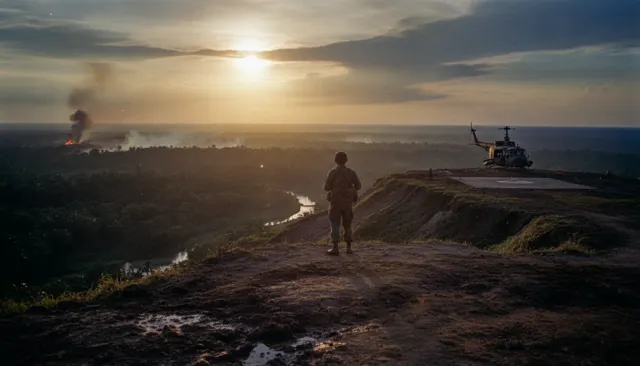 PhotojournalismLife Magazine Color Photojournalism
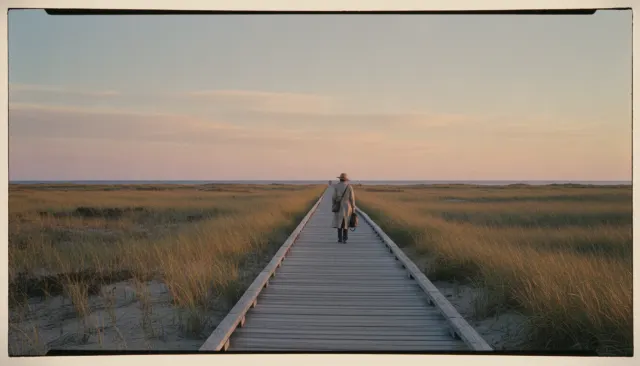 Street PhotographyJoel Meyerowitz Color Street
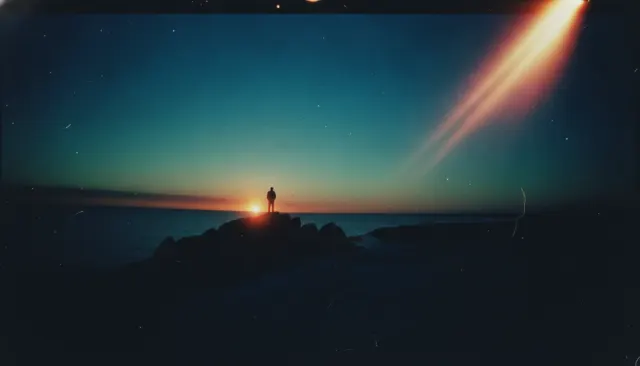 Photographic EraLomography Toy Camera
 Photographic EraInstagram 2010s VSCO Filter
 Photographic EraHolga Medium Format Light Leak
Your first cut
is on us.
+ New videoFree plan · no card · 1080p export