PHOTOGRAPHIC ERA · 1960S · USA
Instamatic 1960s Snapshot
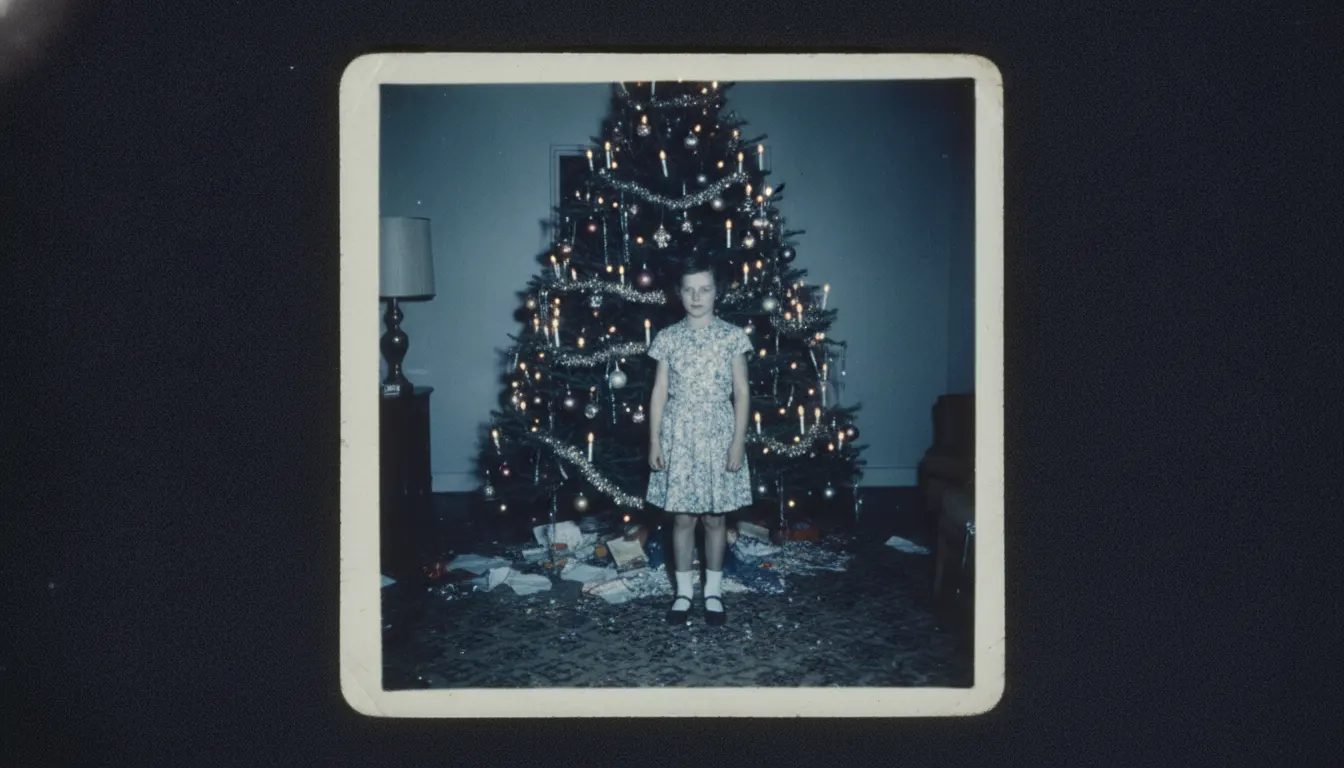
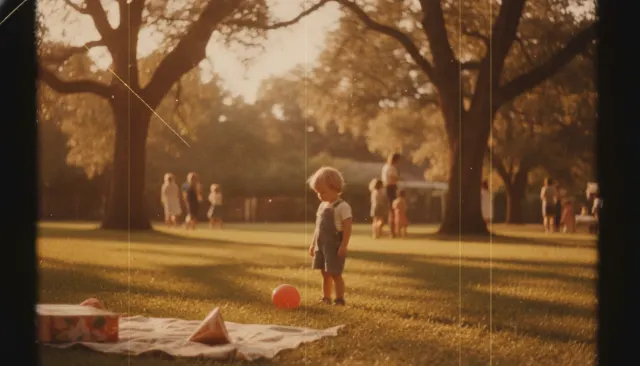
Kodak Instamatic 126 cartridge snapshot. Flashbulb harsh on-axis flare, blue cast, square frame, birthday party and Christmas tree.
instamaticflashbulbsnapshotsixties
LUT instamatic-blue-flash
WHEN TO USE
- Nostalgic family, domestic, or childhood-memory themed content
- 1960s-1970s period-accurate visual reconstruction
- Warm, intimate portrait photography evoking memory and personal history
- Brand storytelling for heritage or legacy brands established in that era
- Music videos or editorial work referencing the specific warmth of analogue memory
WHEN NOT TO USE
- Any content requiring technical sharpness or color accuracy
- Modern or contemporary visual contexts where the period reference would confuse
- Luxury or premium product photography where the casual register undercuts prestige
- Documentary work where color accuracy is required for accuracy
SIGNATURE TECHNIQUES
How the look is made.
The moves a human crew would use to get here. Cue applies them for you, and knowing their names is how you ask for a change.
- 01Fixed
focus lens: soft subjects closer than 4 feet, sharper at distance
- 02Direct single
source flash: flat, frontal lighting with hard shadow behind subject
- 03Warm color drift with orange
red shadow cast (aged print emulation)
- 04Slightly reduced saturation in cool channels
cyans and blues fade or desaturate
- 05Mild grain consistent with 126 format negatives at 4x6 print size
- 06Square or near
square crop reflecting the 28x28mm negative format
- 07Slight image softness overall
no microcontrast sharpening
HISTORY & CONTEXT
Where it comes from.
Instamatic: The 1960s Snapshot Aesthetic
The Kodak Instamatic camera arrived in 1963 and immediately became the most successful camera in American consumer history. By 1970, over 50 million Instamatic cameras had been sold worldwide. It used a new drop-in 126 cartridge film format that made loading foolproof: no threading, no sprockets, just drop and close. Combined with a built-in flash cube socket (later the Magicube and Flipflash), the Instamatic put competent snapshot photography in the hands of anyone who could point and press a button.
What the Instamatic Looked Like
The 126 format produced a 28x28mm square negative - smaller than 35mm but larger than a half-frame. The single-element plastic or glass lens was fixed-focus, optimized for subjects from about four feet to infinity. Anything closer appeared soft. Flash exposures at typical indoor distances produced the flat, even lighting that characterizes every family birthday photo, Christmas morning, and backyard barbecue of the era.
Kodacolor X and later Kodacolor II film gave saturated, moderately contrasty results with warm skin tones. As these prints age - and virtually all surviving Instamatic prints are 40-60 years old - the color shifts predictably: cyan dyes fade first, leaving images with a warm orange-red cast, especially in the shadows. Highlights often retain a greenish-yellow cast. The combination is recognizable as the 1960s-70s snapshot palette even without the family subjects.
Cultural Ubiquity
The Instamatic documented the quotidian life of the Western middle class from 1963 to about 1985, when it was superseded by the 110-format Pocket Instamatic and eventually the 35mm point-and-shoot. The images it produced are the visual record of childhood memories for everyone born between 1955 and 1975. The soft focus, warm color drift, and direct flash have become so associated with that period that they function as shorthand for nostalgia, domesticity, and the physical reality of memory.
Contemporary Usage
The Instamatic aesthetic is distinct from Kodachrome (sharper, more saturated, slide film) and Polaroid (instant, square, darker). Its specific quality - soft, warm, flat-lit, domestic - is reproduced in presets, filters, and film emulations across Lightroom, VSCO, and various mobile apps. The Kodak brand's recent retro-marketing campaigns lean heavily on the Instamatic's cultural resonance.
NOTABLE WORKS
Where you have seen it.
Life magazine 'Family of Man' era domestic photography
Anonymous family snapshots now archived at archives like the Vernacular Photography Archive
Nan Goldin's early work shares visual DNA with the snapshot tradition
THE RECIPE
The exact knobs
the renderer turns.
A Look is not a filter. It is a set of stored decisions the pipeline reads before it makes a single frame, so two videos in the same Look actually match.
SettingValue
GradeColour LUT applied to every frame
instamatic-blue-flashTransitionHow one shot becomes the next
hard cuts · 200ms · linearKen BurnsCamera move applied to stills
Static framesTypographyDisplay / body / mono pairing
Cooper Hewitt · Inter · CourierMusic moodWhat the bed under the voice sounds like
motown-60s · organ-popPrompt suffixAppended to every shot prompt in this Look
Kodak Instamatic 126 1960s snapshot, flashbulb harsh on-axis, blue cast, square frame, birthday party Christmas treePALETTE
Primary
#7AB0D0
Secondary
#5C8AA8
Accent
#E8A05A
Text/Light
#0F2A3A
Text/Dark
#F5E5C8
BG 900
#0A1A26
BG 800
#152A3A
RELATED LOOKS
Next to it on the shelf.
Your first cut
is on us.
+ New videoFree plan · no card · 1080p export