Super 8 (film)
J.J. Abrams / Larry Fong · 2011
Feature-length homage to Super 8 home movie culture and 1979 Ohio childhood filmmaking
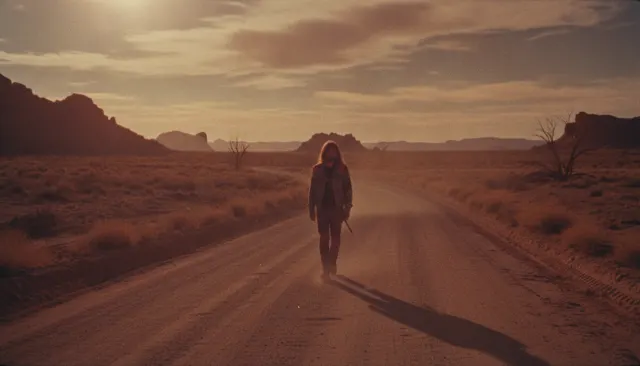
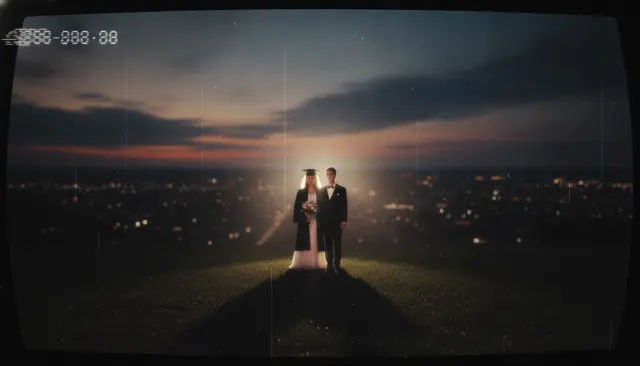
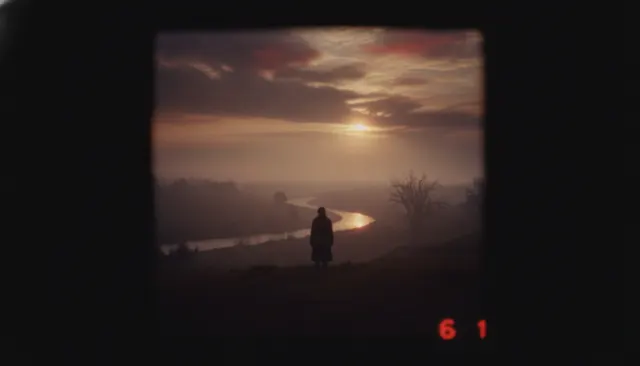
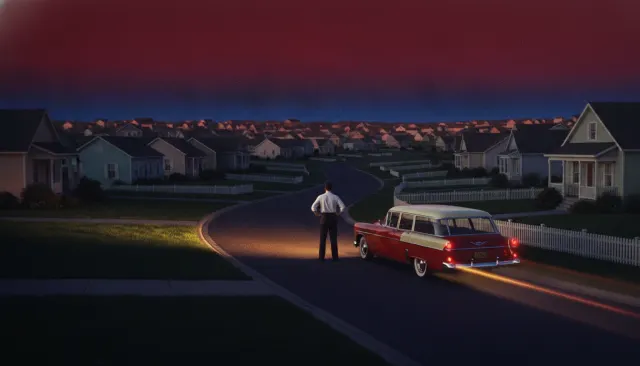
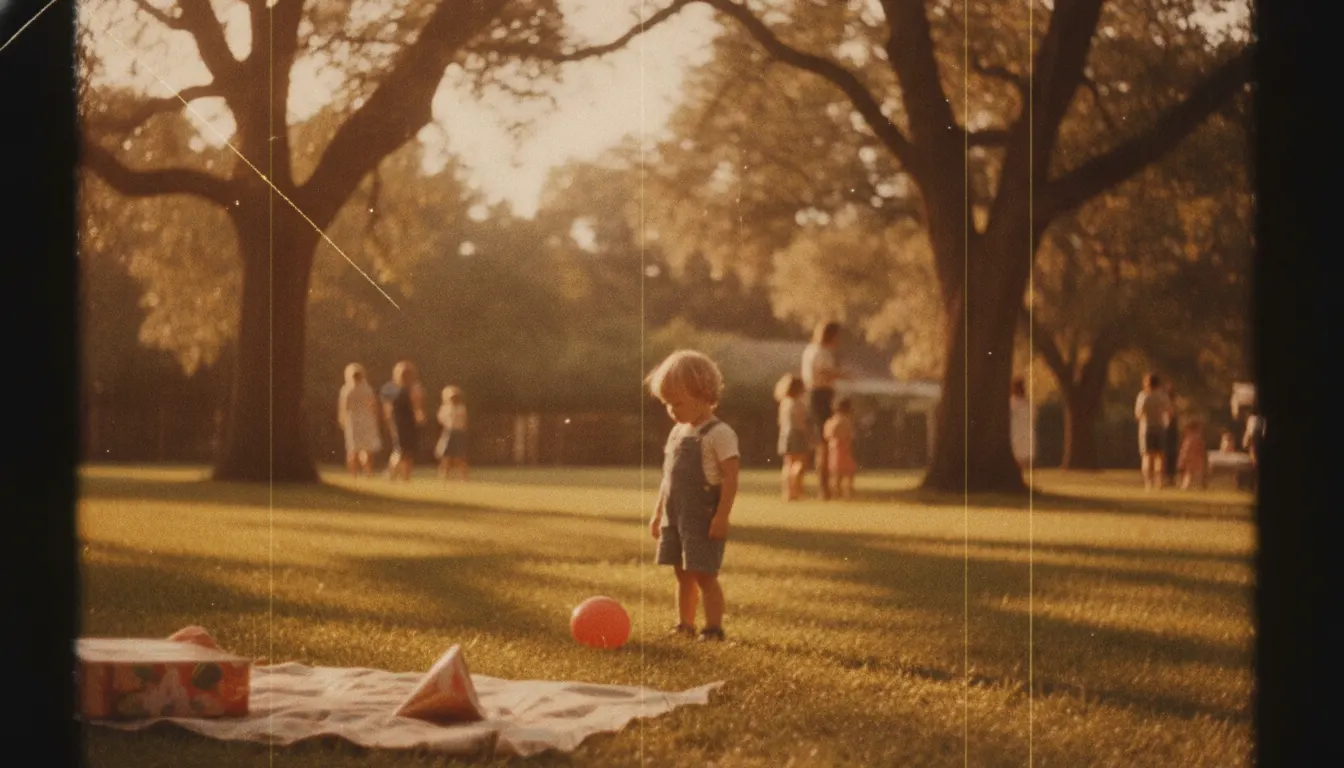
Super 8mm family home movie. Faded amber Kodachrome, sprocket-wobble, silent backyard birthday, scratched and joined.
The moves a human crew would use to get here. Cue applies them for you, and knowing their names is how you ask for a change.
Small film frame produces grain that is large relative to the image, creating an unmistakable tactile texture.
Kodachrome 40 stock produces characteristic warmth in sunlight and strong orange shift in artificial light.
Unstabilised handheld operation produces the specific up-and-down bounce that signals private, non-professional capture.
Simple automatic exposure produces blown highlights and dark, warm-shifted shadows as authentic imperfections.
The absence of synchronised sound creates emotional distance that is filled by music, amplifying nostalgic resonance.
Super 8 lenses and film gate produce natural vignetting at the frame edges, concentrating attention on the centre.
Super 8 is a motion picture film format introduced by Kodak in 1965, designed to make home movie production accessible and affordable. The format - a smaller frame area than standard 8mm, within a cartridge that eliminated the need for threading - democratised moving-image capture for the American middle class, producing a visual legacy of family films from the late 1960s through the 1990s that carries an entire emotional register: nostalgia, the intimacy of private memory, the specific warmth of domestic events rendered impermanent by the fragility of film.
Super 8 film is 8mm wide with a frame area of approximately 4.2mm x 5.79mm - substantially smaller than 16mm or 35mm. This small frame area means that any grain in the film stock is proportionally much larger when projected or scanned, producing the pronounced visible grain that is Super 8's most distinctive visual characteristic. Kodachrome 40, the dominant stock for decades, has a specific colour response: warm amber-orange in incandescent light, beautifully saturated in daylight, and strongly orange-shifted in artificial lighting.
Early Super 8 cameras were fixed-exposure or had simple automatic exposure systems, leading to frequent over- and underexposure, blown highlights in sunlit exteriors, and dark, warm-shifted interiors. The format also lacks any stabilisation - Super 8 footage is always slightly unsteady, with the characteristic bounce and jitter of a hand-held camera operated by someone primarily paying attention to their subject rather than their technique.
Sound Super 8 was introduced in 1973, but most home-movie Super 8 was shot silent, requiring musical accompaniment or narration to be added in post. This silence is a significant part of the aesthetic register: Super 8 footage carries the emotional weight of a medium that was never designed to record speech.
Super 8 home movie footage has been repurposed extensively in documentary, music video, and art cinema: as evidence of private life, as nostalgic material, and as an aesthetic texture that signals authenticity, intimacy, or pastness. Directors including Steven Spielberg (who made home movies on Super 8 as a teenager and whose Super 8 (2011) is an explicit homage), Peter Jackson, and Jodie Foster made early films on the format.
The Super 8 aesthetic has been extensively simulated in digital video through grain overlays, warm colour shifts, and camera shake applied as effects. Applications like the 8mm Vintage Camera app (2010) and Kodak's own digital Super 8 camera (announced 2016, released 2024) testify to the enduring demand for the format's aesthetic properties.
J.J. Abrams / Larry Fong · 2011
Feature-length homage to Super 8 home movie culture and 1979 Ohio childhood filmmaking
Richard Linklater / Shane Kelly · 2016
1980 Texas Super 8 aesthetic as period texture and coming-of-age nostalgia
Stephen Chbosky / Andrew Dunn · 2012
Super 8 home movie footage woven into 1990s coming-of-age narrative
Sarah Polley · 2012
Documentary using new Super 8 footage deliberately made to look archival; memory and truth
Andrew Douglas · 2003
Southern American music documentary shot on Super 8 for authentic folk texture
Quentin Tarantino / Robert Richardson · 2019
Super 8 inserts within the 35mm period narrative; home movie texture as psychological truth
A Look is not a filter. It is a set of stored decisions the pipeline reads before it makes a single frame, so two videos in the same Look actually match.