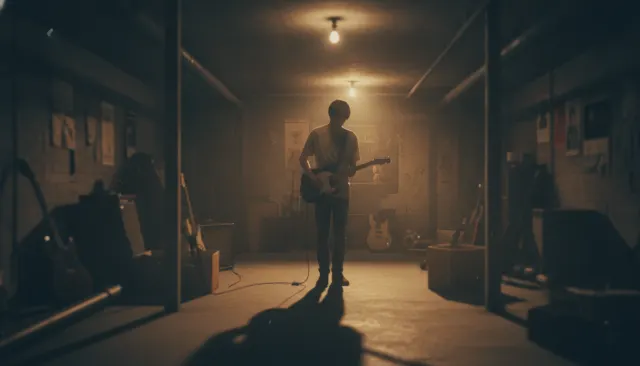
Kids
Larry Clark / Harmony Korine · 1995
Shot on 16mm but with VHS camcorder aesthetic influence; established lo-fi as legitimate visual choice for youth subjects
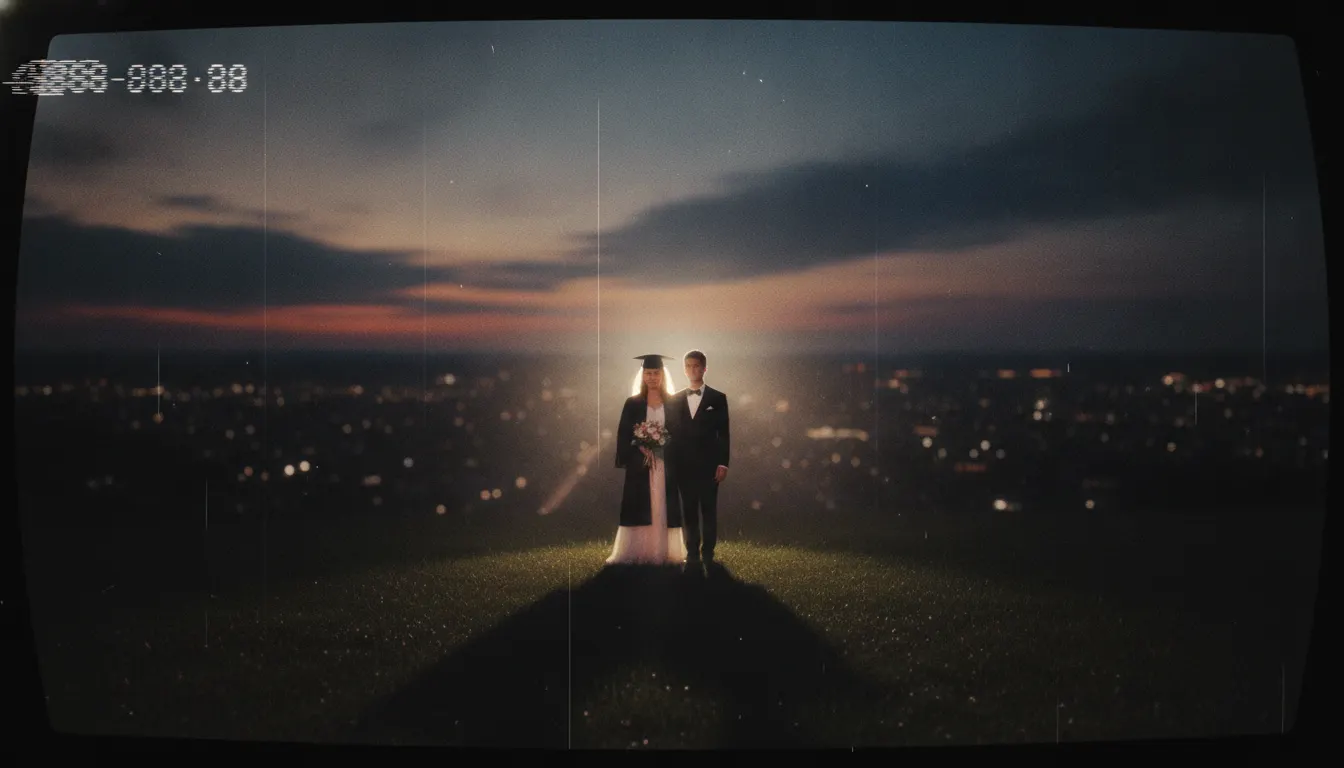
1990s shoulder-mount VHS-C camcorder. Date stamp burned in, tracking-error static, hot on-camera light, wedding-and-graduation footage.
The moves a human crew would use to get here. Cue applies them for you, and knowing their names is how you ask for a change.
240-line horizontal resolution simulation with luminance bleed on high-contrast edges and loss of fine detail.
Period-accurate LCD font displaying month-day-year and hour-minute-second in the lower right corner of the frame.
Shadowless, axis-matched halogen illumination producing flat, warm indoor light with eye-level catchlights.
Gradual or sudden color temperature shifts within a shot as the camera's auto-balance algorithm adjusts to changing light conditions.
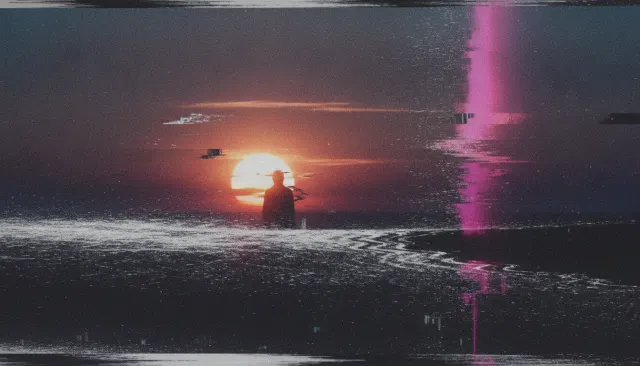
Horizontal bands of white noise or color distortion at frame edges, simulating worn tape or misaligned playback heads.
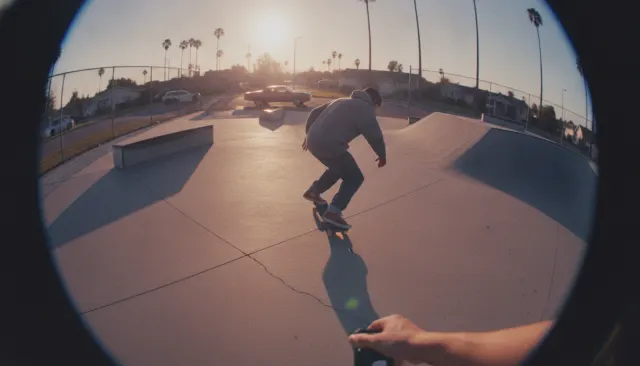
Shoulder-mount or handheld movement with characteristically unsteady panning, involuntary zooming, and casual reframing.
The VHS camcorder aesthetic of the 1990s is the visual grammar of the first era when everyday people could afford to record their own lives. Shoulder-mount and handheld VHS-C camcorders from manufacturers like JVC, Panasonic, Sony, and RCA democratized image-making between roughly 1988 and 2000, producing a distinctive visual texture that is now deeply associated with personal memory, family ritual, and a particular quality of pre-digital intimacy.
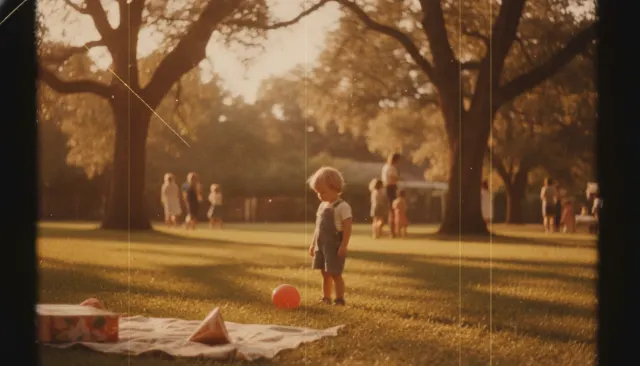
VHS and VHS-C tape recorded at 240 lines of horizontal resolution - a fraction of 35mm film or even S-VHS. This low resolution produced characteristic softness and a slightly painterly quality where fine detail bled into its surroundings. Color rendition was warm and slightly oversaturated in reds, with a tendency to bloom in bright light. The automatic white balance algorithms of consumer camcorders often produced orange indoor casts or blue outdoor shifts that could change mid-shot as the camera adapted.
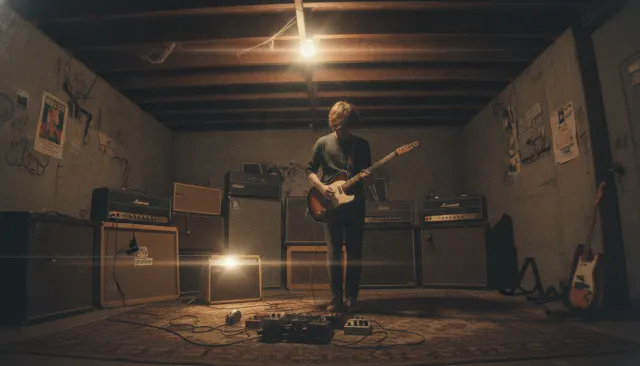
The on-camera light - a small halogen built into the unit - produced the signature VHS indoor look: hot white key directly from the lens axis, creating flat, shadowless illumination that wraps around subjects but eliminates depth. This is the lighting grammar of birthday parties, Christmas mornings, graduation ceremonies, and wedding receptions the world over from 1988 to 2000.
Consumer camcorders burned in a date and time stamp in the lower-right corner by default, and most users never learned to disable it. The digital numerals - in a specific, era-characteristic LCD font - are now as iconic as the tape format itself. Early camcorders also displayed focus indicators, battery levels, and tape-counter information in a heads-up display overlay that is part of the visual vocabulary.
Tracking errors - horizontal bands of static and color distortion that appear when a tape is worn or the playback heads need cleaning - are among the most recognizable VHS artifacts. They appear at the top or bottom of the frame, or as horizontal striping through the image, communicating impermanence and the physical mortality of magnetic media.
The 90s VHS camcorder is inseparable from the social events it recorded: youth sports, school plays, holiday dinners, theme park visits, beach vacations, and the unguarded moments between. The aesthetic communicates warmth, authenticity, and the specific tenderness of being recorded by someone who loved you enough to carry a heavy camera. Filmmakers including Harmony Korine (Kids, 1995), early Matt Groening associates, and documentary makers drew on the format for its rawness and accessibility.
Since roughly 2018, VHS aesthetic simulation has become popular in music videos, short films, and brand content targeting millennial nostalgia. CapCut, Premiere Pro, and DaVinci Resolve all carry VHS LUT/effect presets. Physical VHS camcorders are experiencing collector revival, and creators like Internet Girl have built aesthetic identities around actual analog tape.
Larry Clark / Harmony Korine · 1995
Shot on 16mm but with VHS camcorder aesthetic influence; established lo-fi as legitimate visual choice for youth subjects
Daniel Myrick & Eduardo Sanchez · 1999
Elevated VHS camcorder format to horror grammar; found-footage as institutional authenticity claim
Matt Reeves · 2008
DV/VHS-influenced found-footage applied to big-budget spectacle, proving the aesthetic's genre-crossing range
Oren Peli · 2007
Security camera and consumer DV grammar derived from VHS camcorder tradition; spawned a genre
Christopher Denham · 2008
Horror film structured entirely as VHS family camcorder documentation
Victor Zarcoff · 2015
Consumer surveillance camera aesthetic that extends the VHS grammar to contemporary horror
Samuel Bayer · 2006
Music video using VHS degradation for emotional contrast against epic rock content
A Look is not a filter. It is a set of stored decisions the pipeline reads before it makes a single frame, so two videos in the same Look actually match.