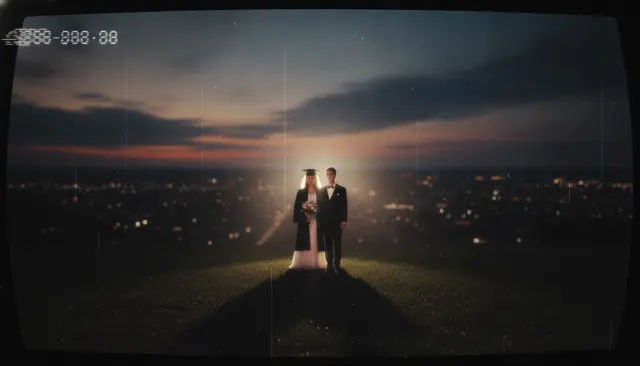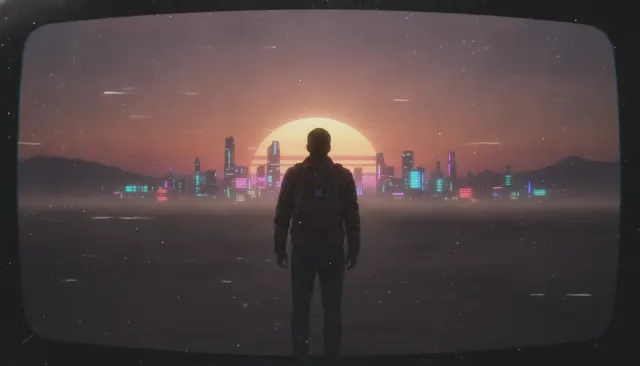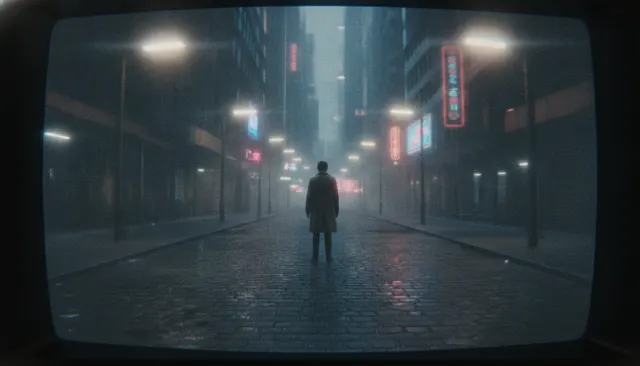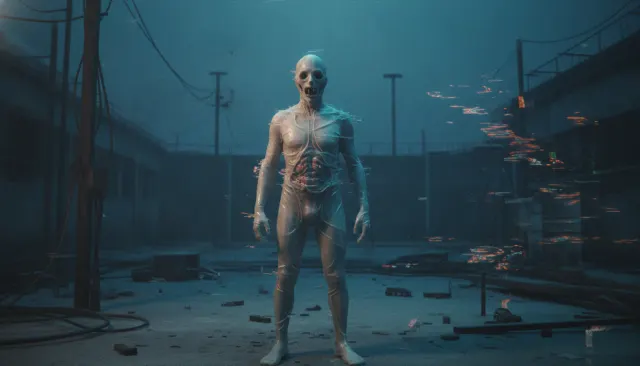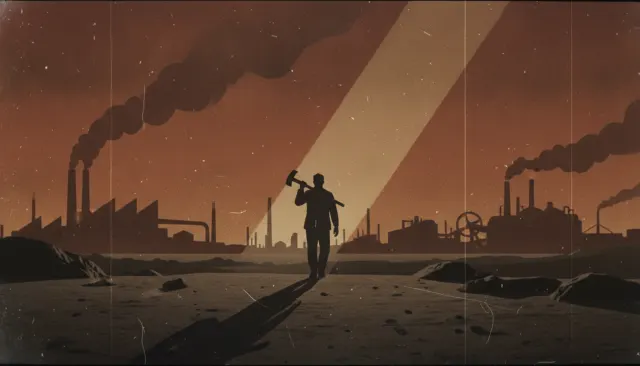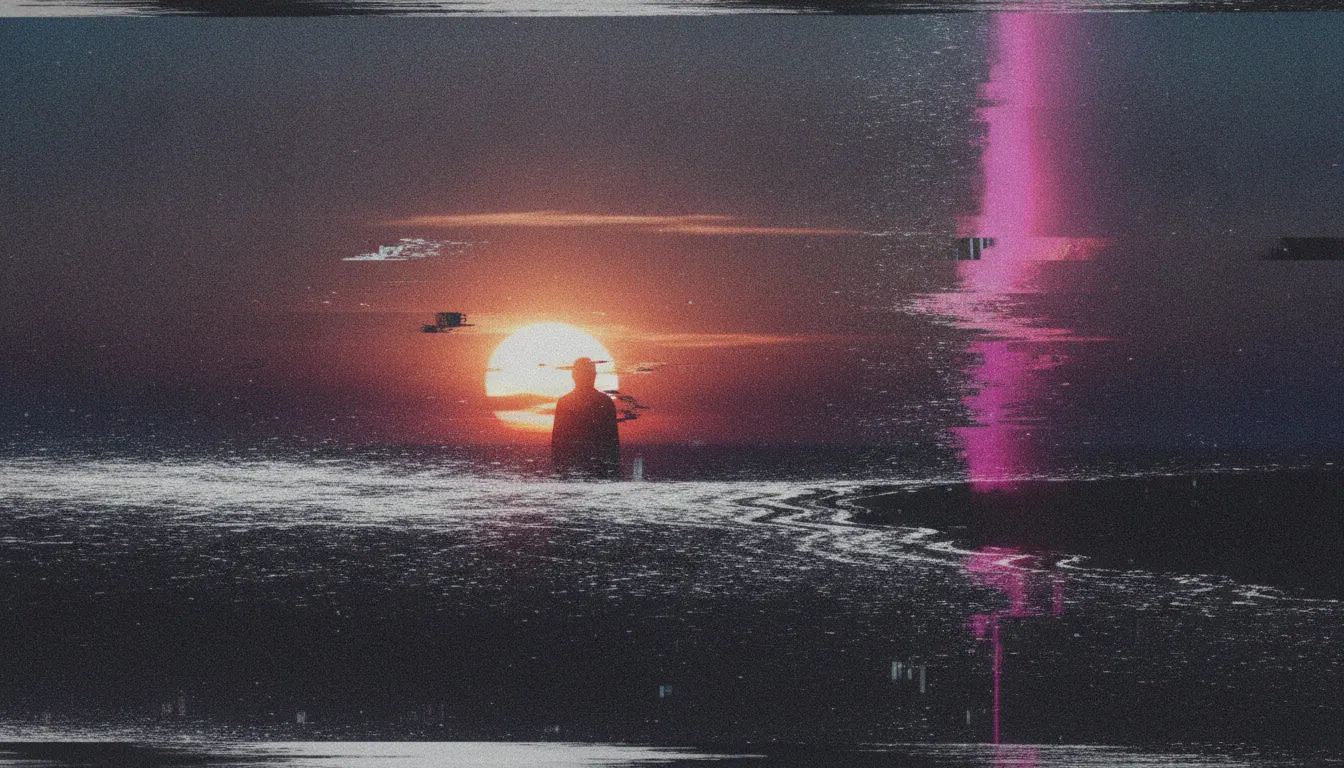
Ringu / The Ring VHS tape sequence
Hideo Nakata / Gore Verbinski · 1998/2002
Cursed VHS tape whose contents defined the visual language of VHS horror artifact as supernatural threat
Heavily degraded VHS tape. Dropouts, snow static, head-switching noise band at bottom, tracking error bars, magenta dropout streaks.
The moves a human crew would use to get here. Cue applies them for you, and knowing their names is how you ask for a change.
Horizontal bands of color (typically cyan, magenta, yellow, or white) that appear at the frame's lower third when tracking is misaligned between record and playback heads.
Single-pixel or multi-pixel horizontal white or colored streaks from magnetic particle shedding in the oxide coating layer.
Red, green, and blue color channels offset horizontally from each other by 2-8 pixels, reproducing the color fringing of luminance-chrominance separation artifacts.
Horizontal tear at the bottom 20 pixels of the frame where the video head switches between two helical recording tracks.
Slight horizontal jitter and vertical wobble as tape speed variation causes sync instability, visible as a slight waviness in vertical lines.
Increased chroma noise in skin tones and saturated areas from multi-generation dubbing loss, producing colored speckle most visible in flat fields.
Full-frame geometric distortion when the sync signal degrades completely, causing the image to fold, shear, or roll vertically.
VHS tape damage aesthetics document the visible failure modes of the Video Home System magnetic tape format: horizontal scan line dropout, tracking error color bars, luminance noise, magnetic dropouts, head clog distortion, and the distinctive diagonal tear artifacts of signal degradation. These failure modes, introduced into contemporary video as deliberate aesthetic choices, have become a powerful visual language for nostalgia, decay, horror, and the fragility of memory.
Victor Company of Japan (JVC) launched the VHS format on September 9, 1976, following the Betamax introduction by Sony in 1975. VHS won the format war primarily through longer recording time rather than image quality - Betamax was technically superior at its native 2-hour standard, while VHS offered 6 hours in EP mode. The image quality ceiling for VHS was 240 lines of horizontal resolution at SP speed, compared to Betamax's 250 and LaserDisc's 440 - already significantly below broadcast standards of the era.
The specific artifacts of VHS degradation follow from the format's mechanics. A VHS cassette stores video as a helical scan pattern of magnetic domains across 12.65mm tape. Degradation pathways include: magnetic particle shedding (producing dropout lines - white or colored horizontal streaks), tracking errors (producing colored horizontal bars that scroll up the frame when the VHS deck's tracking adjustment doesn't match the recording parameters), head clog (producing an entire frame smeared with noise), tape stretch (producing geometric distortion in horizontal sync), and copy generation loss (each VHS-to-VHS dub adds approximately 10% quality reduction, losing resolution and adding color noise).
The VHS damage aesthetic entered contemporary creative work in two primary trajectories. The horror trajectory - popularized by the Ring franchise (Ringu 1998, The Ring 2002) and later the found-footage genre (Cloverfield 2008, V/H/S anthology 2012) - uses VHS artifacts to signal authenticity and to make digital footage convincingly pre-digital. The nostalgia trajectory - popularized by lo-fi music aesthetics (vaporwave from ~2011, lofi hip-hop from ~2013) and retrofuturist design - uses VHS artifacts as comfort signifiers for 1980s-1990s cultural memory.
Software tools for VHS effect simulation include After Effects plugins (VHS Creator by Motion Array, Bad TV by Singular Software), dedicated desktop apps (VHS Camcorder by Bitgym), and mobile apps (Vaporgram, Glitchlab). The After Effects "echo" effect, combined with chromatic aberration, scan line overlays, and color noise addition, is the standard production pipeline.
Hideo Nakata / Gore Verbinski · 1998/2002
Cursed VHS tape whose contents defined the visual language of VHS horror artifact as supernatural threat
various directors · 2012
Found-footage anthology using VHS degradation aesthetics as a horror authenticity marker, influencing a generation of lo-fi horror
Macintosh Plus / Vektroid / various · 2010-2012
Music genre that institutionalized VHS tracking errors and NTSC color artifacts as aesthetic signatures of nostalgic retrofuturism
Matt Reeves / JJ Abrams · 2008
Major studio found-footage film that simulated VHS camcorder artifacts on digital cinema capture to enhance diegetic authenticity
JVC · 1976-1985
Original VHS marketing materials showing the format at its quality ceiling, documenting what the aesthetic looks like without degradation as a comparison baseline
various YouTube channels · 2017-present
Continuously streaming lo-fi music channels using VHS scan lines, color grading, and tracking artifacts as visual identity for billions of accumulated views
A Look is not a filter. It is a set of stored decisions the pipeline reads before it makes a single frame, so two videos in the same Look actually match.