Charli XCX, CRASH album visual campaign
2022
early 2000s pop visual nostalgia
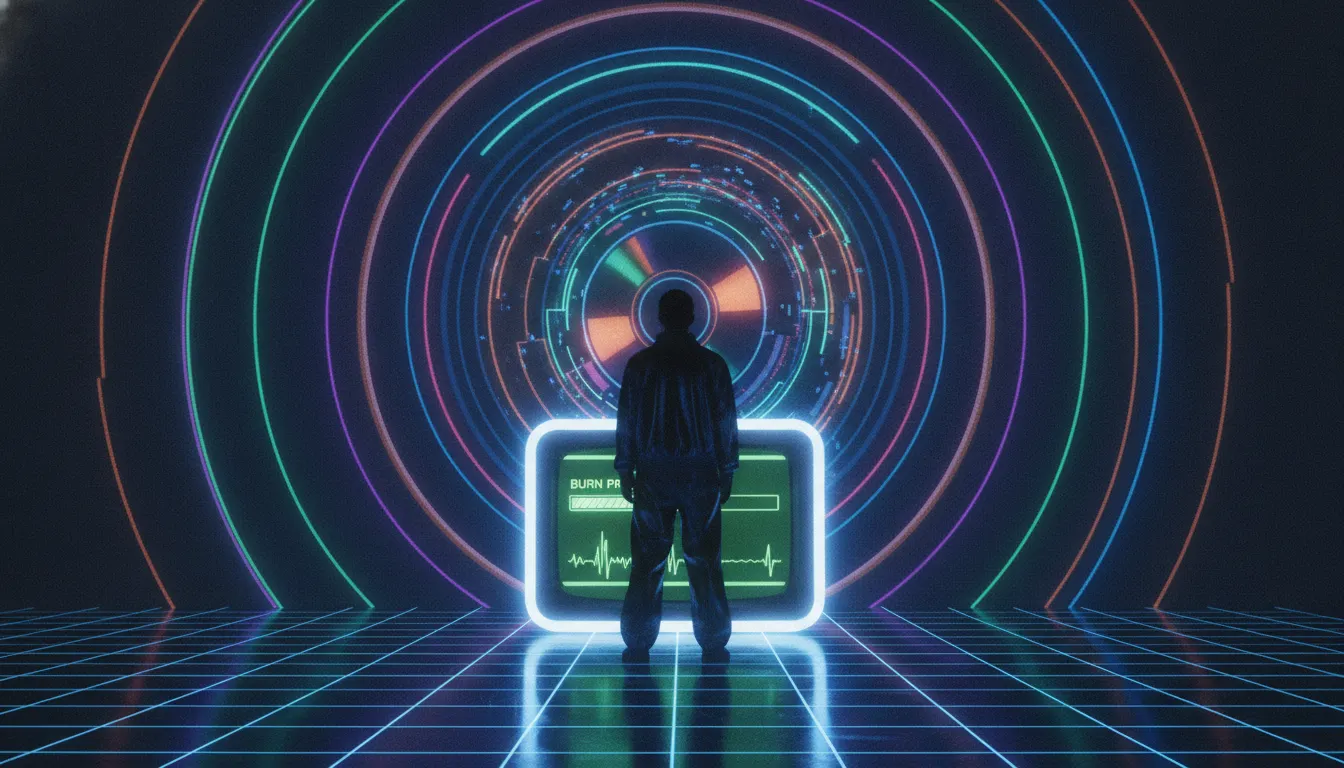
Y2K mixtape CD-R aesthetic. WinAMP visualizer, AIM glow, pixelated burn screens, dial-up modem buzz, blue-screen-of-death incidental.
The moves a human crew would use to get here. Cue applies them for you, and knowing their names is how you ask for a change.
blue-white cold light, curved screen edge, faint scan-line pattern on the display surface
resolution compression artifacts: JPEG blocking, GIF dithering, intentional bitrate reduction
era interface design: Luna theme, Papyrus and Trebuchet MS fonts, taskbar and Start menu elements
on-silver-disc CD-R as physical prop and graphic element
overexposed background, compression noise, limited dynamic range
white screen glow as primary light source in dark environment - the bedroom-at-2am light
The burned CD-R aesthetic is a specific cultural memory object - the visual and material language of a period (roughly 1999-2007) when music became freely transmissible but the primary storage medium was still a physical disc. The aesthetic encompasses the Sharpie-labeled silver disc, the blue glow of a CRT monitor at 2am, WinAmp skin design, the grainy webcam photograph, and the emotional experience of discovering a band through a compressed .mp3 downloaded over a DSL connection.
The burned CD-R as an object carries specific visual qualities: the iridescent purple-gold sheen of the unprinted disc underside, the Sharpie-written tracklist in whatever hand the creator had, the handmade inlay card photocopied or printed on a home inkjet. This was music as an act of curation and gift-giving: you made a compilation for someone specific, and the visual roughness of the object was evidence of the care it represented.
The software environment was equally specific: WinAmp with its dark skin and frequency visualizer, the Windows Media Player orb visualization pulsing to music, the AOL Instant Messenger away message as a music recommendation platform, the MySpace music player on a band's page loading in stages. These interfaces had specific visual qualities - dark backgrounds, pixel fonts, neon accents on gray - that constitute a coherent design aesthetic.
The CRT monitor's blue-white glow in a dark bedroom was the light source of late-night music discovery. This light - cold, slightly flickering, with the curved-glass edge of the CRT screen catching the room behind it - is the specific light of the era. It colors skin blue, throws sharp shadows from desk objects, and creates a private, cave-like environment that is associated with the intimacy of solitary music listening.
The 2000s internet aesthetic became a nostalgia target in the early-to-mid 2020s, particularly among the "zillennial" cohort (born 1993-1998) who experienced formative childhood and adolescence in this digital environment. Artists including Charli XCX (CRASH, 2022), 100 gecs, and Hyperpop producers deployed visual elements from this era - low-resolution graphics, Windows XP-era interface design, the specific compression artifacts of early-2000s web imagery - as a form of generational coding.
The CD-R aesthetic in music video and visual content uses CRT scanlines, intentional low-resolution compression artifacts (JPEG blocking, .gif dithering), Windows XP-era desktop aesthetics, and the specific warmth-and-cyan of consumer-grade webcam footage from the Creative Labs or Logitech webcams of the era.
2022
early 2000s pop visual nostalgia
2019
hyperpop Y2K aesthetic
2007
era-specific MySpace-era aesthetic
2005
period MySpace rock visuals
LJ/LiveJournal aesthetic
the aesthetic as platform artifact
burned CD-R era indie
2003
early 2000s indie bedroom aesthetic
A Look is not a filter. It is a set of stored decisions the pipeline reads before it makes a single frame, so two videos in the same Look actually match.