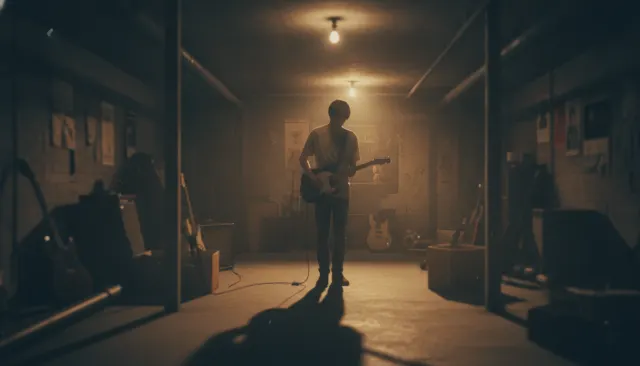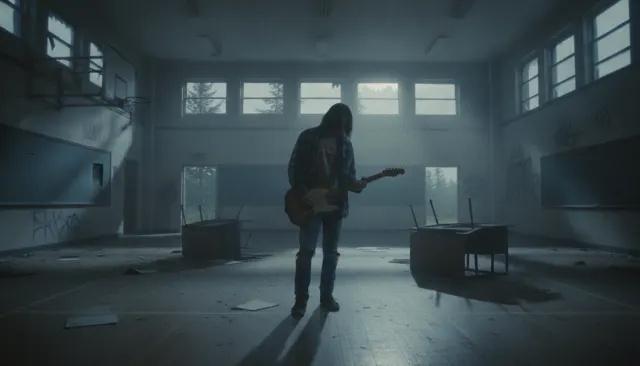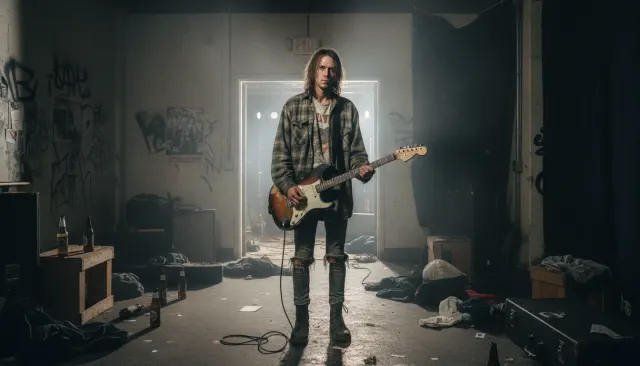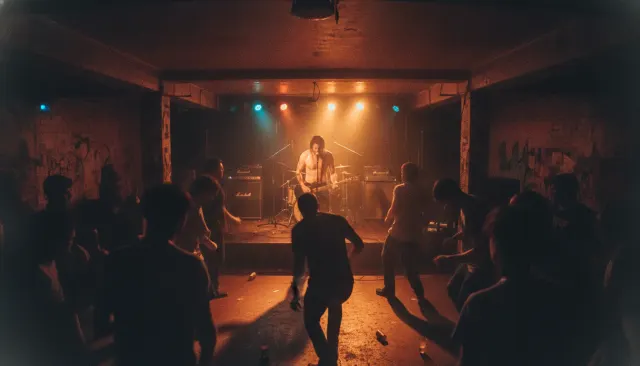
Nirvana, early Sub Pop performance footage, Central Tavern Seattle (1989-1990)
VHS document
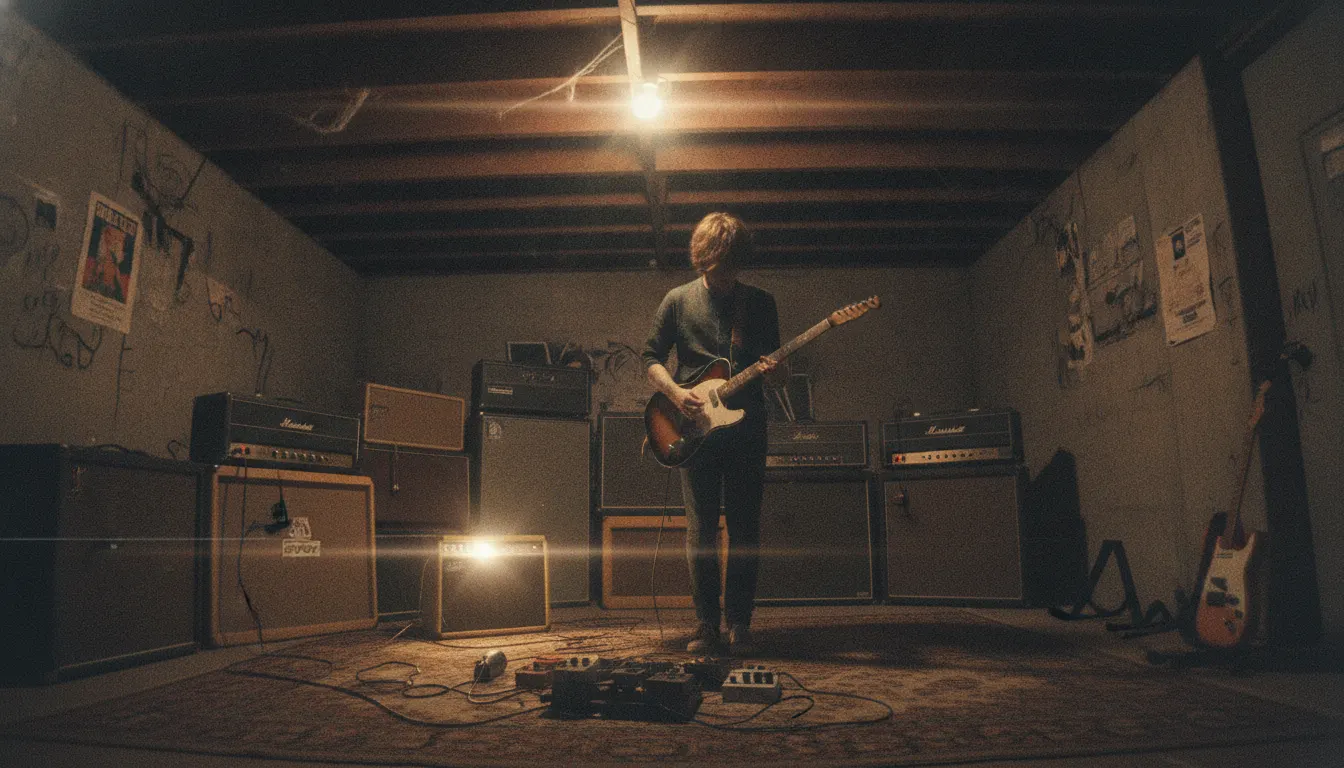
Indie rock VHS basement MV. Wavves and Best Coast lo-fi handheld, basement amp, single bulb, chroma-bleed VHS transfer, sloppy-camera energy.
The moves a human crew would use to get here. Cue applies them for you, and knowing their names is how you ask for a change.
horizontal tracking lines, color bleed at edges, soft dark-area detail loss
exposure instability: scene changes causing exposure lurching
string lights, floor lamps, single LED panel uplight, no overhead sources
ceiling mise-en-scene - the practice space as its own visual language
in-frame or audience-in-frame obscuring line of sight to the performer
faces recognizable but not high-definition
the camcorder operator on a stool or wedged in a corner
the blue-green of fluorescent against incandescent warm spots
The VHS basement aesthetic occupies a specific historical moment in indie rock visual culture - roughly 1988 to 2005 - when the video camcorder made documentation accessible but the VHS tape format imposed its own physical constraints and artifacts. These constraints became the aesthetic: the basement performance, the tape grain, the color smear, the tracking instability.
VHS tape, recorded and often re-recorded onto used cassettes, produced a specific image quality: limited resolution (approximately 240 lines horizontal), color bleed at high-contrast edges, susceptibility to tracking errors that introduced horizontal distortion lines, and a particular softness in dark areas that made shadows smear rather than hold detail. Recorded onto Hi8 or Mini-DV in the later 1990s, the quality improved but the aesthetic sensibility - close quarters, available light, the performer in their actual environment - remained.
The basement itself - concrete walls, exposed pipe, low ceilings, practice space foam - was not a limitation to be shot around but a primary visual element. The ceiling was usually a problem (too low for overhead lighting), so most basement performance footage was lit with practical lamps, string lights, or single LED panels placed at floor level, creating unflattering upward fill or harsh side shadows that became part of the visual identity.
The Sub Pop Records aesthetic - established through Charles Peterson's photography and early Nirvana and Mudhoney promotional documentation - created a template that was adopted throughout indie rock. The close-quarters, tape-documented performance was both economically necessary and ideologically coherent: it was anti-production-value as a philosophical position. Touch and Go Records, Dischord, and Matador Records all cultivated visual aesthetics that valued roughness over polish.
From 2015 onward, the VHS aesthetic became available as a deliberate retro choice through plug-ins (VHS Emulator, BRAW VHS LUT packs, After Effects VHS presets) and camera apps. Artists like Lil Peep, Billie Eilish (early content), and Clairo deployed VHS aesthetics as a nostalgic signal, marking themselves as children who had grown up watching their parents' home videos on tape.
The basement VHS aesthetic has been revived and refined by artists including Clairo ("Pretty Girl" iPhone video, 2017, the minimal digital equivalent), Snail Mail, Soccer Mommy, and the broader emo-adjacent indie sphere. The DIY ethos is now less economically necessary and more culturally deliberate - a statement about values rather than a response to budget.
VHS document
ideological DIY visual
basement origin document
2017
modern minimal equivalent
Ohio basement aesthetic
West Coast basement template
contemporary revival
2017
current practice
A Look is not a filter. It is a set of stored decisions the pipeline reads before it makes a single frame, so two videos in the same Look actually match.