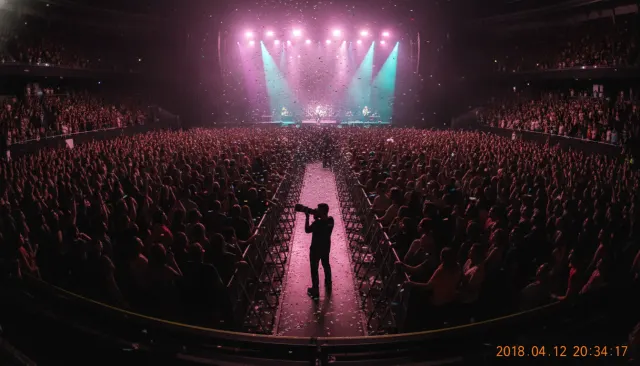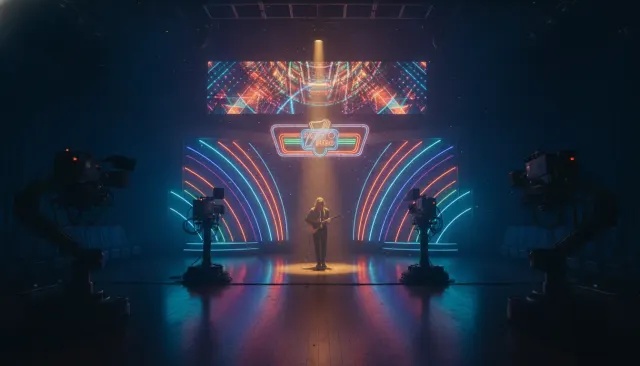
Joy Division, performance footage at Manchester Lesser Free Trade Hall and early Factory Records shows
1976
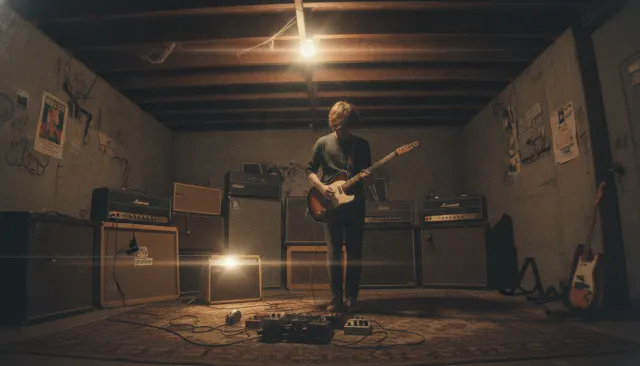
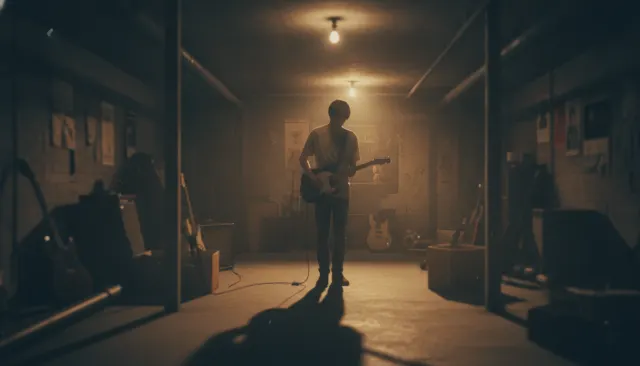
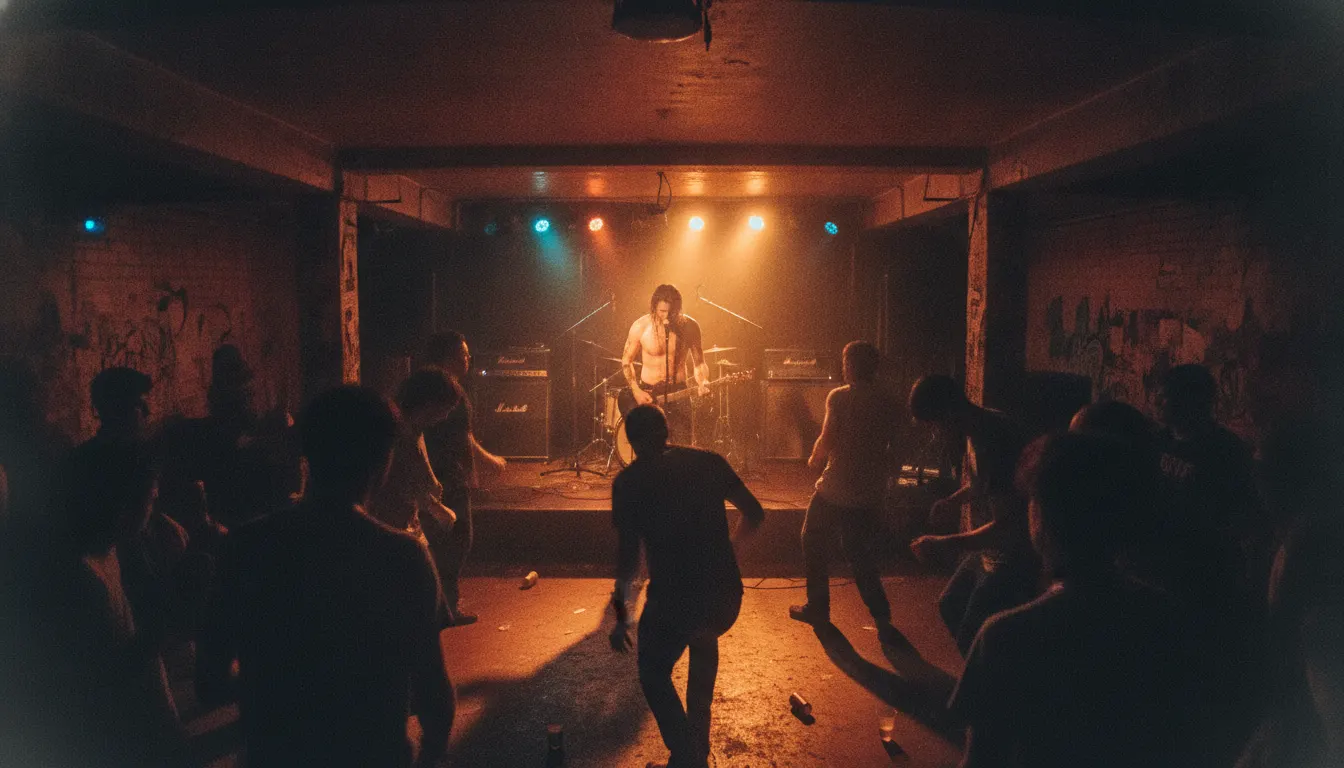
Intimate club basement-cam capture. Brooklyn DIY venue, single-cam handheld, sweat-glow practical, fingers-in-the-mosh-pit POV.
The moves a human crew would use to get here. Cue applies them for you, and knowing their names is how you ask for a change.
performers shot against the ceiling with limited vertical headroom
red, blue, green or amber wash with hard shadow edges
visible light shafts through particulate, softened depth
lighting with only occasional fill-side face illumination
heads, hands, and bodies as part of the composition
light digital noise from sensors pushed in dark conditions
the working mechanics of performance
The intimate club basement camera aesthetic is defined by the physical constraints and sensory environment of a specific type of music venue: the 80 to 300-capacity room below street level or in an industrial space, where the ceiling is low, the lights are minimal and practical, the crowd is close enough to touch, and the camera is navigating bodies rather than observing from a controlled position.
The aesthetic vocabulary emerges directly from the limitations of the space. Low ceilings prevent the use of overhead lighting rigs. Concrete or brick walls are unhelpful reflectors. The crowd fills the frame and cannot be controlled - they are performers in their own right, a physical presence that the camera has to work around or through. Stage-to-back-of-room distance is often under 10 meters, which means the performer and audience exist in genuinely shared space.
Lighting in this environment is usually a combination of: colored par cans on stands pointed at the stage (red, blue, green), smoke or haze machines that turn the light into visible shafts and soften everything beyond the immediate foreground, and occasional strobe or LED wash. This produces high-contrast images where the performer is silhouetted against colored back light, with faces visible only when turning toward a side light source.
In a 200-capacity room, the camera operator is a participant. A Sony FS7, BMPCC, or even a prosumer mirrorless camera on a gimbal or held handheld becomes an active body in the crowd. The resulting footage has specific qualities: involuntary camera movement from crowd contact, selective focus as the lens navigates from face to stage to ceiling, and perspective that is at crowd height rather than elevated.
Some of the most significant documents of this aesthetic are not music videos per se but live recordings: Radiohead's Oxford Zodiac footage (1994), the Velvet Underground's Dom recordings (1966, primitive but ancestral), and Joy Division's performance footage from Manchester venues (1979-1980, dir. various). Contemporary artists including Beach Bunny, Wet Leg, and Phoebe Bridgers' early solo shows produced smartphone and prosumer camera basement footage that circulated on YouTube and TikTok as promotional material before their careers scaled.
The basement club camera aesthetic is not merely a visual style - it is an index of subcultural credibility. The specific room encodes a career stage: the artist was small enough to play there, and the audience was devoted enough to be present. As artists scale, they often produce videos that deliberately reference the intimacy of basement spaces even when they can no longer occupy them authentically.
1976
1994
pre-fame intimacy document
2021
pre-breakthrough document
2018
pre-signing document
2012
Captured Tracks basement aesthetic
A Look is not a filter. It is a set of stored decisions the pipeline reads before it makes a single frame, so two videos in the same Look actually match.