GENRE NICHE · CONTEMPORARY · USA
Late Night Saturday Night Live MV
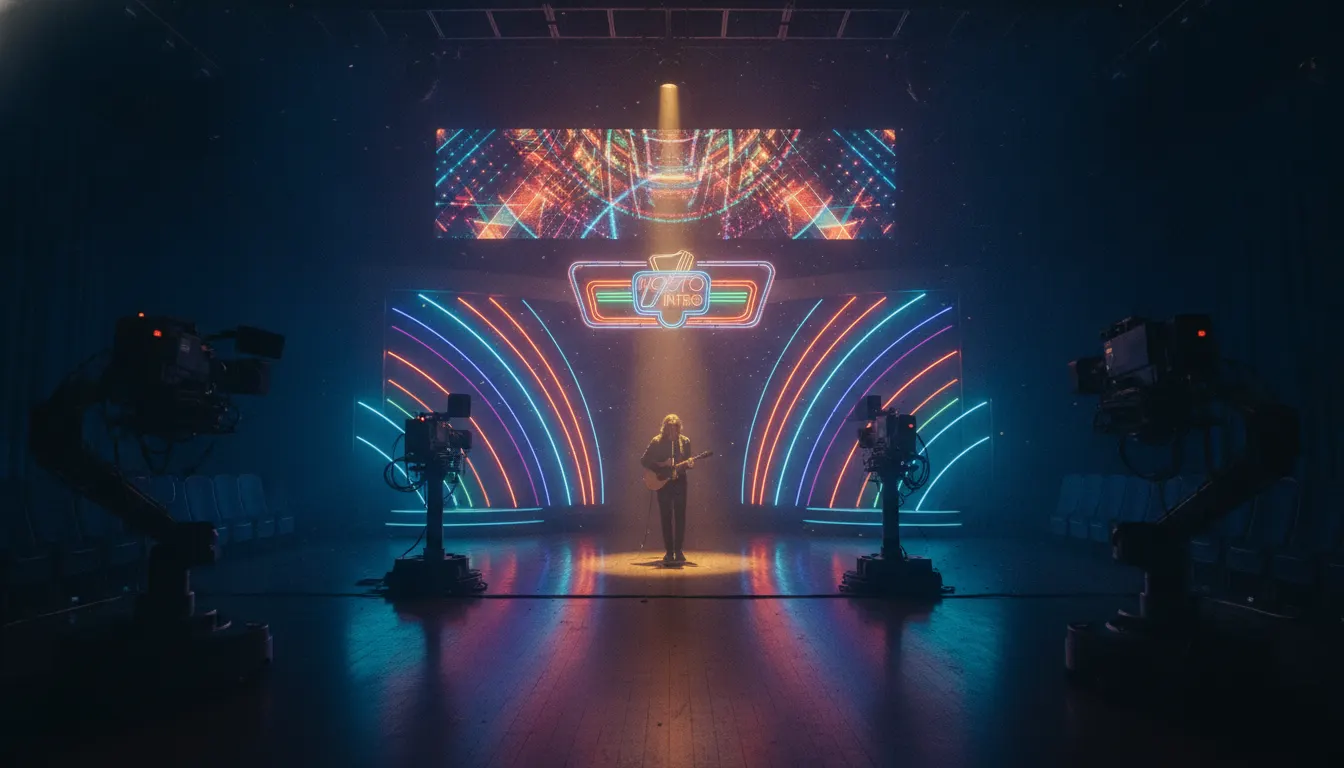
SNL late-night musical guest capture. Rockefeller Studio 8H, broadcast multi-cam, host intro card, neon stage band, audience-laugh boom mic.
snllate-nightbroadcaststudio
LUT snl-late-night-studio
WHEN TO USE
- Live performance content that wants to invoke the cultural prestige and one-take authenticity of the late-night television context
- Artist documentation content that prioritizes performance energy over production polish
- Content for established artists crossing between music and television or film cultural space
- Performance-format music content where the absence of video production values signals artistic seriousness
- Content referencing specific cultural moments in music television history - the archive as cultural touchstone
WHEN NOT TO USE
- Content that requires the control and polish of a dedicated music video production
- Emerging artists who have not yet built the cultural capital where the raw performance aesthetic reads as intentional
- Content requiring complex visual concepts, set design, or choreography that live television cannot support
- Contemporary pop or K-pop where the fan audience expects the polish of a dedicated music video production
SIGNATURE TECHNIQUES
How the look is made.
The moves a human crew would use to get here. Cue applies them for you, and knowing their names is how you ask for a change.
- 01Multicam live floor coverage
wide master, front close-up, wing handhelds responding to performance rather than blocking it
- 02Flat broadcast color grading
neutral, undramatic, designed to read as live television
- 03Thrust stage with audience visible on three sides
performers aware of multiple sight lines
- 04Hard overhead LED wash plus front fill
the standard SNL lighting package
- 05Real
time audience reaction coverage intercut with performance - the laughter or silence as live barometer
- 0690
second setup constraint: minimal scenic elements, the instrument and the performer as the total visual statement
- 07One
take physical stakes visible in face and body - the absence of pickups or safety nets in the performance
- 08Broadcast aspect ratio and resolution
the specific look of live HDTV versus cinema or streaming camera formats
HISTORY & CONTEXT
Where it comes from.
Saturday Night Live Musical Guest Aesthetic
The Saturday Night Live musical guest performance is a distinct and highly specific visual format - one of the few remaining live television performance contexts for popular music artists, and one whose constraints and conventions have produced a recognizable and influential aesthetic over five decades.
NBC Studio 8H and Its Constraints
Studio 8H at 30 Rockefeller Plaza has been the physical environment for SNL musical performances since October 11, 1975. Its constraints are fixed: a thrust stage with the audience on three sides, a ceiling height that limits vertical rigging, and the requirement that setup and breakdown occur in under 90 seconds between sketches. These constraints shape the visual language: the stage is relatively spare, the lighting rig is established in advance and cannot be completely custom to each act, and the performance must read across the studio floor (for the 400 live audience members) and on a broadcast camera simultaneously.
The camera coverage in the current era uses 5-7 cameras: a wide master from the floor, a center-stage close-up, handheld cameras on both wings, an overhead or high-angle camera, and audience reaction coverage. This multicam live mix has the quality of documentary coverage - the cameras are where they can be, responding to performance rather than blocking it.
The One-Take Energy
The definitive quality of the SNL performance aesthetic is the absence of safety nets. There are no pickups, no ADR, no cutaways to a more polished alternate take. The performance happens once, and the broadcast record is the document. This produces a specific kind of presence that studio videos cannot replicate: the physical stakes of the live moment are visible in the performers' faces and bodies.
Some of the most iconic moments in popular music television are SNL performances: Nirvana's "Lithium" (January 11, 1992), when Cobain added words to the end of the song that were not in the prepared broadcast; Taylor Swift's first solo performance; Kanye West's "All Falls Down" with a 2004 appearance that many industry observers credit with accelerating his mainstream breakthrough.
Visual Conventions
The standard SNL lighting package uses an overhead LED wash, audience fill lights to prevent the house going fully dark during performance, and artist-specific front lighting that varies by act. Fog or haze is increasingly common. The broadcast color grading is flat and neutral - the SNL feed is designed to look like live television, not a color-graded music video.
Cultural Significance
A successful SNL performance remains one of the highest-impact single television moments available to a recording artist. The cultural weight of the context - 11:30pm on Saturday, one of the last shared broadcast experiences - gives performances a seriousness that streaming platform live sessions cannot replicate.
NOTABLE WORKS
Where you have seen it.
Kanye West, SNL performance of 'All Falls Down', Season 30, Episode 1
2004
Adele, SNL performance of 'Chasing Pavements' (October 2008)
career-launching performance
The White Stripes, SNL performance of 'Seven Nation Army'
2003
Taylor Swift, SNL debut performance (November 2008)
Kendrick Lamar, SNL performance of 'Humble' (April 2017)
elaborate set design exception
Billie Eilish, SNL debut performance of 'Bad Guy' (February 2019)
Harry Styles, SNL performance of 'Watermelon Sugar' (November 2020)
THE RECIPE
The exact knobs
the renderer turns.
A Look is not a filter. It is a set of stored decisions the pipeline reads before it makes a single frame, so two videos in the same Look actually match.
SettingValue
GradeColour LUT applied to every frame
snl-late-night-studioTransitionHow one shot becomes the next
hard cuts · 110ms · linearKen BurnsCamera move applied to stills
Static framesTypographyDisplay / body / mono pairing
Inter · Inter · JetBrains MonoMusic moodWhat the bed under the voice sounds like
live-pop · broadcast-rockPrompt suffixAppended to every shot prompt in this Look
SNL late night musical guest capture, Rockefeller Studio 8H, broadcast multicam, host intro card, neon stage bandPALETTE
Primary
#1A1A1A
Secondary
#3A3A3A
Accent
#22D3EE
Text/Light
#0A0A0A
Text/Dark
#E0F5FF
BG 900
#000000
BG 800
#0A0A0A
RELATED LOOKS
Next to it on the shelf.
Your first cut
is on us.
+ New videoFree plan · no card · 1080p export