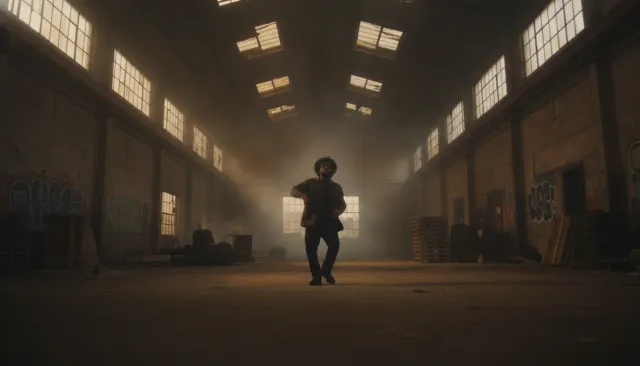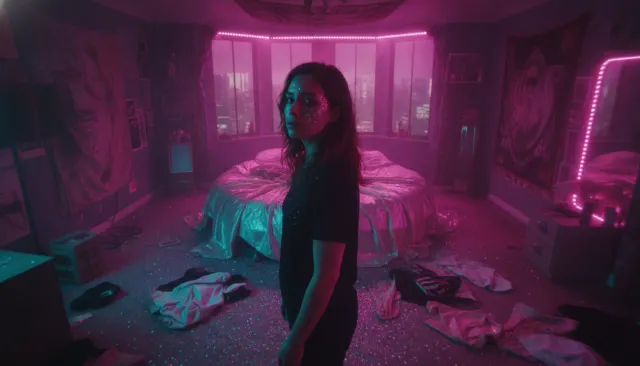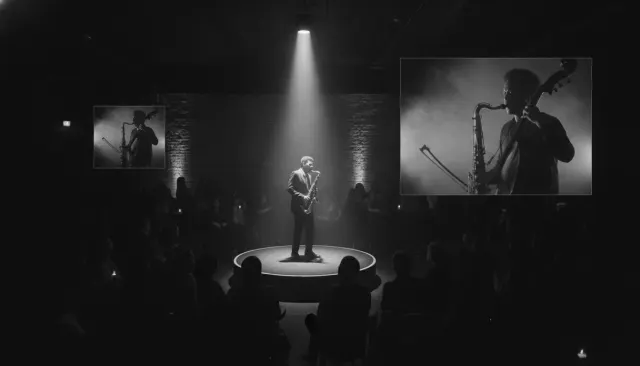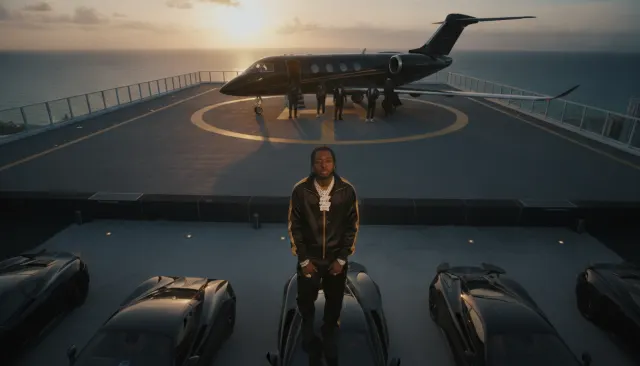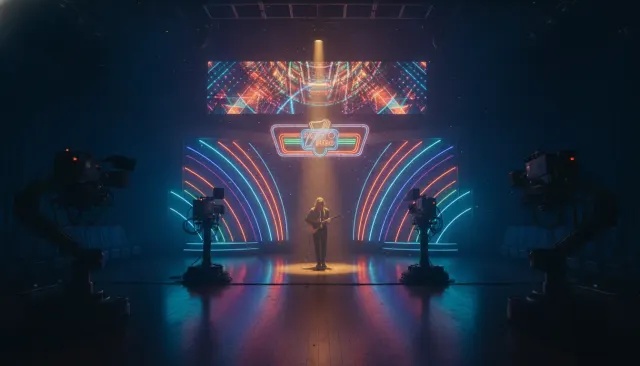
The Weeknd, 'Blinding Lights' dir. Anton Tammi
2019
Las Vegas baby blue and neon apex
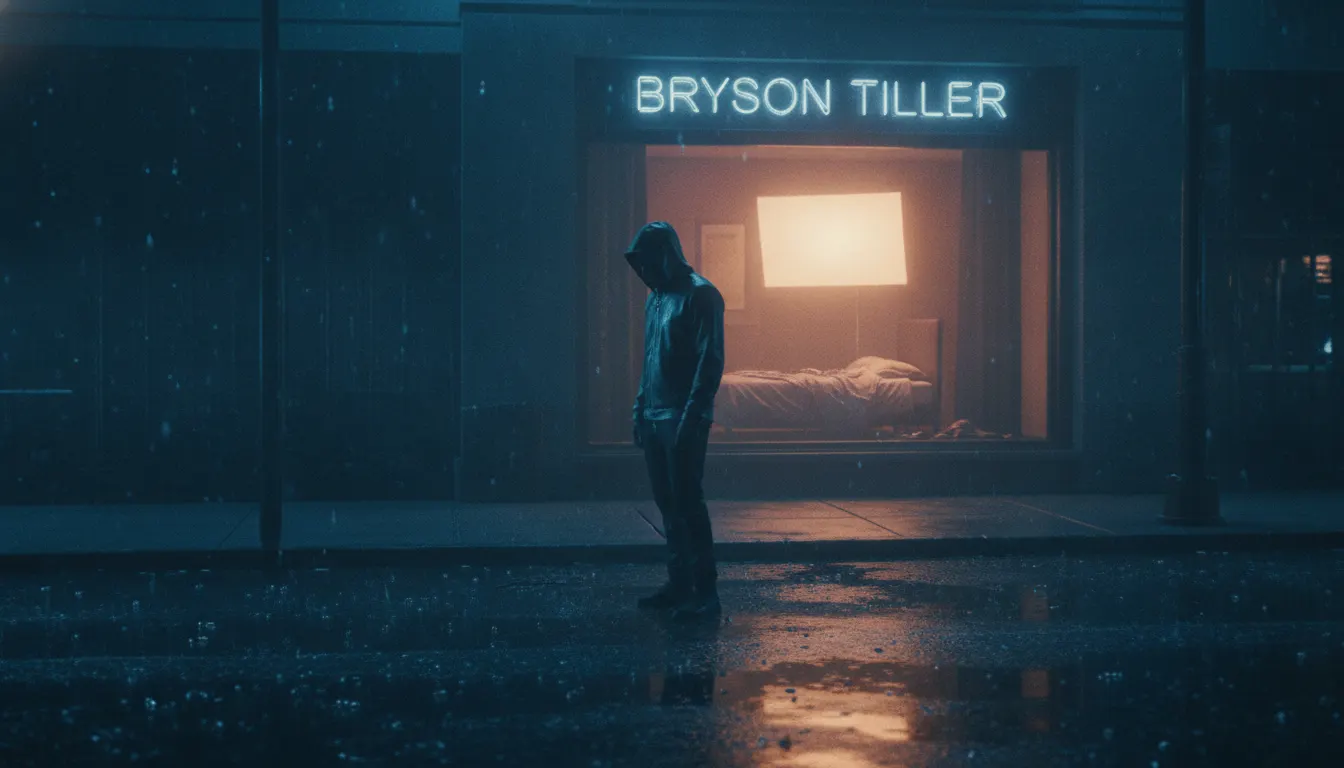
Modern late-night RB MV. Bryson Tiller baby-blue neon, rain-slicked street, single-source softbox bedroom, Frank Ocean melancholic frame.
The moves a human crew would use to get here. Cue applies them for you, and knowing their names is how you ask for a change.
LED streetlight blue, pre-dawn sky, fluorescent cool light
blue primary environment
black backgrounds with selective illumination of face and hands
down close-up on the performer's face in neon light
the specific loneliness of American commercial non-places
neon signs, streetlights, car headlights, convenience store fluorescent
the performer sharp, the neon background blurred into soft color pools
120fps) for rain, driving at night, or physical movement in neon light
The late-night R&B aesthetic of the 2010s and 2020s is a specific visual register that encodes emotional and physical vulnerability within a nocturnal urban environment. Baby blue, neon pink, and the deep navy of pre-dawn sky create a palette that is simultaneously cold (the hour, the emotional distance) and warm (the neon, the desire). It is the visual language of 3am as an emotional state.
The Weeknd's visual world, crystallized in the After Hours album campaign (2020) and its associated videos, is the most fully developed expression of the late-night R&B aesthetic in the contemporary period. "Blinding Lights" (dir. Anton Tammi, 2019) used a palette built almost entirely of neon red, baby blue, and deep night - the Las Vegas Strip in the pre-dawn hour, the Weeknd moving through it with the physical urgency of someone running from or toward something that the video never names.
The specific baby blue of the Weeknd's After Hours jacket became a cultural symbol - a color that the video team and art director used across the entire campaign, including the Las Vegas sequence, the fragmented narrative of the "Heartless" video, and the blood-soaked formal wear imagery that ran through the album cycle.
Frank Ocean's visual work - particularly the Blonde era (2016) and the "Nights" section of that album's associated imagery - used a different kind of blue: warmer, more nostalgic, often approaching teal or turquoise. The iPhone footage and deliberately lo-fi quality of much of Ocean's visual content placed intimacy over production polish, but the color temperature remained consistent: blue as emotional depth, as the color of introspection and desire.
SZA's visual work - "Kill Bill" (dir. Christian Breslauer, 2022), "Supermodel" (2017), and the broader SOS album visual campaign - applied the late-night neon palette to a specifically feminine perspective. The baby blue of domestic spaces (bedrooms, kitchens, fluorescent-lit convenience stores at night) combined with the vulnerability of the emotional content to create a visual world that was simultaneously mundane and heightened.
The technical foundation of the aesthetic is color temperature contrast: the cool blue of available night light (mercury vapor streetlights, LCD screens, pre-dawn sky) against the warm-to-neutral of neon signage (pink, orange, the red of a motel sign). These two sources are rarely balanced - one dominates, and the other provides a foil. When baby blue dominates, the emotional register is introspective, cold, isolated. When warm neon is primary, desire and urgency move forward.
2019
Las Vegas baby blue and neon apex
2019
Las Vegas night, deep blue nocturnal
2016
warm blue introspection
2022
domestic neon feminine noir
2017
early baby-blue R&B palette
2015
intimate blue nocturnal
2016
minimalist baby-blue performance
2016
night blue luxury
A Look is not a filter. It is a set of stored decisions the pipeline reads before it makes a single frame, so two videos in the same Look actually match.