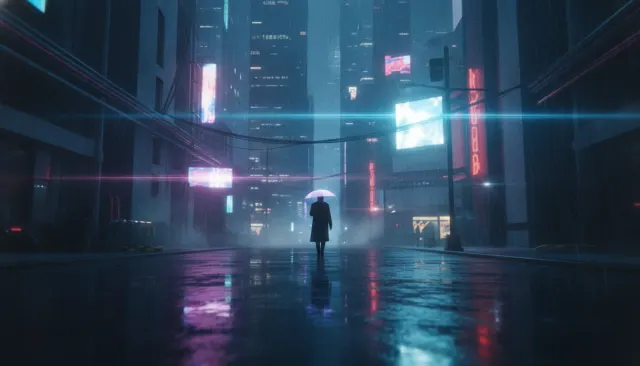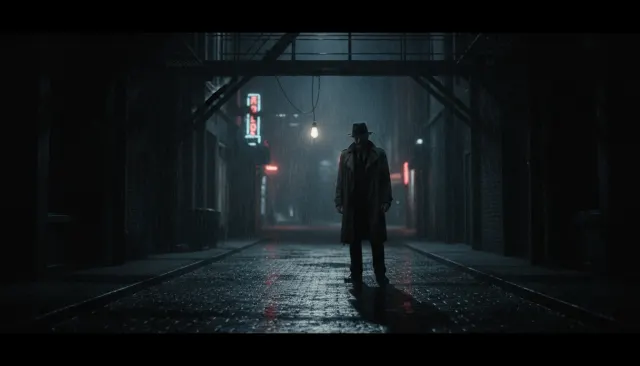
Euphoria (Season 1)
Sam Levinson / Autumn Durald Arkapaw (DP) · 2019
Defining Gen Z prestige TV visual language; character-color system established
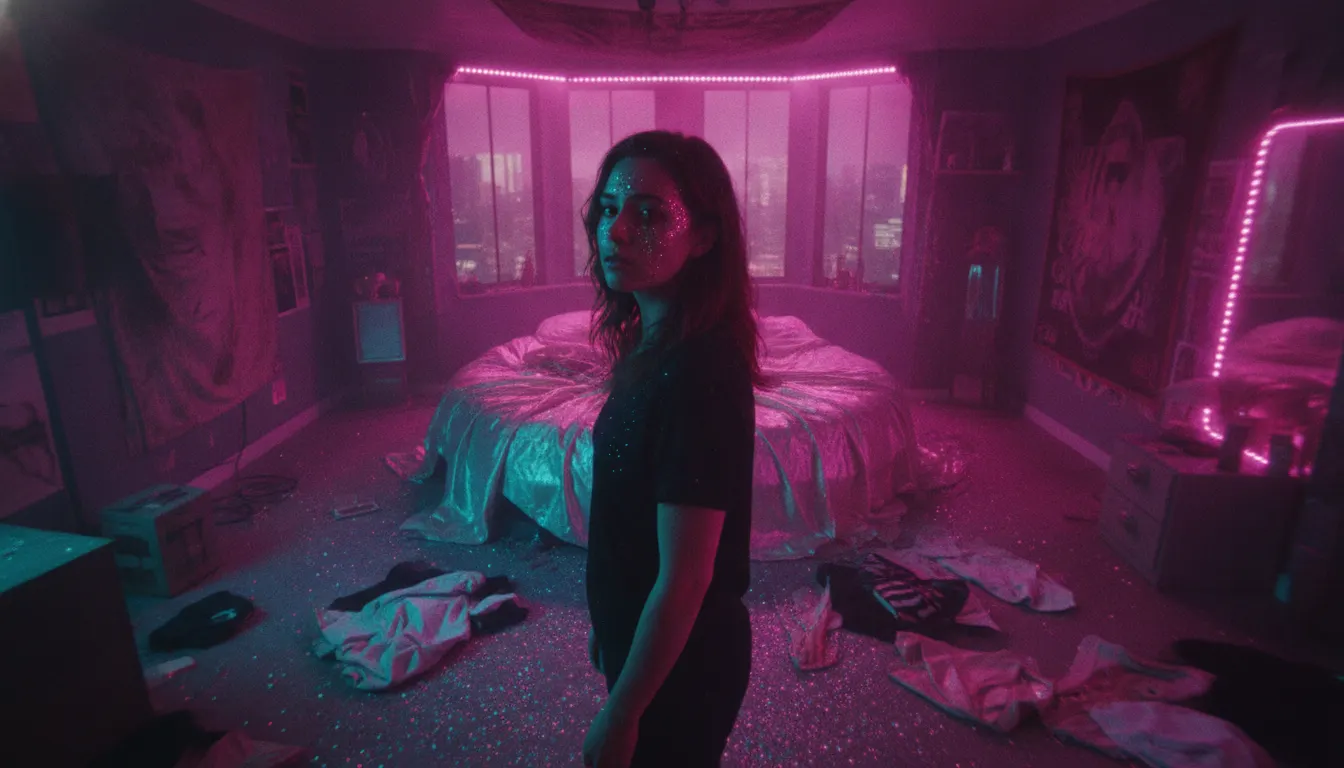
Autumn Durald Arkapaw Euphoria neon. Sam Levinson HBO Gen Z, glitter-and-tear close-up, magenta-cyan bedroom, dreamy spiral handheld.
The moves a human crew would use to get here. Cue applies them for you, and knowing their names is how you ask for a change.
Each major character assigned a dominant hue palette that functions as a visual signature for their emotional state.
Rapid camera spiral around a character at emotional peak, blurring room lights into neon trails.
Extreme close-ups of glitter, gems, skin texture, and facial detail turning makeup into narrative landscape.
Image underexposed overall then selectively amplified in neon-light zones, creating saturated pockets in dark fields.
Kodak Vision3 35mm stock grain preserved to add texture and analog warmth to the digital-neon palette.
Macro close-ups in bedrooms and bathrooms contrasted with wide suburban establishing shots to amplify emotional isolation.
Autumn Durald Arkapaw's cinematography for HBO's Euphoria (seasons 1-2, 2019-2022) created the dominant visual language of Gen Z prestige television: ultra-saturated neon palettes, extreme close-ups of glitter-dusted skin and glistening tear tracks, dreamy handheld spirals, and a coloring philosophy that treats the teenage bedroom as a stage for emotional maximalism.
Durald Arkapaw joined Euphoria for the pilot after collaborating with director Sam Levinson, and her approach to each episode was built around character-specific color worlds. Rue's sequences are cool-blue, desaturated, and observational - the coloring of dissociation. Nate's scenes are harsh, institutional, fluorescent. Cassie's world is warm pink and amber. Jules's sequences push neon magentas and cyans into hyperreal saturation.
The cinematography uses a mix of 35mm film (Kodak Vision3 stocks) and digital, with aggressive underexposure and selective neon-light amplification creating the impression of teenagers living inside a music video. Lens choices range from macro close-ups - individual glitter particles, the iris of an eye, a lip trembling - to wide establishing shots in Rue's suburban tract-house neighborhood, making the intimacy/scale contrast part of the emotional grammar.
The signature move is the whip-pan spiral: the camera swings rapidly around a character in an emotional peak moment, the room's lights blurring into neon trails. This device appears in at least one major sequence per episode, serving as a visual equivalent of the characters' internal disorientation.
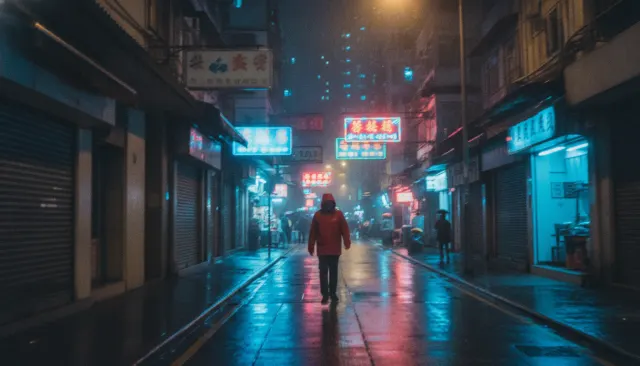
Durald Arkapaw cites Wong Kar-wai and Christopher Doyle (specifically Chungking Express and Happy Together) as visual touchstones. The Euphoria palette is essentially those Hong Kong films translated into an American suburban teenager's bedroom, replacing neon-lit alleyways with ring-lit bathroom mirrors and house-party dance floors.
The show's makeup designer Donni Davy created the 'Euphoria makeup' look - graphic eye liner, gems, glitter architecture - that became a global trend. The cinematography and makeup function as a unified visual system: the camera's extreme close-ups are designed to make that makeup the narrative landscape.
Durald Arkapaw's work on Black Panther: Wakanda Forever applied her rich-color philosophy at blockbuster scale. The mourning sequence opening the film uses deep blues and purples - an expansion of her Euphoria emotional-color grammar into Marvel's action framework.
The 'Euphoria aesthetic' has become a dominant reference point for teenage-target content, music videos, beauty campaigns, and any creative work wanting to signal authenticity with a Gen Z audience. The combination of extreme intimacy, neon saturation, and emotional excess is now a genre unto itself.
Sam Levinson / Autumn Durald Arkapaw (DP) · 2019
Defining Gen Z prestige TV visual language; character-color system established
Sam Levinson / Autumn Durald Arkapaw (DP) · 2022
Expanded neon-emotional grammar; maximalist party sequences
Ryan Coogler / Autumn Durald Arkapaw (DP) · 2022
Rich-color philosophy at Marvel blockbuster scale
Trey Edward Shults / Drew Daniels (DP) · 2019
Contemporary precursor to Euphoria's neon-teen emotional aesthetics
Janicza Bravo / Ari Wegner (DP) · 2020
Social-media neon visual language; shared Gen Z prestige vocabulary
A Look is not a filter. It is a set of stored decisions the pipeline reads before it makes a single frame, so two videos in the same Look actually match.