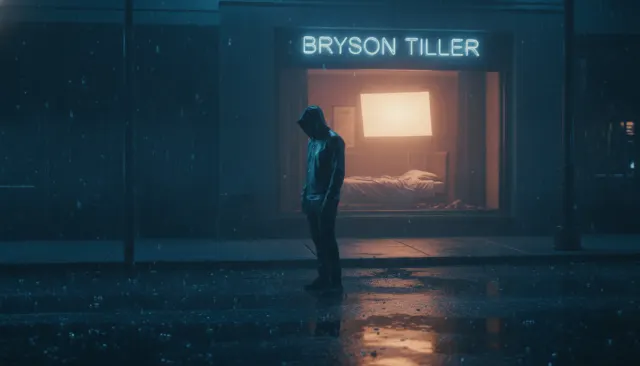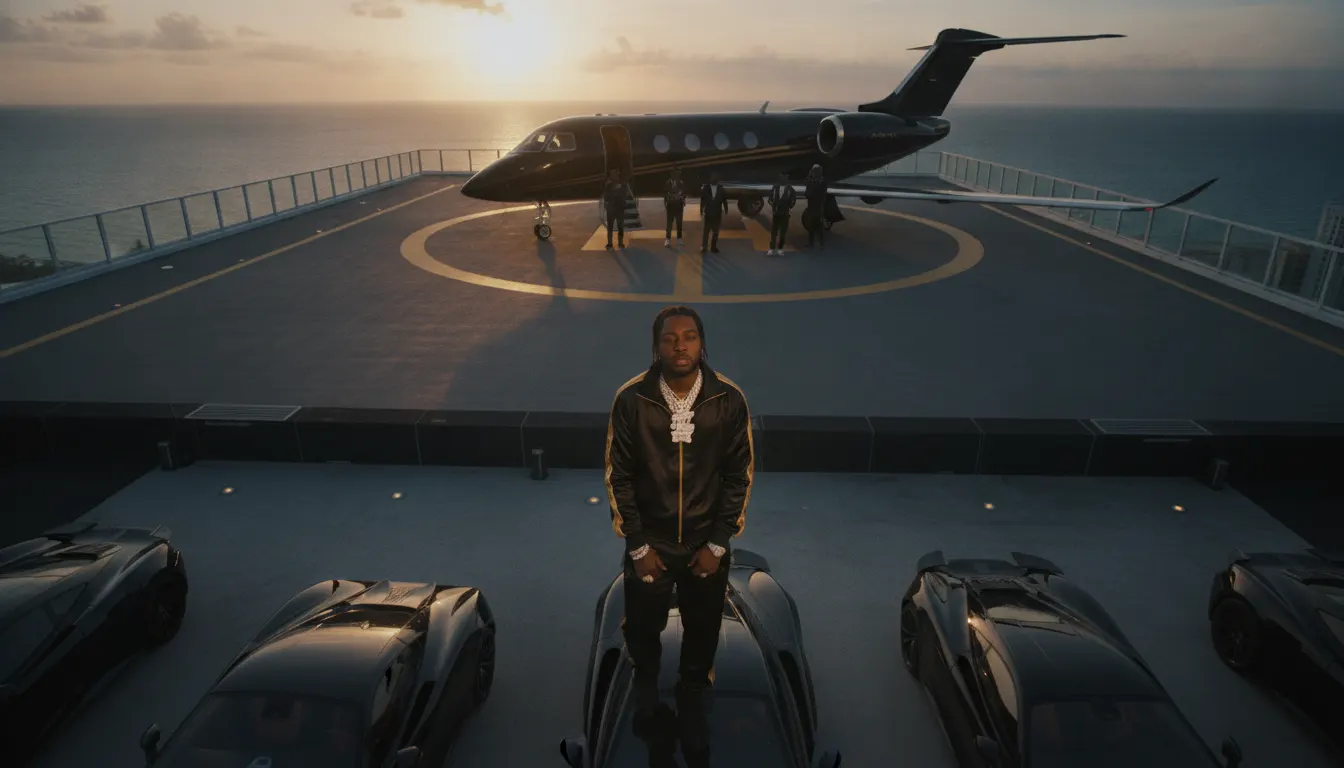
Puff Daddy ft. Biggie, 'It's All About the Benjamins (Rock Remix)' dir. Hype Williams
1997
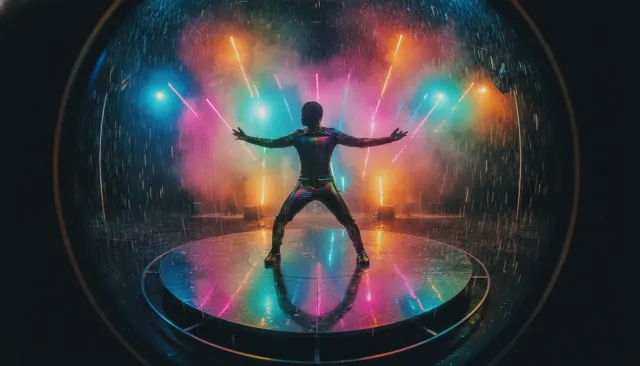
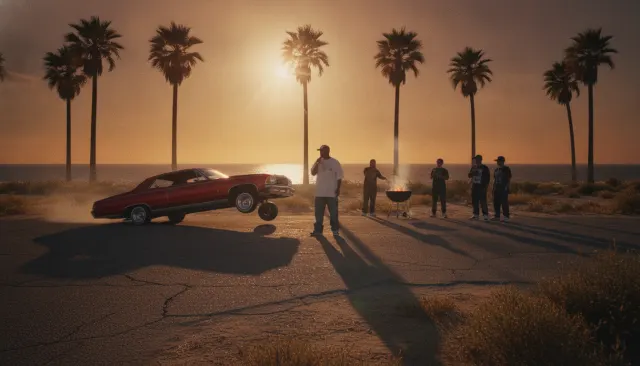
Modern hip-hop chains-and-cars MV. Iced Cuban links, McLaren paddock, Miami penthouse, gold-on-black grade, posse posing on private jet stair.
The moves a human crew would use to get here. Cue applies them for you, and knowing their names is how you ask for a change.
open aperture (f/1.4-f/2.8) rendering backgrounds as soft luxury blur with sharp foreground subjects
era fish-eye lens on wide establishing shots of yachts, penthouses, and crowd scenes
glass houses, marble floors, infinity pools, penthouse terraces
the chain brought to camera-front
hour or tungsten interior color grading - champagne and amber tones throughout
the artist surrounded by crew, reflecting collective abundance rather than solo wealth
The luxury aesthetic in hip-hop music video is not merely display - it is a political statement about access, aspiration, and the accumulation of resources denied by structural inequality. From the first gold chains of Run-DMC to Drake's Italian marble and private jets, the visual grammar of hip-hop wealth has evolved as a form of cultural reclamation.
The luxury aesthetic has its roots in the conspicuous display of early hip-hop's reaction to poverty: Run-DMC's Adidas and thick gold chains in the mid-1980s were a neighborhood kid's vision of prosperity, deliberately visible and unapologetically present. By the early 1990s, with the rise of Death Row Records and Bad Boy Entertainment, the scale escalated: Hype Williams' work for Puff Daddy and Biggie in 1996-1997 established the architecture of the contemporary luxury hip-hop video - slow motion, fish-eye wide angles, gleaming surfaces, Cristal champagne, and designer labels foregrounded in the frame.
Jay-Z and Birdman's "Big Pimpin'" (2000, dir. Hype Williams) brought this to a nautical apex: the video staged aboard a yacht in Trinidad during Carnival, with a horizontal luxury that was geographically expansive rather than architecturally contained. The color palette was vivid tropical against white vessel - the luxury isolated by ocean.
Drake's visual team, led by Director X (Julien Christian Lutz) and later director Karena Evans for Scorpion (2018), evolved the luxury aesthetic into something more emotionally ambiguous. "God's Plan" (dir. Karena Evans, 2018) inverted the genre - Drake distributing $996,631 to Miami residents - but the visual language retained luxury's warm color temperature, shallow-focus product placement, and the artist as source of abundance rather than its recipient.
The architectural vocabulary shifted from yacht decks and strip clubs to modernist glass houses in the Hollywood Hills, Toronto skyline penthouses, and desert brutalist mansions. Marble, floor-to-ceiling glass, infinity pools against city backdrops, and the choreography of designer clothing in natural light became the dominant visual grammar.
High frame rate (overcranked) slow motion is the luxury video's most consistent technical device - it slows the movement of fabric, chain, champagne pour, and low-rider bounce to a meditative pace that transforms display into something approaching portraiture. The 2000s introduced RED and Alexa cameras with wide-open apertures rendering backgrounds into creamy blur - the chain or the face in sharp focus against a defocused aspirational landscape.
1997
2000
Trinidad yacht excess
2006
2018
inverted luxury
2016
mansion and marble
2018
luxury as feminist statement
2016
trap luxury aesthetic
2020
quarantine-era luxury
A Look is not a filter. It is a set of stored decisions the pipeline reads before it makes a single frame, so two videos in the same Look actually match.